Head of Product & Design · Crypto Casino & Sportsbook
BrandProductAICrypto
View case →
2026
Cursed Deck · Self-Initiated
A Collectible-Pull Original for a Crypto Casino
Game DesignConceptiGaming
View case →
2025
Monaco Jack · UX Consultant
Casino UX + Gamification Layer
UX/UIMobileGamification
View case →
2026
WUSS Casino · Client
Casino + Sportsbook, Designed & Built from Zero
UX/UIFront-endCasino + Sports
View case →
2025
Kickback Casino
Brand + UX · Cashback Pool & Lootbox
BrandUXCasino
View case →
2025
Sport Challenge Tech · Principal Designer
Prop-Firm × Sports Betting Platform
BrandUX/UISportTech
View case →
2026
OMNIA · Self-Initiated
A Narrative Card Game About Raising an AI
Game DesignNarrativeMobile
View case →
2025
Trybet.com · Solo Designer
Nordic Casino & Sportsbook
BrandUX/UINordic
View case →
2026
Quota 2600 · Self-Initiated
A Survival Horror Told Through a Radio
Game DesignHorrorMobile
View case →
2025
Wicked Games
Design Consultant · Social & AI Video
AISocialB2B
View case →
2025
Esportal · Freelance Creative
CS2 Tournament & Social Campaigns
EsportsSocialCS2
View case →
2026
Sidekick · Self-Initiated Concept
A Fresh iGaming Insider — Not Another Comparator
ConceptBrandProduct
View case →
2026
Registro · Self-Initiated
A Card Horror Where Your Memories Get Corrected
Game DesignNarrativeMobile
View case →
Coming soon
2024—26
AbsoluteBet
Head of Design · Brand + Product · .com & Ontario
BrandUXCRM
Case study coming soon
Coming soon
2023
MoneySwap · Fintech
Swiss FX Brand & UX
FintechBrandUX
Case study coming soon
Coming soon
2020
Bingo.it · Betsson Group
Italian Casual Casino
BrandItalyCasino
Case study coming soon
Coming soon
2023—2024
Fruta.com · High Roller Technologies
VIP Casino · End-to-End Brand & Product
BrandUX/UIVIP
Case study coming soon
Coming soon
2018—2022
StarCasino.it · Betsson
Top 9 GGR Italy · 4 yrs Creative Lead
BrandCreative LeadItaly
Case study coming soon
What I do
The full Arsenal.
01
Brand & Creative Direction
Brand systems from scratch — identity, visual language, tone of voice, campaigns. From the first mark to a scalable design system across every touchpoint.
02
Product Design & UX/UI
End-to-end product design — user flows, wireframes, pixel-perfect UI. Casino lobby, sportsbook bet slip, deposit / withdrawal, KYC, VIP, RG surfaces. I ship with dev teams.
03
Regulated Markets & Compliance
Designed and shipped across ADM/AAMS · MGA · UKGC · AGCO · Spelinspektionen. KYC, AML and Responsible Gaming flows built to pass audit, not slow conversion.
04
CRM, Loyalty & Campaign Design
Email, push, in-app templates, narrative-led loyalty systems. CRM open / CTR data fed back into design. Italy, Nordics, UK, .com and crypto audiences.
05
AI-Augmented Production
Claude, Veo 3, Seedreams, Midjourney, FigmaMake — built into a repeatable production pipeline. Faster cycles, same craft.
06
Creative Leadership & PM
Led teams of 6–8 designers (Betsson). Acting PM for in-house and external dev pods. Roadmap, sprint planning, stakeholder management, vendor coordination.
Giovanni AngeliniCreative Lead & Product Designer · Malta
About
11 years. One obsession.
I'm a Creative Lead and Product Designer who has spent 11 years inside iGaming — and along the way I've built across casino, esports, fintech and crypto. Not on the periphery, but at the core. Building the brands players remember and the products they can't stop using.
My edge: I move across the full spectrum — from brand strategy and visual identity to UX/UI, prototyping and product management. I don't hand off. I ship.
Since 2024 I've embedded AI deep into my creative workflow — Claude, Veo 3, Seedreams, FigmaMake — not as a shortcut, but as a force multiplier. Same craft, faster shipping.
0
Years iGaming
0
Brands Built
0
Live Clients
0
Team Led
What they say
Words from people who know.
Giovanni balances an ambitious, go-getter attitude with a humble, team-player ethos. He sees the bigger picture within the business he is operating in and understands how to navigate the industry with skill. As his manager he took direction very well and as a member of a team he was always there to assist — no job too big or too small. His cheerful spirit is as valuable an asset as his ability to be counted on.
AB
Adam Brimmer
Director of Brand+Creative · Betsson Group Global
I had the pleasure of working with Giovanni, a strong Design Lead with a solid eye for UX/UI and a clear understanding of how to create experiences that work for real customers. What stands out about Giovanni is his ability to take initiative — he does not wait for every detail to be defined before moving forward. He brings creativity to his work, but always in a practical way. His designs are not just visually strong; they are also grounded in how customers think, behave, and interact with the product. I would gladly recommend him to any team looking for a Design Lead who can combine strong UX/UI skills with ownership, creativity, and a genuine customer-first mindset.
DS
Darren Sammut
Senior Product Manager · Direct manager at Sport Challenge Tech
Giovanni is a very passionate, talented, versatile designer, with a solid experience on his back. Always at the forefront, he keeps himself updated about latest design trends and customs. Capable of effectively managing his work load and deadlines, Giovanni is also very sociable and good at building proper working relations. I would recommend him as a valuable asset for any company looking for a great digital designer.
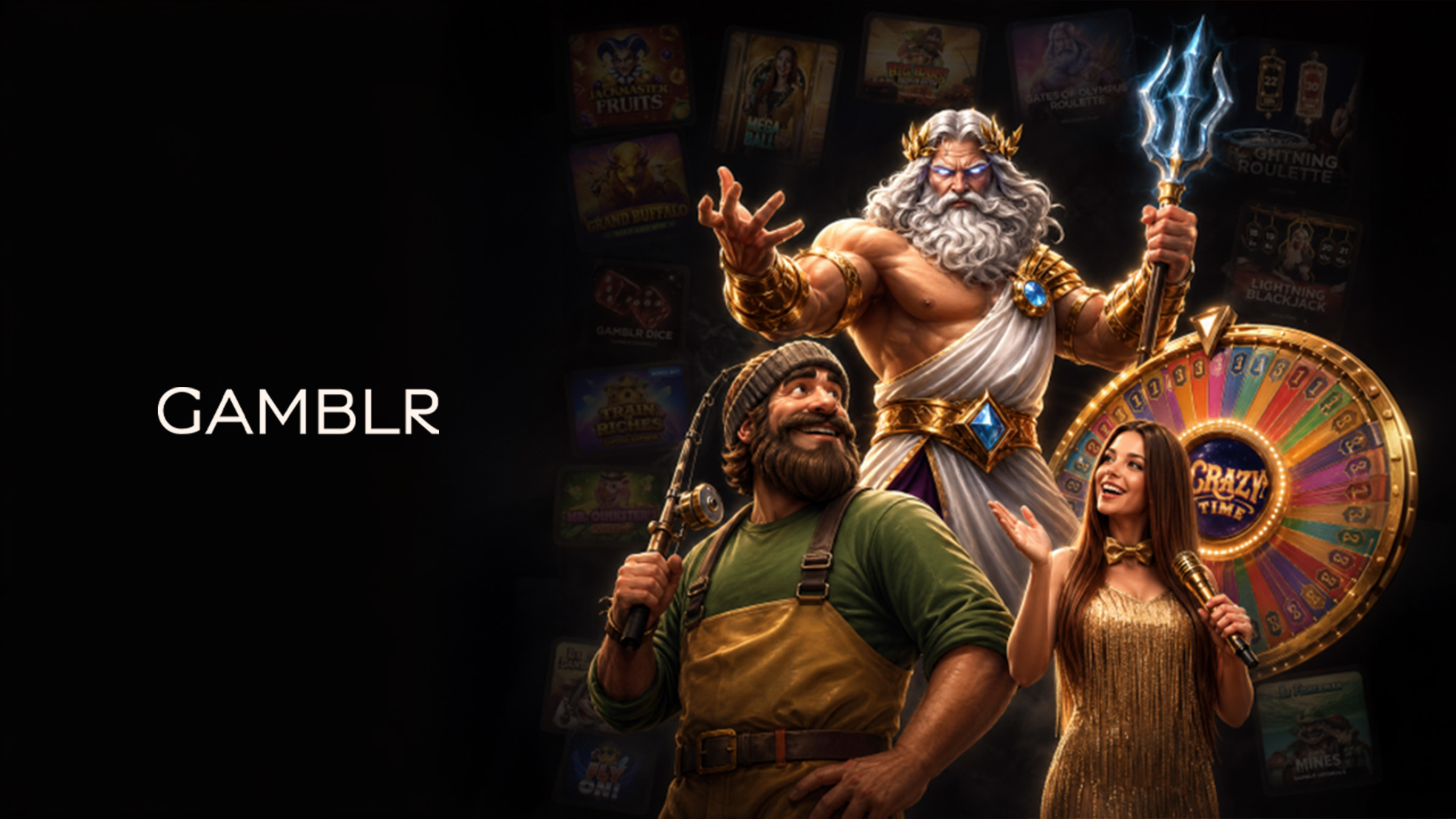
Research & development for the casino and sportsbook platform, leading it on the product side from research to release. Built the AI Studio, where games are created through the in-house AI game engine, and own the brand. Oversee design, marketing and product.
01
Jun 2025—May 2026 Malta
Gamblr.io
Head of Product & Design
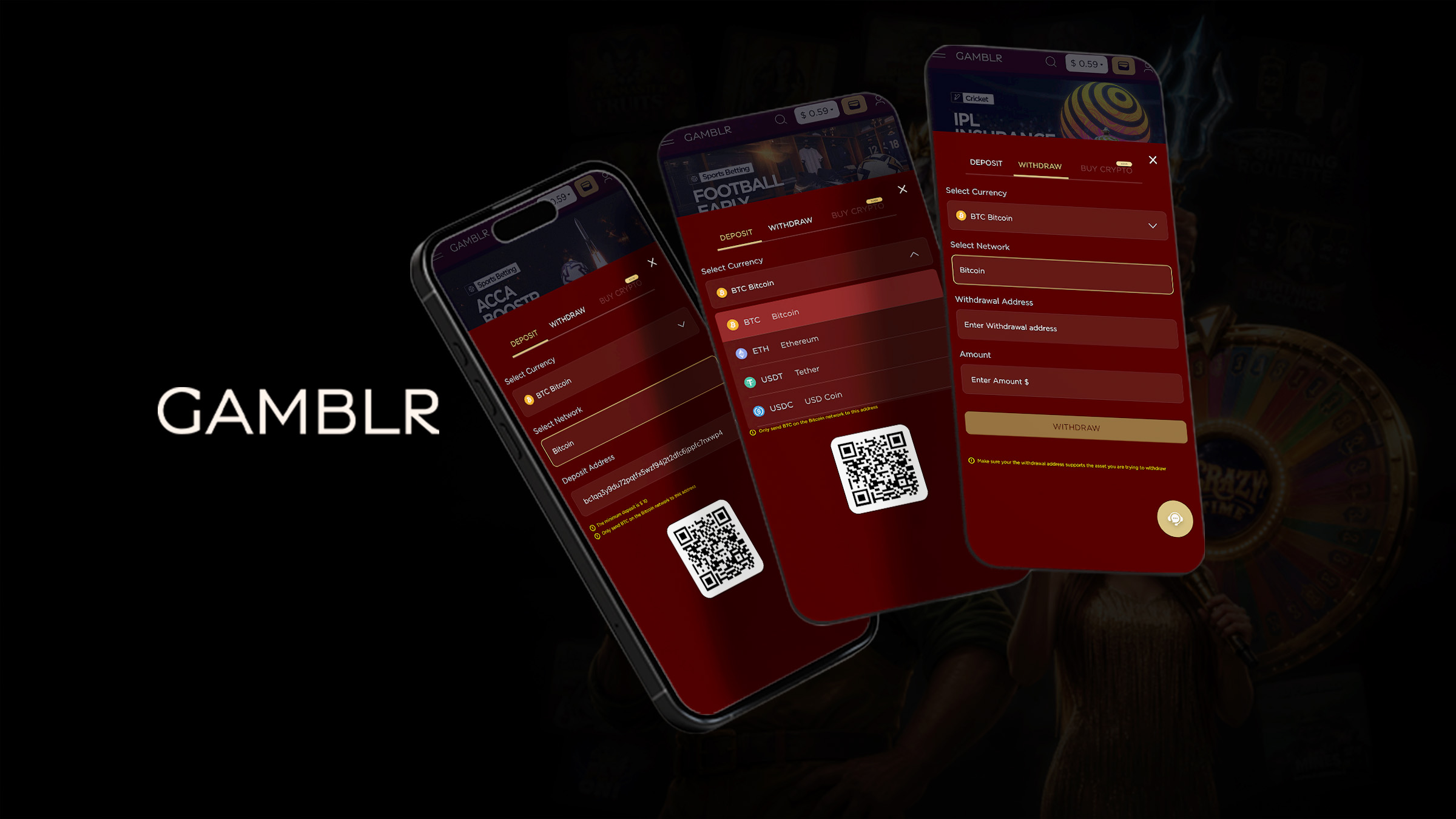
Sole designer at C-level, reporting to C-suite. Brand, UX/UI, multi-coin crypto wallet flows (BTC + altcoins). Built the in-house deposit/withdrawal flow from scratch, redesigned the VIP page and overall VIP experience. Visual language refresh. 5+ live landing pages on a Cloudflare/GitLab pipeline. AI-driven content pipeline, CRM collaboration. Interfacing with C-suite + marketing internally, external product/dev team.
Brand and creative direction across 8 simultaneous clients spanning casino, iGaming, esports, fintech and crypto. End-to-end identities, UX/UI, CRM and AI-powered campaigns.
03
2024—2025 Malta
OptiLead Ltd
Head of Creatives
AbsoluteBetShinobiBet
Created both ShinobiBet and AbsoluteBet brands from scratch. Collaborated with external dev team to deliver the AbsoluteBet site (live on .com + Ontario regulated market). Designed the VIP Karate Belt loyalty system for ShinobiBet — narrative-driven progression that turned transactional engagement into an emotional journey.
04
2023—2024 Malta
High Roller Technologies
Product Design Lead
Fruta.comHighRoller.comMoneyswap
Created and launched the Fruta.com brand from scratch. Optimised the parent HighRoller.com site, organised the migration from legacy CMS to in-house CMS. Promo visuals, onboarding flow improvements and overall UX. Collaborated with designers, CRM, marketing and product teams.
05
2022—2023 Malta
MediaTroopers
Creative Lead
Led creative for regulated markets (US, Canada, UK). Managed in-house team + 2 agencies. Introduced AI tooling and systematic A/B testing tied to CTR and CPA.
Crypto casino, no in-house design or product team. I own the core product flows, the visual language and a 200+ creative output — all on an AI-augmented pipeline.
Brand + Product + AI Pipeline
Jun 2025 — May 2026
Live
Head of Product & Design
The Brief
Gamblr.io is a crypto casino & sportsbook. When I joined there was no in-house design team and no in-house product team — just a product live in market with everything outsourced. They needed one person at C-level to own brand, product UX and creative output end-to-end, reporting directly to CMO and CPO, and acting as PM for 2 external developers.
The mandate had two halves: fix the core product flows that move money (registration, VIP, cashier), and build the visual language and production engine to keep up with a high-cadence promo calendar across casino and sportsbook.
The Constraint
The hardest part wasn't the design — it was the platform itself. Limited surface for customisation, multiple third parties involved in development, slow code-side change cycles. Big product re-architecture wasn't on the table.
So the strategy was deliberate: shift the leverage to where the leverage actually was — branding, visual language, communication and the small high-impact UX wins (registration, VIP, cashier). The result is a product that feels rebuilt, even where the platform underneath couldn't be.
What I Did · Product Improvements
The product side was where the leverage was. I rebuilt the three flows that affect activation, retention and LTV:
Registration flow — standardised to feel familiar to crypto-casino users, then layered psychological design on top: bonus-redeem step engineered with urgency cues so the bonus reads as a thing to unlock now, not a footer footnote.
VIP page & experience — pre-existing page was effectively empty. Designed the entire VIP narrative from scratch: tier visualisation, perks system, dedicated UI surface.
Cashier — optimised and aligned to market-standard crypto deposit / withdrawal UX. Less friction, fewer assumptions on the user, mobile-first.
✦ Live Prototype · FigmaMake
Registration flow · interactive prototype
Click through the rebuilt registration with the bonus-redeem urgency layer. Built in FigmaMake as the working spec for the dev pod.
Brand and promo production needed to scale without losing voice. I built the visual system that powers the whole campaign calendar:
200+ creatives shipped across casino and sportsbook — covering standalone promos, weekly recurring drops, game releases and tournaments.
Seasonal campaigns — including a Special Fortune Wheel for Easter and other tentpole moments built into the recurring calendar.
Brand-anniversary video for Gamblr's birthday — fully animated, end-to-end produced with AI-generated visuals + motion.
In-house landing-page platform on Cloudflare + GitLab — 20+ live pages with dynamic affiliate IDs, owned by design instead of outsourced to dev agencies.
AI content pipeline — Claude, Veo, Midjourney, Imagen, Runway integrated into a repeatable production workflow that cuts time without compromising craft.
✦ Featured · AI-Animated
Gamblr Brand-Anniversary · fully AI-generated
End-to-end production with Veo 3 · Seedreams · Midjourney — concept, character, motion, edit. Same AI pipeline used across the campaign calendar. Tap unmute to watch full piece.
A live casino with a working frontend needed a critical gaming eye to lift UX, mobile, and add a gamification layer — without breaking what worked.
UX/UI · Mobile · Gamification · CRM
2025
Live in production
External UX Consultant
The Brief
Monaco Jack was already live in production with the main frontend in place. The team was kicking off marketing initiatives and needed a designer with deep iGaming experience to bring a critical eye — improve the user experience and visual communication where it mattered most.
Brief: come in as external consultant, identify the friction points, and ship targeted improvements alongside a new gamification layer to drive return visits.
What I Did
External UX/UI consultant. Owned specific surfaces end-to-end while collaborating with the in-house team:
UX overhaul — improved general interface, side menu navigation, and overall flow consistency.
Mobile-first rework — redesigned the mobile experience top to bottom, with a focus on the deposit / withdrawal UX and the user profile area.
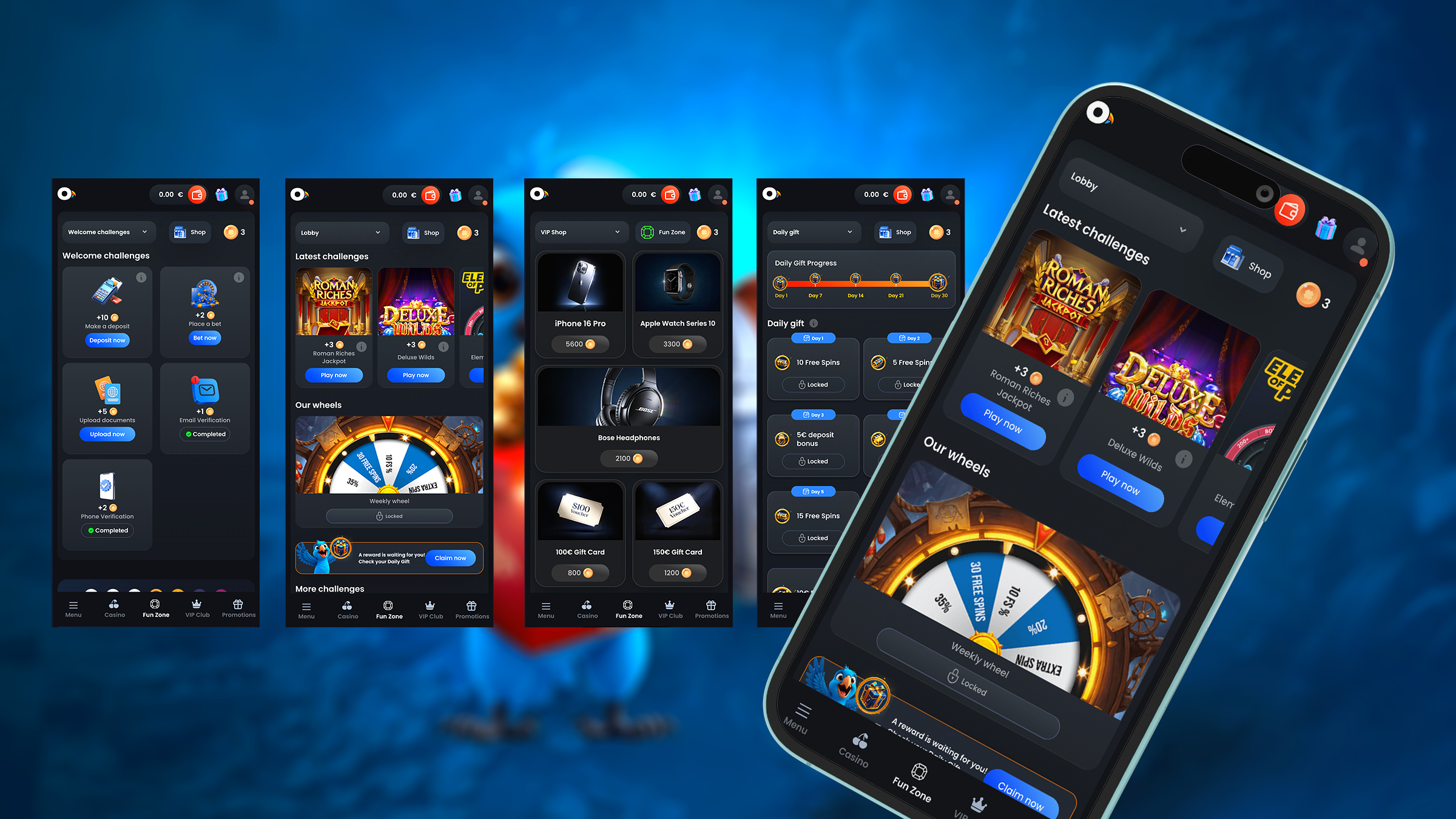
Gamification layer — designed and shipped Weekly Challenges, Daily Challenges, Wheel of Fortune, Fun Zone — all inspired by mobile-game loop mechanics to drive return engagement.
Visual communication — production-ready banner suite for promos and acquisition campaigns.
Email templates — full CRM email system aligned with the new gamified narrative.
Spotlight · Fun Zone
A self-contained gamification layer to turn one-shot deposits into return-driven sessions.
Fun Zone is the dedicated tab where every retention mechanic lives in one place — designed mobile-first, scoped for live ops, and tied to a single virtual currency the player accumulates through play.
Welcome Challenges — gamified onboarding (deposit, bet, KYC, email/phone verification) with explicit reward count + clear CTA per step.
Latest & More Challenges — game-specific quests (Roman Riches Jackpot, Deluxe Wilds, Element of…) seeded weekly to drive trial & cross-sell.
Our Wheels — Weekly & Daily Wheel of Fortune, locked-until-eligible mechanic to push wagering thresholds without breaking the fun.
Daily Gift · 30-day ladder — incremental free spins / bonus rewards across a 30-day streak, with visible progress + locked-state preview.
Fun Zone Shop — virtual-currency redemption: real-world goods (iPhone 16 Pro, Apple Watch, Bose), gift cards, free spins. Currency earned only inside Fun Zone.
Persistent reward CTA — sticky "A reward is waiting for you" prompt with mascot — surfaces unclaimed daily gifts without nagging.
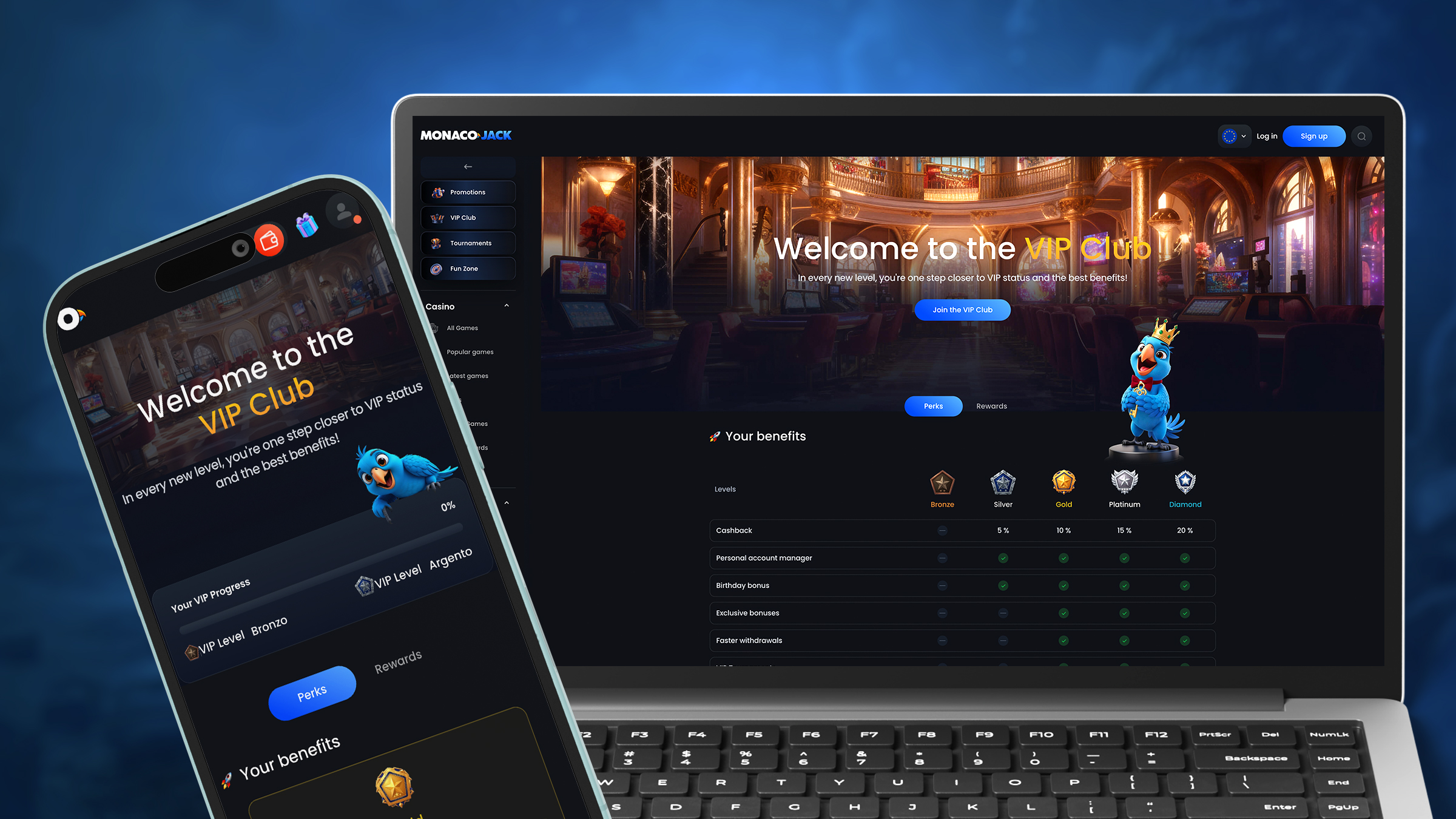
Spotlight · VIP Club
A 5-tier loyalty program that makes status feel earned — not bought.
The VIP Club is the long-tail counterpart to Fun Zone: where Fun Zone drives daily/weekly engagement, VIP Club captures the recurring high-value player with progressive perks, a personal-touch tier, and a clear ladder from first deposit to Diamond.
5-tier ladder — Bronze → Silver → Gold → Platinum → Diamond, each with its own pentagonal medal + colour code, surfaced consistently across web & mobile.
Cashback escalation — 5% → 10% → 15% → 20% across tiers. Headline benefit, intentionally readable at a glance in the comparison table.
Perks vs Rewards split — toggled view separates structural benefits (manager, birthday bonus, faster withdrawals) from earnable items, so the value prop stays clean.
Personal account manager — kicks in from Silver upward — the moment the program shifts from automated rewards to human relationship.
Mascot-led narrative — the crowned parrot is the guide across every state (welcome, progress 0%, level-up, Diamond unlocked) — keeps a "fun" iGaming tone even on a serious loyalty system.
Web + mobile parity — same hero, same tier table, same CTA hierarchy — designed once, shipped responsive, with the side rail collapsing into the bottom nav on mobile.
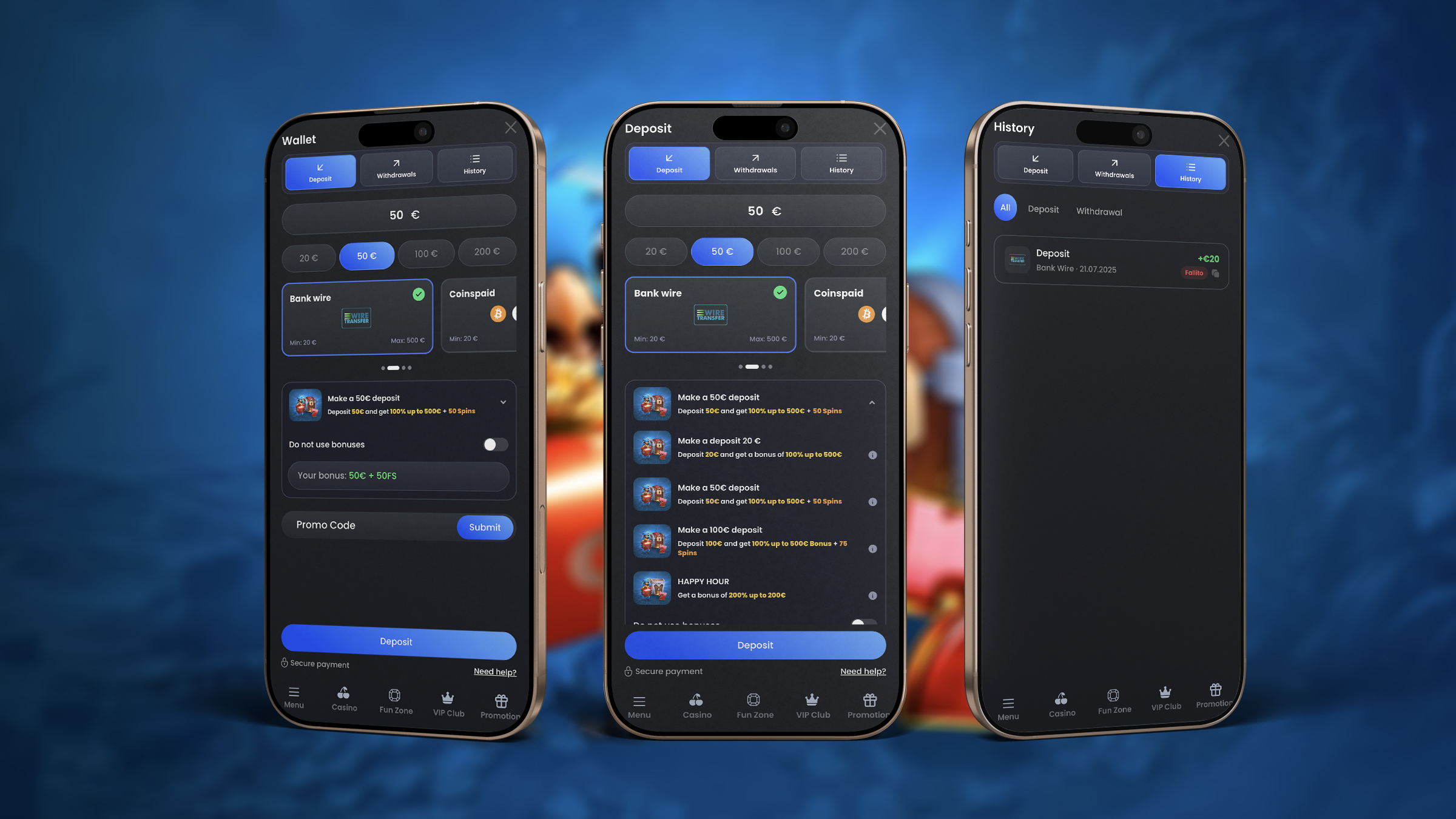
Spotlight · Cashier
The cashier is where conversions live or die — designed mobile-first, end-to-end.
Deposit, Withdrawal and History live in the same wallet shell — three tabs, one mental model. The whole flow was rebuilt mobile-first to remove the most expensive friction in iGaming: the moment between "I want to deposit" and "the money is in my account".
One wallet, three tabs — Deposit / Withdrawals / History share the same chrome, same nav, same close target. Players never get lost.
Quick-amount chips — 20€ / 50€ / 100€ / 200€ pre-filled — typing only when the player wants a custom amount. Cuts taps to deposit by ~40%.
Payment carousel with Min/Max — Bank wire, Coinspaid & co. shown as cards with explicit ranges and selected-state checkmark. No silent rejections at submit time.
Bonus picker inline — collapsible list of every active offer (deposit match, free spins, Happy Hour 200%) — the player sees exactly what they'll get before pressing Deposit.
"Do not use bonuses" toggle + Promo Code field — explicit opt-out for high-volume players, separated from the offer list so it never blocks the main flow.
History with honest status — All / Deposit / Withdrawal filter, status pills (incl. Failed) shown clearly. Trust comes from transparency on the bad days, not the good ones.
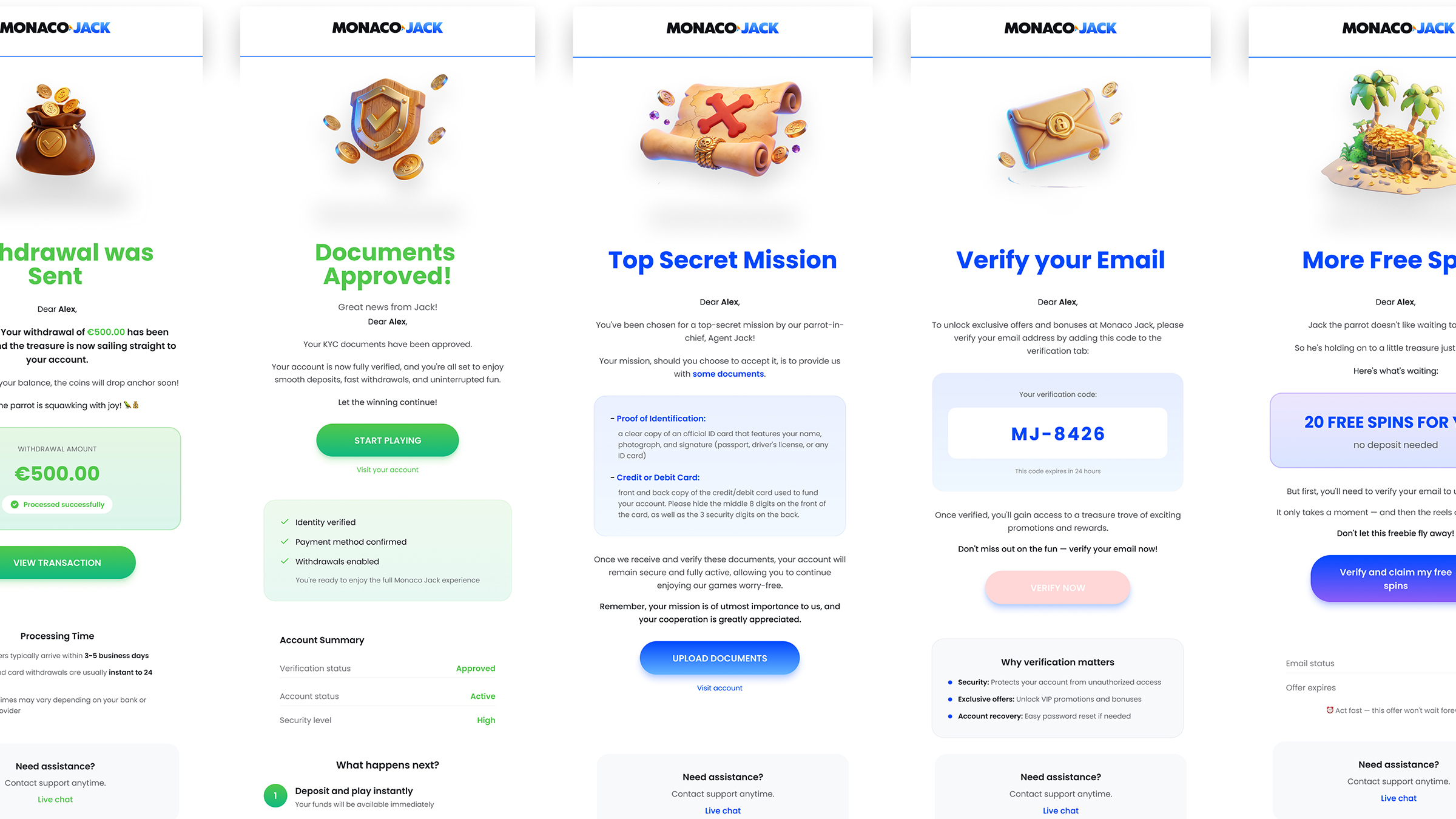
Spotlight · CRM Email Templates
A unified template system that turns transactional emails into brand moments.
The Monaco Jack CRM email suite is built on a single modular template — same header, same footer, same hierarchy. What changes is the colour, the illustration, and the voice. The mascot, Agent Jack the crowned parrot, is the recurring character that makes a KYC reminder feel like a treasure-hunt brief instead of a compliance email.
Branded header on every email — Monaco Jack logo + lime/blue accent line. Inbox-recognisable in one glance, before a single word is read.
Colour-coded by intent — green = transactional success (withdrawal sent, KYC approved); blue = action required (verify, upload docs); purple = incentive (free spins, no-deposit bonus). Players parse priority before reading.
3D illustration system — money bag, treasure map, locked envelope, treasure island — same style language across every send. Reinforces the iGaming-as-adventure tone established in the site brand.
Mascot-led storytelling — Agent Jack the parrot narrates: "Top Secret Mission" for KYC, "the parrot is squawking with joy" for a paid withdrawal, "Jack doesn't like waiting" for free spins. CRM as character, not paperwork.
Modular content blocks — header → illustration → headline → body → CTA → details card → support footer. Same skeleton, different content. New campaigns ship in hours, not days.
Always-on support footer — "Need assistance? · Live chat" closes every email. Trust + support frictionless, regardless of the email's intent.
Promotions · Banner Suite
Production-ready promo banners shipped for paid acquisition, on-site campaigns, and gamification touchpoints. Each one designed to live across web + email + push — same narrative, different format.
Scroll to explore · 6 promos →
Results & Impact
~30%
Drop-off reduction on mobile deposit flow
+22%
Session length post gamification rollout
Live
All deliverables shipped to production
Return-driven
Daily / weekly engagement loops added
What I Delivered
UX redesign — general interface, side menu, navigation flow consistency
Mobile experience — optimised deposit / withdrawal UX + user profile area
Gamification system — Weekly & Daily Challenges, Wheel of Fortune, Fun Zone
Banner suite — visual communication for paid + onboarding promos
Email templates — CRM system aligned with the gamified narrative
WANT TO KNOW MORE?
Interested in this project or want to discuss how I can bring the same level of thinking to your product?
Brand · UX · Casino · Live · Slots · Cashback Pool · All Markets
A cashback pool mechanic nobody had seen before: instead of a flat bonus, players share a live pot every month, wagering-free. I designed the brand and the UX layer that makes that feel real instead of like fine print — live now.
Brand + UX End-to-End
Mar 2025 — Present
Live
Solo External Designer
The Brief
Kickback was building a new casino around a cashback pool mechanic — players earn back a share of the platform's revenue based on activity and tier, instead of the usual flat % cashback with wagering requirements attached. The hard part wasn't the math, it was making a monthly revenue-share formula feel like an actual reward rather than a spreadsheet line — a lean, pre-launch team needed one person to own brand and product together so the two never drifted apart.
Casino vertical with live games and slots, targeting all markets. Brand and product built out March — April 2025, soft launch followed as planned, ongoing collaboration since.
What I Did
Solo external designer, embedded with the founding team. I owned brand and UX end-to-end, with a specific focus on making the cashback mechanic feel like a real reward instead of a number:
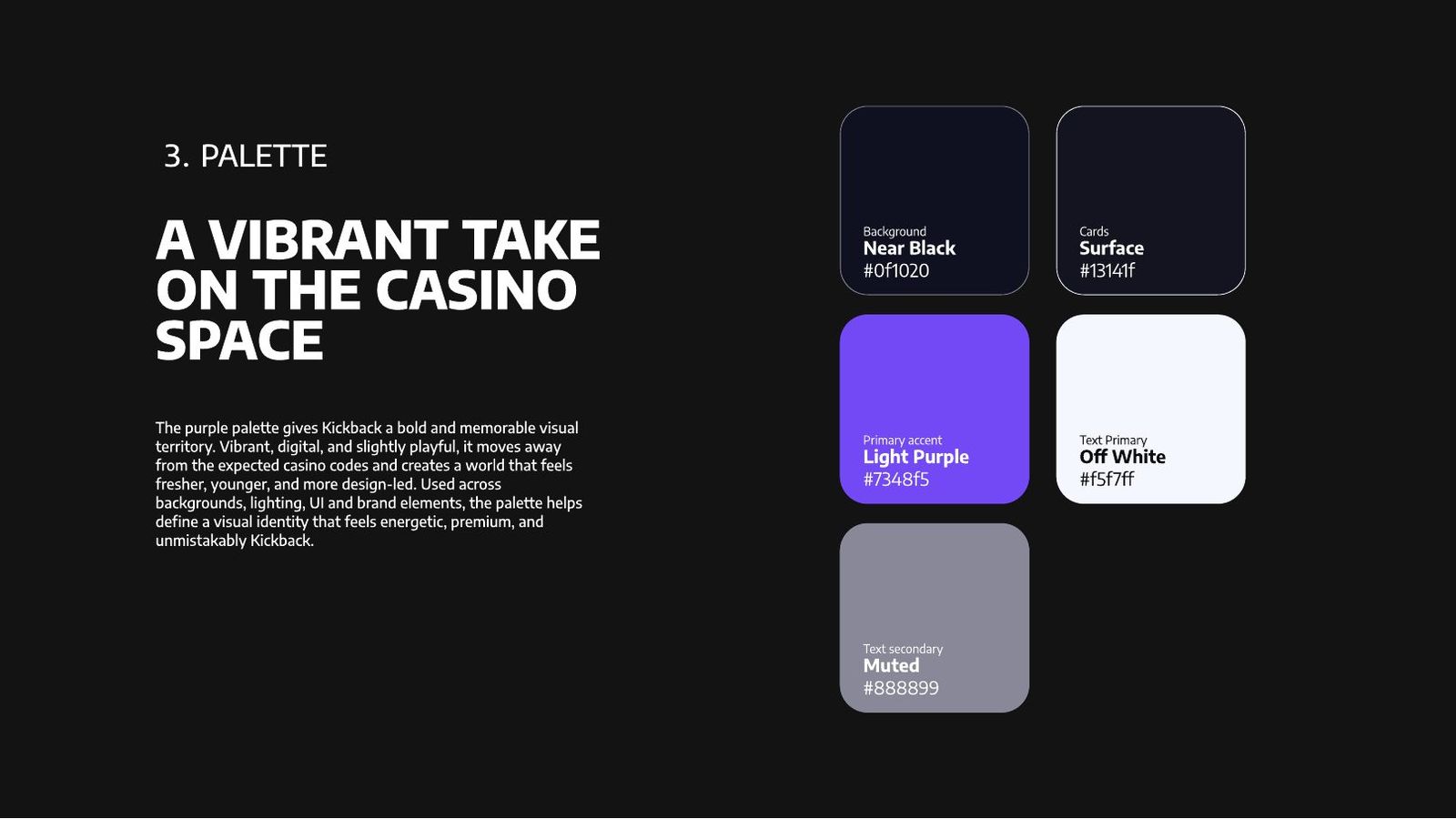
Brand identity from scratch — naming validation, logo system, typography, colour palette, tone of voice. Built to read as premium and player-first, not corporate.
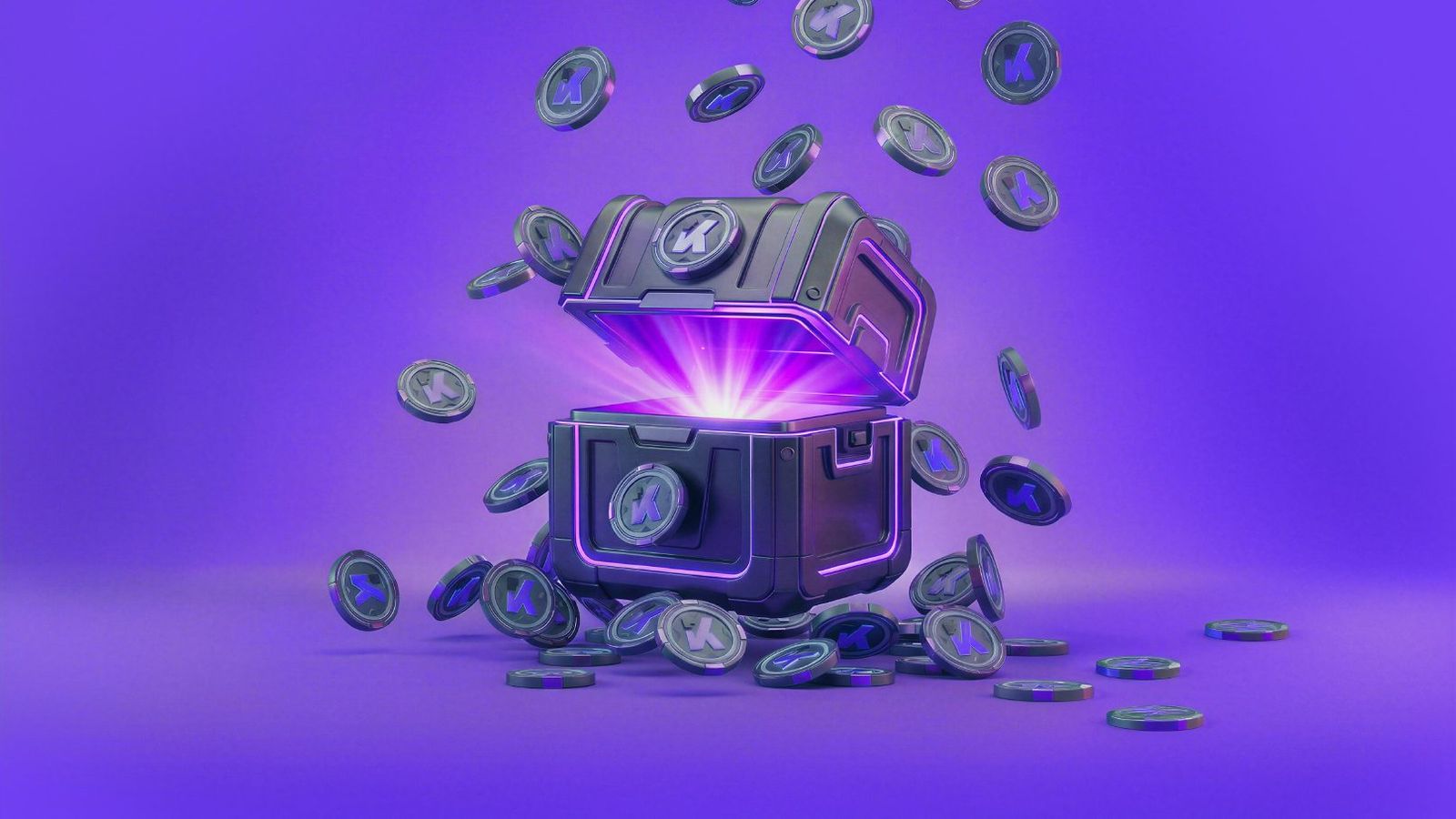
Custom lootbox visual system — the signature solve. Translated the abstract "share of the pool" mechanic into a tangible, openable lootbox metaphor players already understand from gaming culture.
UX for the cashback flow — designed how players see the pool fill, track their share, and claim their rewards. The mechanic becomes a loop, not a footnote.
Product UI — lobby, game tiles, account area, deposit / withdrawal, all states for desktop and mobile.
Marketing & campaign visuals — landing pages, banner suite, onboarding promos, social templates aligned to the lootbox visual language.
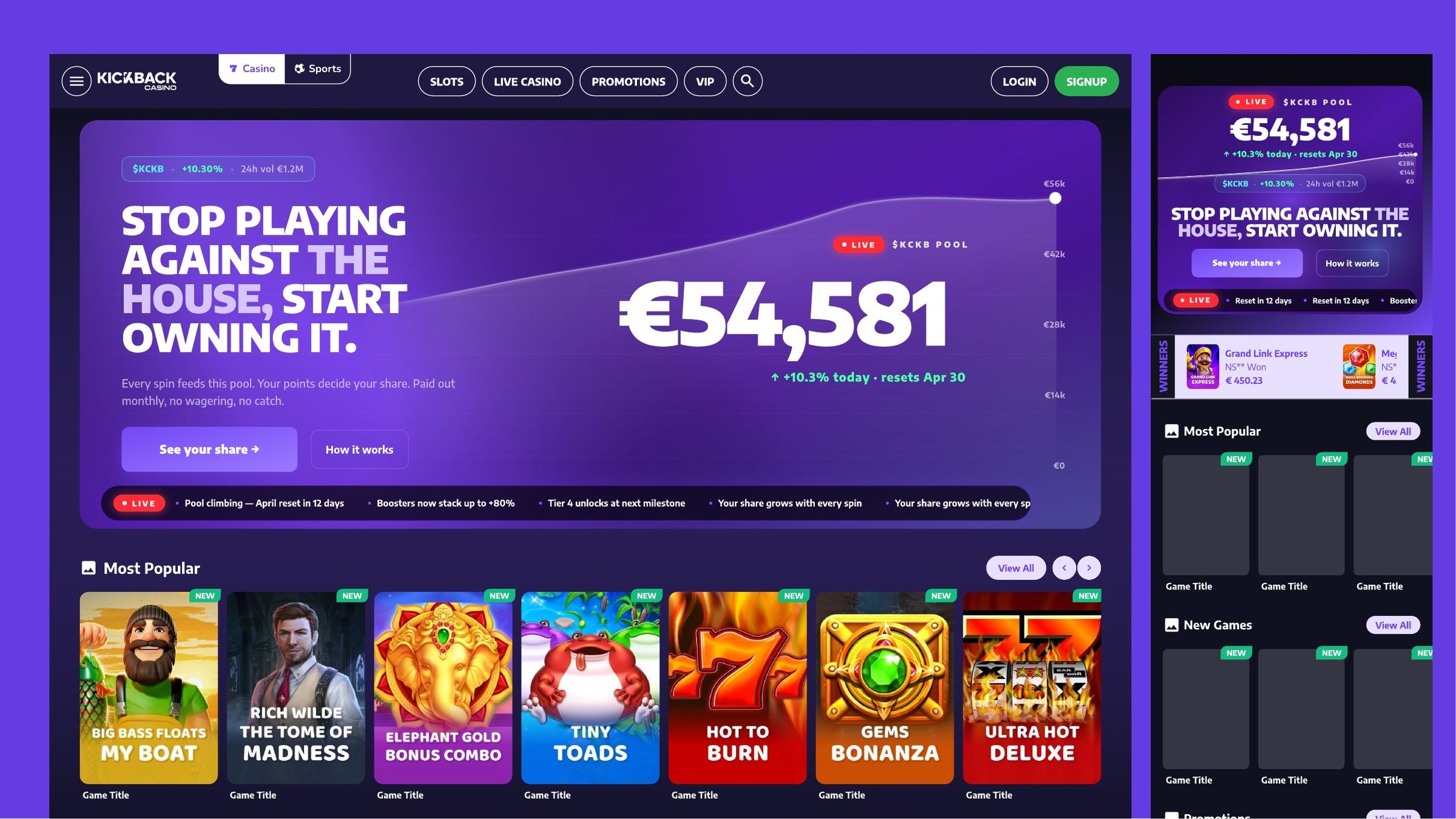
The Product · Lobby
A casino lobby that leads with the pool, not with a welcome bonus.
The live pool sits where every other casino puts its deposit offer: a real number, moving like a market, with a chart behind it. The games come second. On mobile the same module becomes the first thing you thumb past.
● Desktop + mobile lobby · live pool hero · game rails
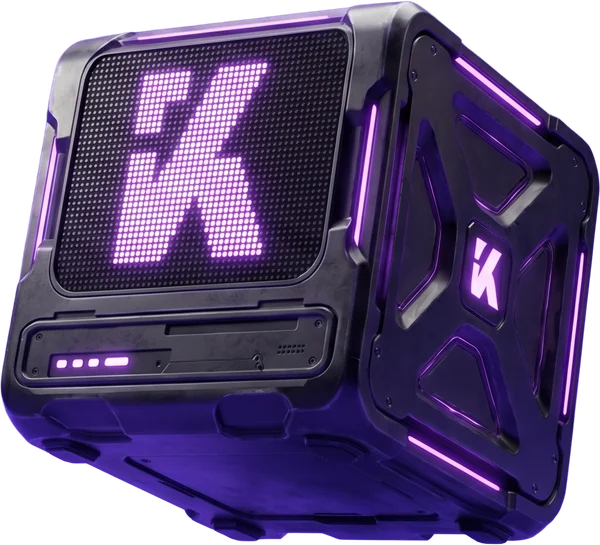
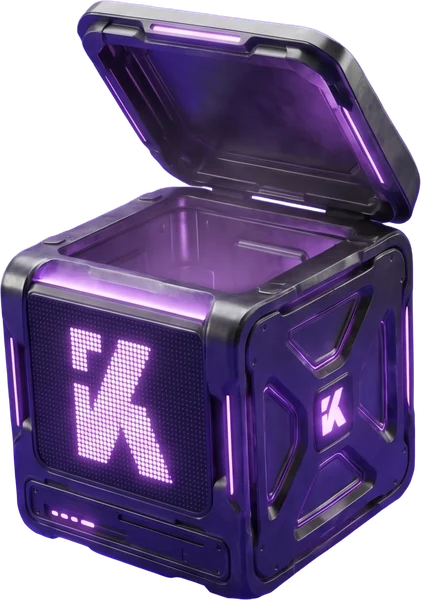
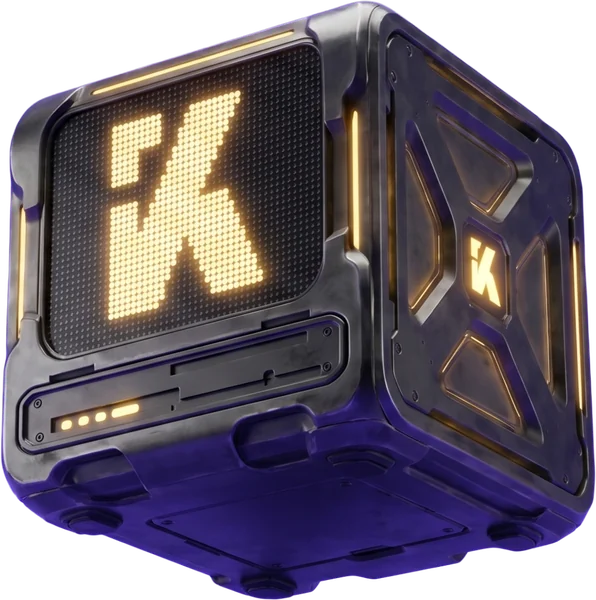
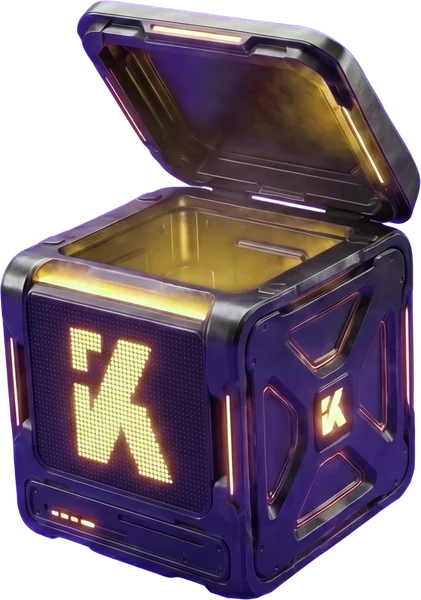
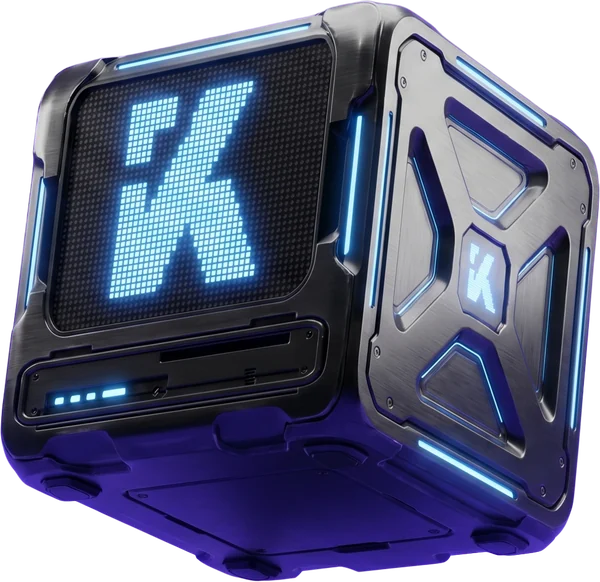
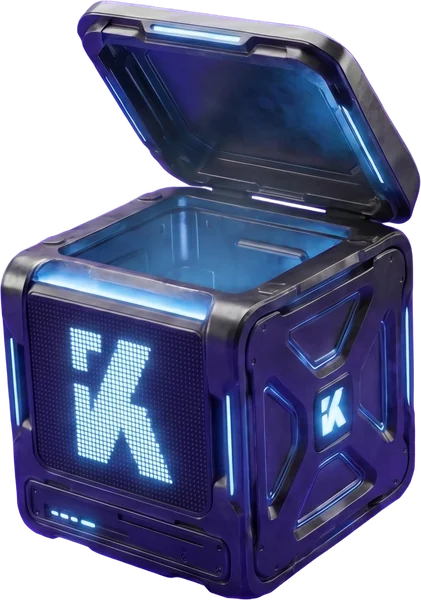
Signature Asset · The K-Box
A share of revenue is abstract. A box you open isn't.
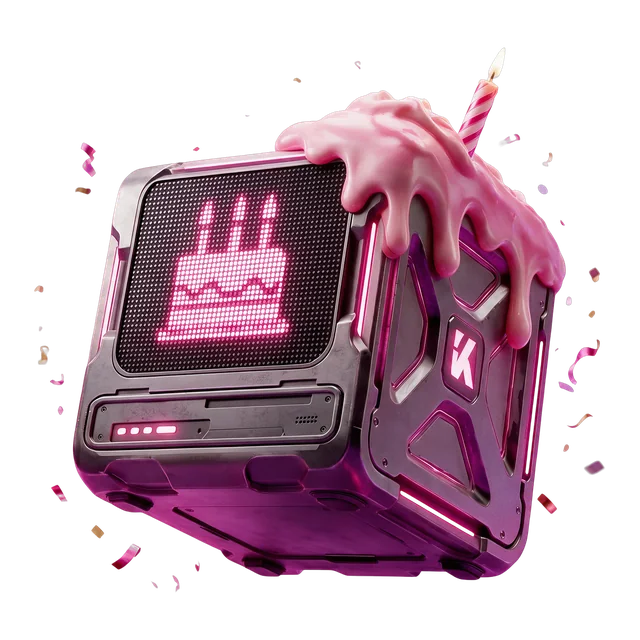
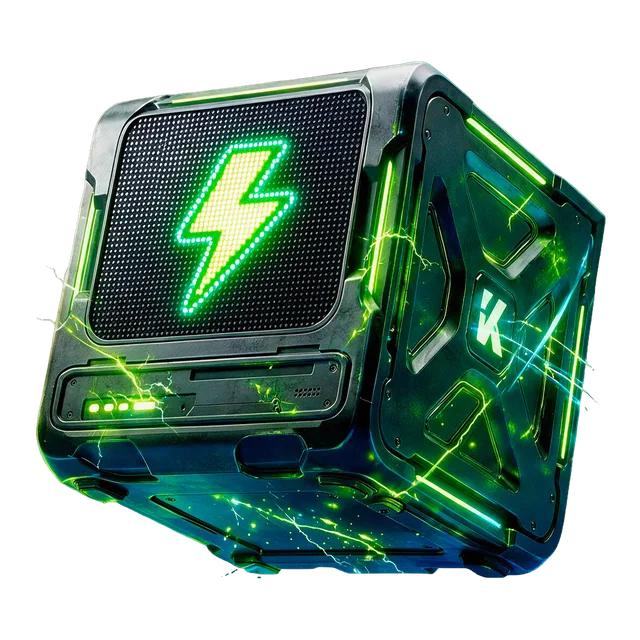
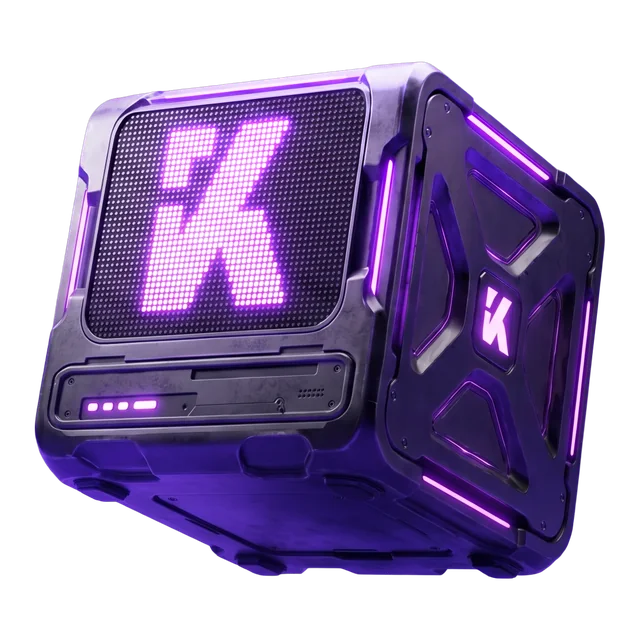
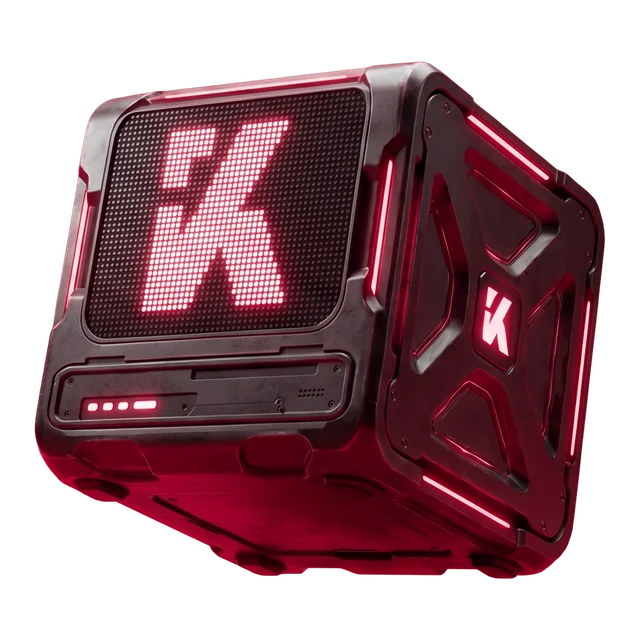
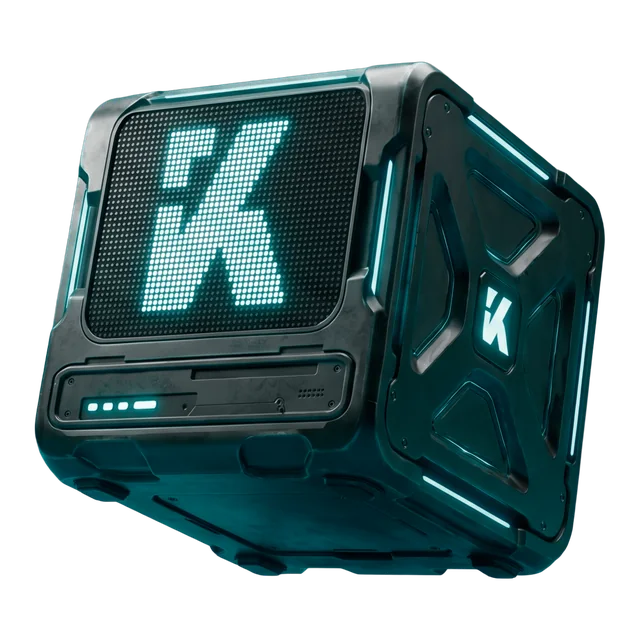
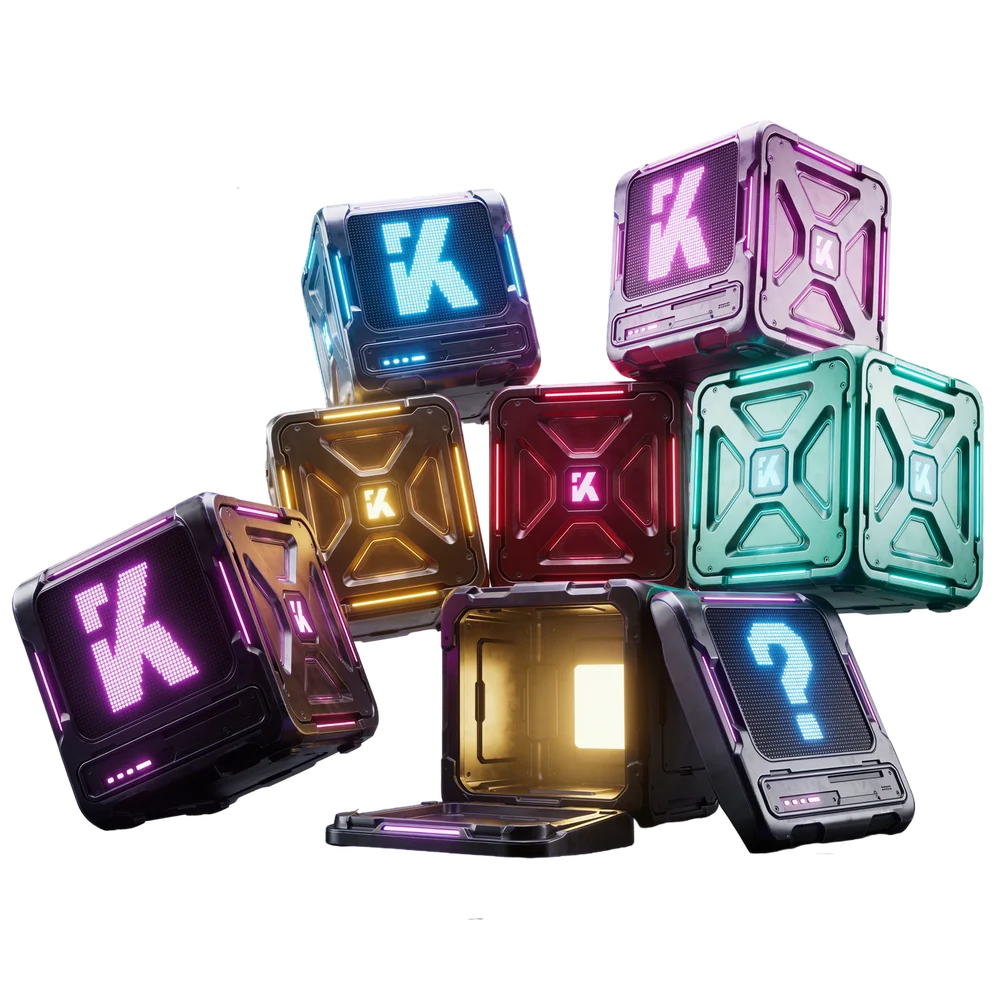
Boosters are how players grow their share of the pool, so they needed to feel like loot, not like a percentage in a table. I designed the K-Box: one hardware object, three tiers, each with its own light. Hover or tap to open them.
Hover · tap to open
+20%
Tiered booster
Loyalty
The more days you play, the higher the boost. From a 2-day starter to a 27+ day reward.
+20%
Tiered booster
Deposit
Monthly deposits push you up the ladder. €100 unlocks tier 1, €1,000+ takes you to the top.
+20%
Tiered booster
Insurance
Unlucky streak? Net loss turns into a bigger share. The harder the run, the heavier the rebound.
Your points boost
+0%
Birthday drop
Boost surge
Violet edition
Crimson edition
Teal edition
The Vault
Secret boosters live in the dark.
Beyond the three tiers, hidden boxes drop across the site: seasonal editions, birthday drops, surprise surges. The system scales from one object, so every new promo is a new colourway, not a new illustration.
One 3D master · 8+ colourways · open / closed states · used across product, landing pages and paid social.
Spotlight · 3D Hero · Live
A real-time 3D hero, built to live in the browser.
The Kickback hero is a custom 3D scene running in WebGL — the brand "K" device, idle-floating, drag-interactive, with a breathing LED pulse every 5 seconds.
Integration · Art × Engineering
Shipped as a Three.js scene — engineered to feel premium, not gimmicky.
The brief was to give the K presence — make it feel like a real product object you can pick up, not a banner image. That meant treating it like an industrial design piece: surface materials, lighting, subtle motion, weight in the idle, response in the drag. Then making all of that ship inside 1 second on mobile.
▸ Artistic direction
Lighting rig as character — lavender key + cyan fill + rim, modulated per frame so the K appears to breathe with the brand palette. Light is the brand voice; the geometry just supports it.
LED pulse as heartbeat — emissive intensity ramps every 5 seconds. Not a decoration — a rhythm that tells the page it's alive. Players notice it without naming it.
Idle weight — compound sin-wave float (±8°), slow, asymmetric. Reads like a physical object suspended in zero-g, not a Lottie loop.
Drag-and-return — user spins it, releases, and 1.5s later it slides back to hero pose. Gives the player ownership without losing the brand framing.
▸ Engineering & performance
glTF 2.0 + Draco — 28MB / 967k tris source simplified to ~77k tris via meshoptimizer and Draco-compressed to 670KB on the wire. Loads under 1s on 4G.
Three.js r160 via ESM importmap, single canvas per variant, pixel ratio capped at 2 for retina without melting low-end GPUs.
Render gating — inactive variants halt their loop on picker switch; render pauses entirely when the tab is hidden. Battery-aware on mobile.
▸ The result
The K stops being a logo and becomes the brand object. It anchors the page, sets the tonal register (premium, dark, electric), and gives players a single thing to focus on before the casino noise begins — it reads like a product launch page, not a casino lobby, which is exactly what it had to compete with for attention.
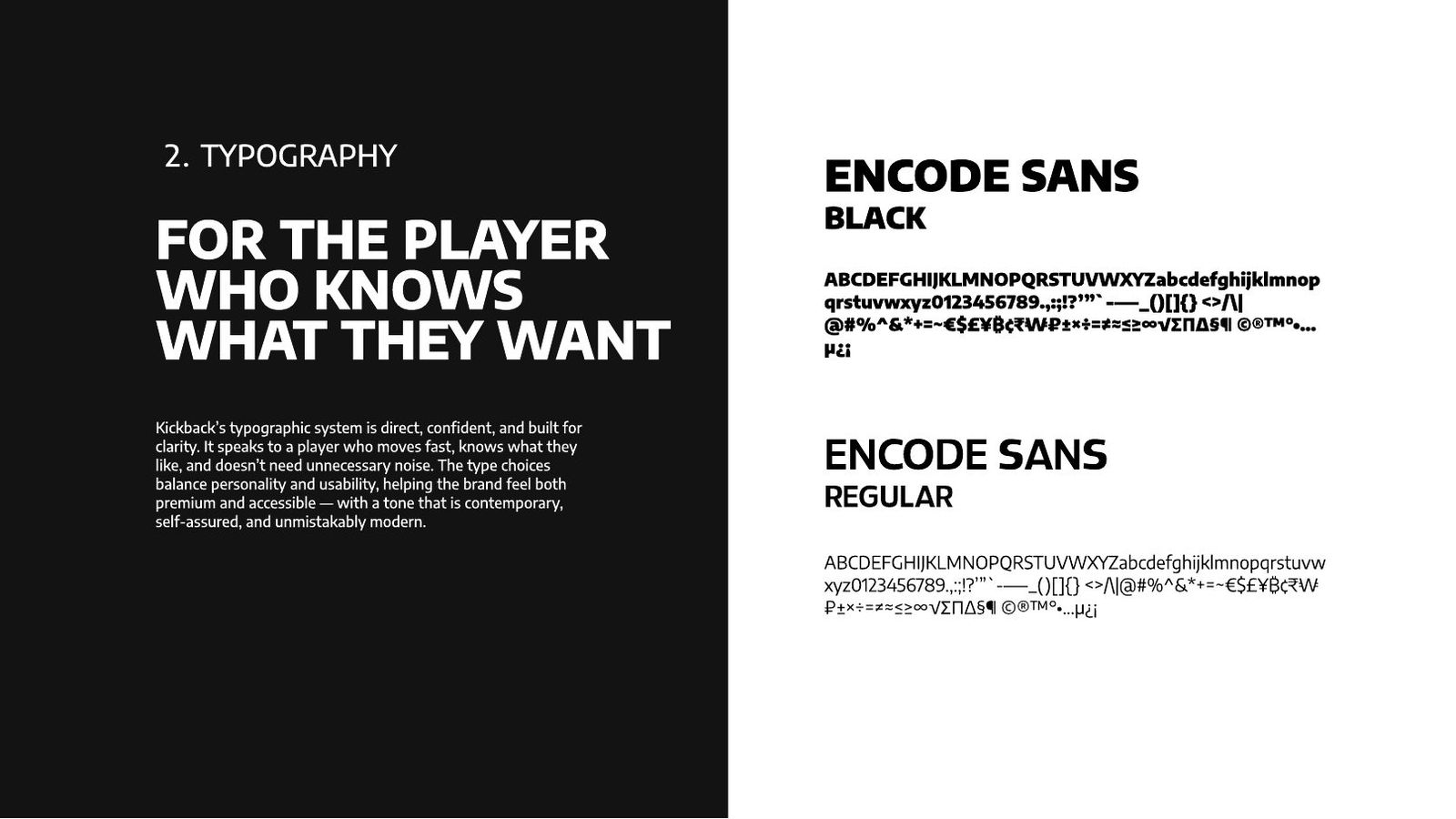
Brand Guidelines · 43 pages
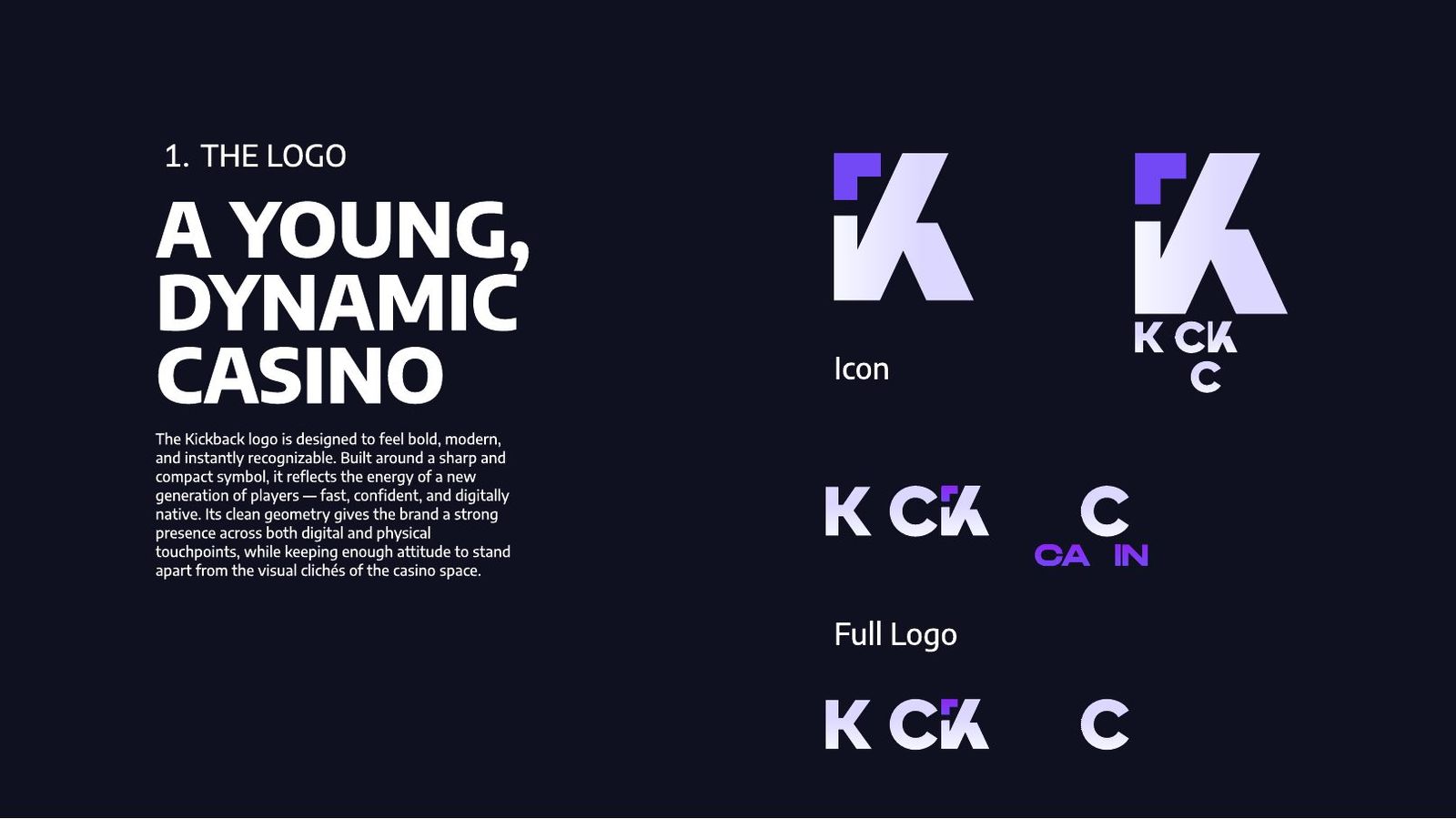
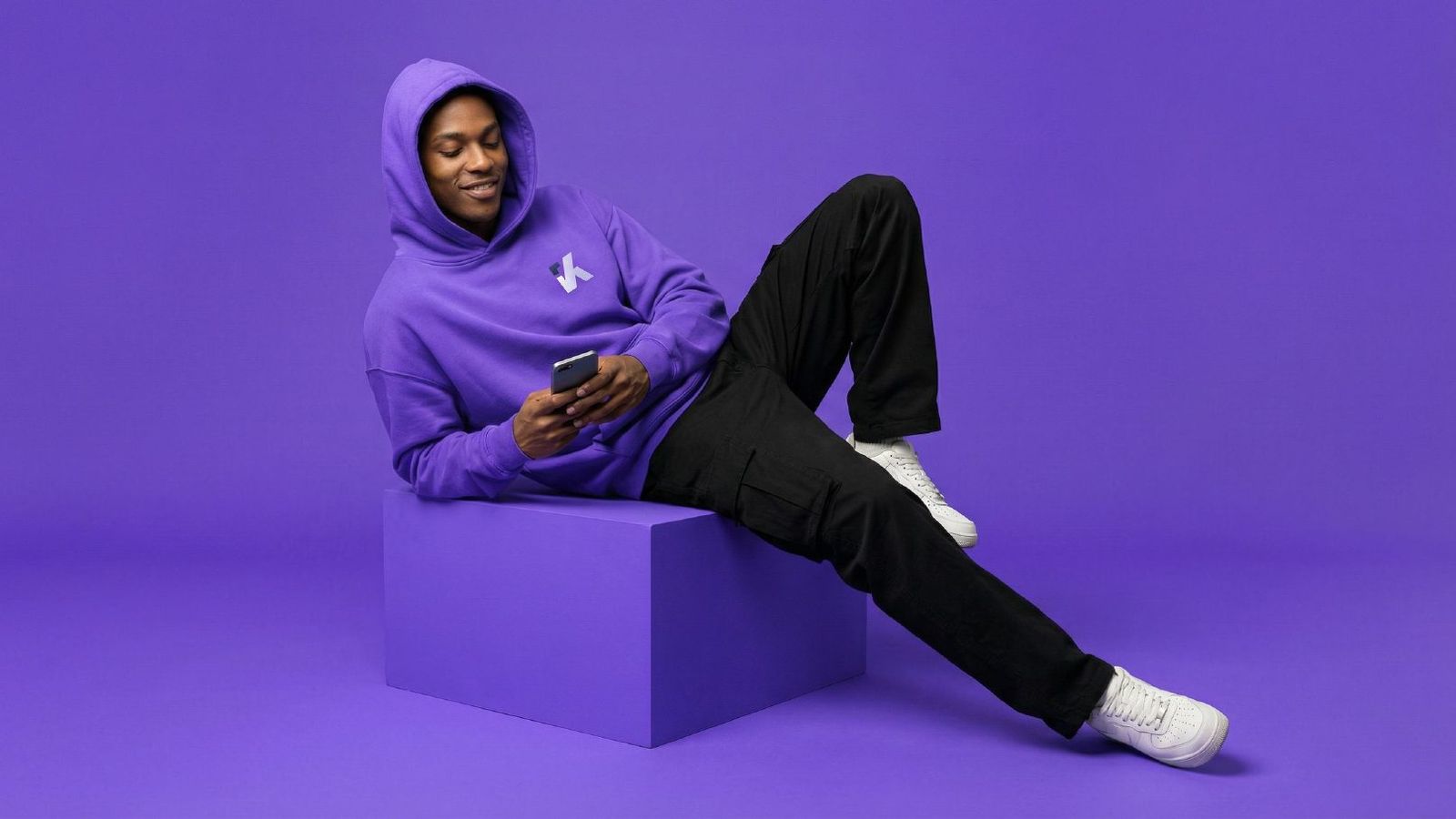
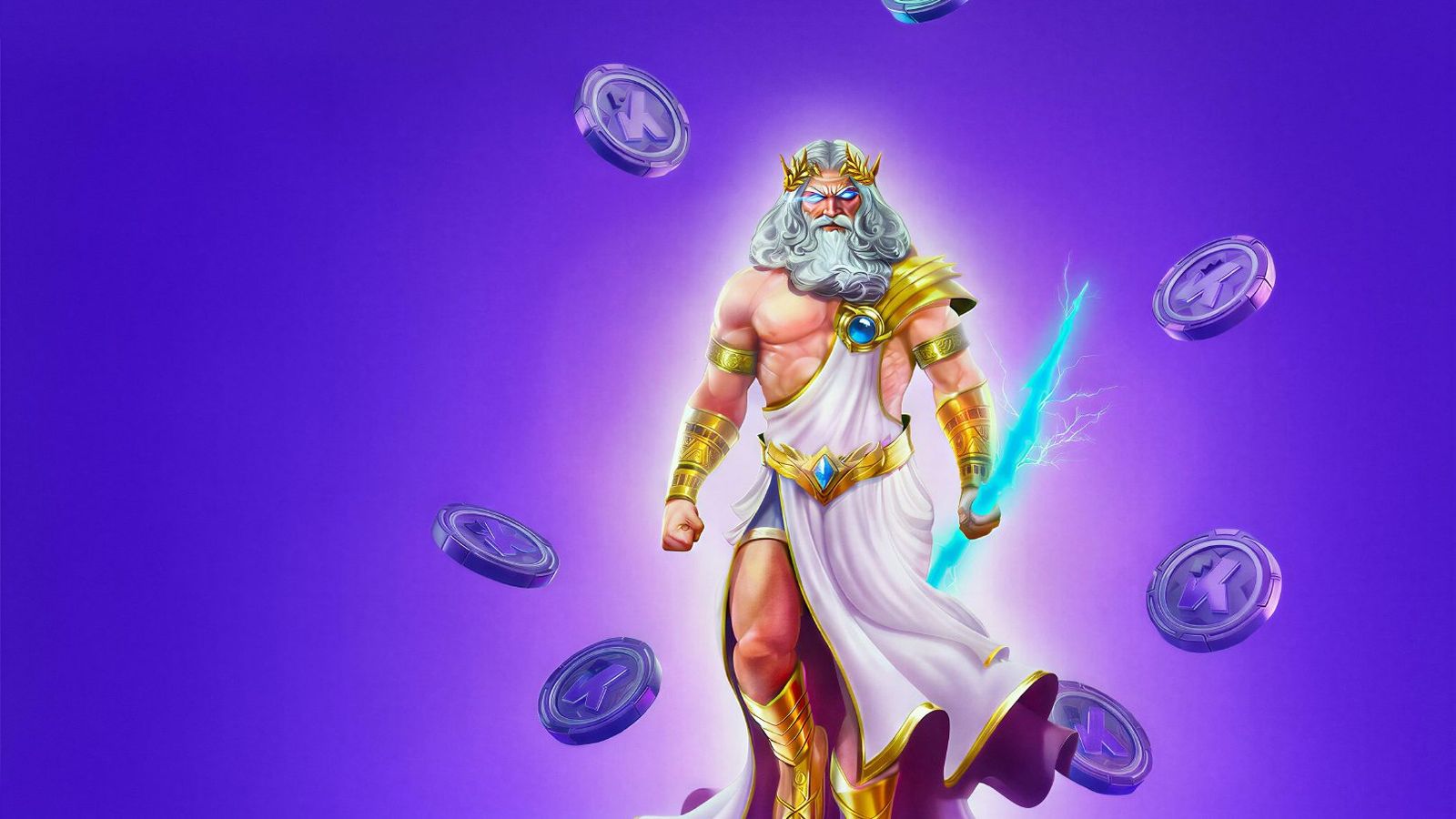
A young, dynamic casino. One violet, one K, one attitude.
The brand book covers the logo system, Encode Sans typography, a palette built around a single violet, a photographic direction with the K on real people, and every application from game banners to the website. Click any page to open it.
The landing page walks through the whole mechanic: live pool, four-step "how it works", the three boosters, a head-to-head against 40–70x wagering, and an FAQ. The account area turns it personal: your points, your share in euros, your active boosters.
Kickback Casino — Pool
● Landing · Kickback Pool · full page, auto-scroll · hover to pause
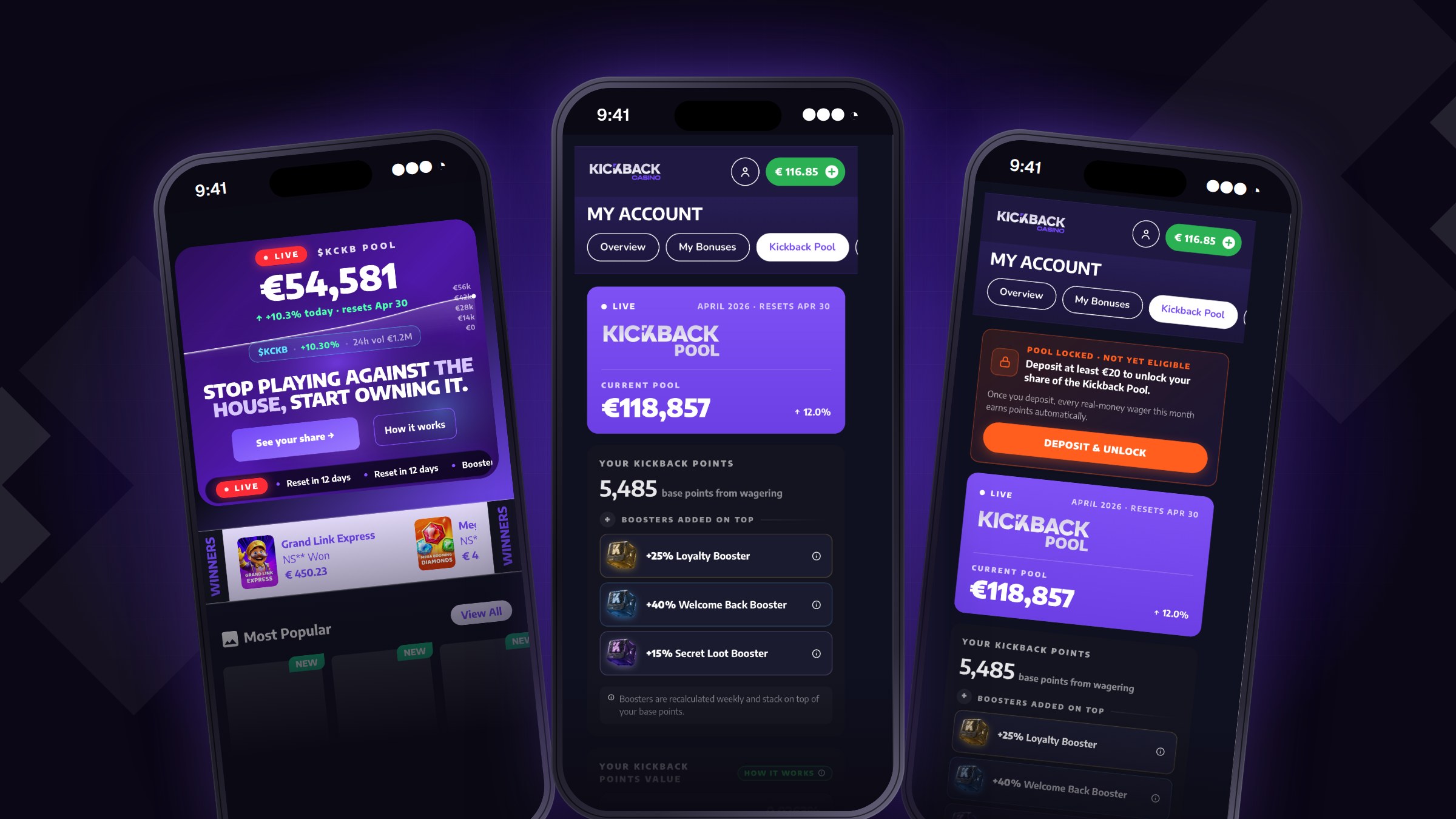
● My account · mobile
Kickback Casino — My account · Kickback Pool
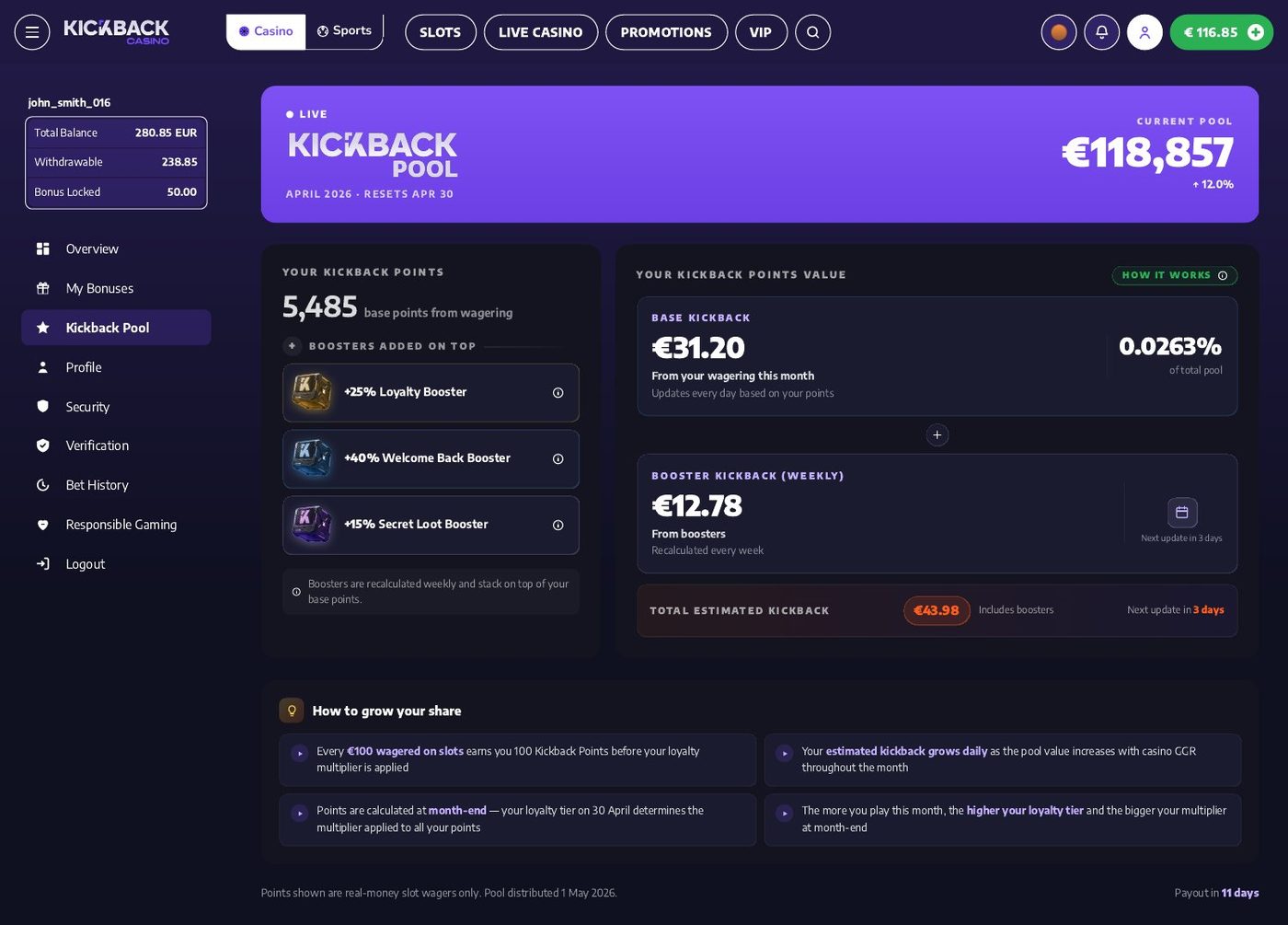
● My account · desktop · points, share in €, active boosters, weekly booster kickback
Mobile Site
Built for the thumb: the pool, your share, one tap to unlock.
On mobile the live pool leads the lobby, the account turns the mechanic into your own numbers, and the locked state tells you exactly what unlocks your share. Three screens, one system.
● Lobby · My account · Pool locked state
Paid Social · Meta
Five messages, every format, animated.
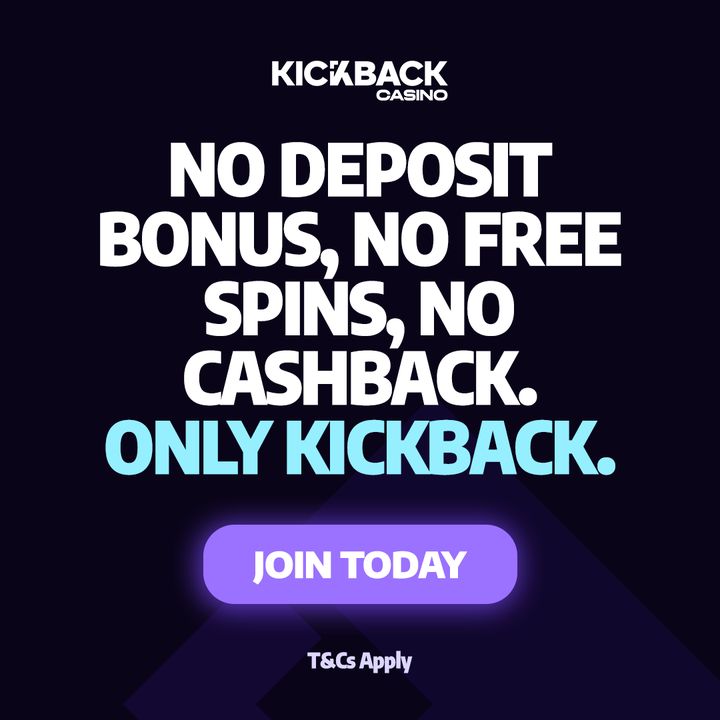
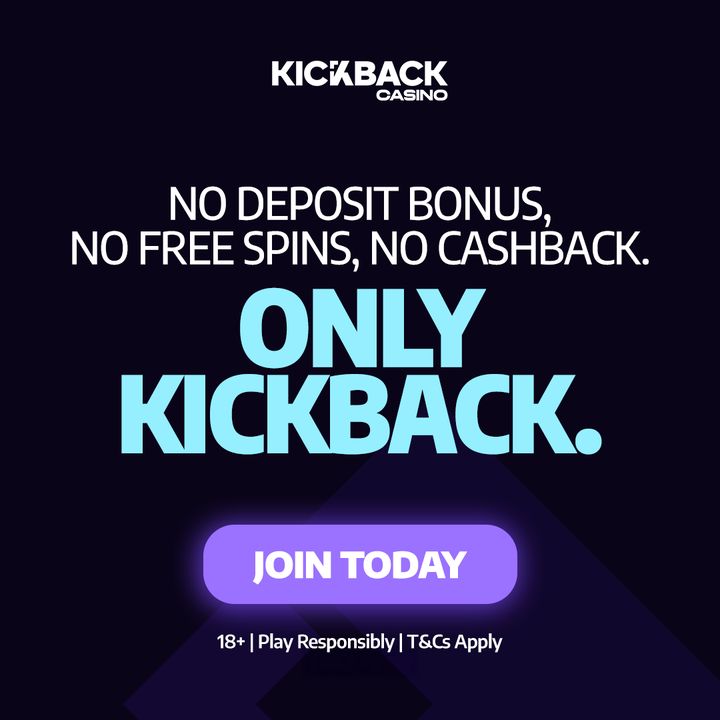
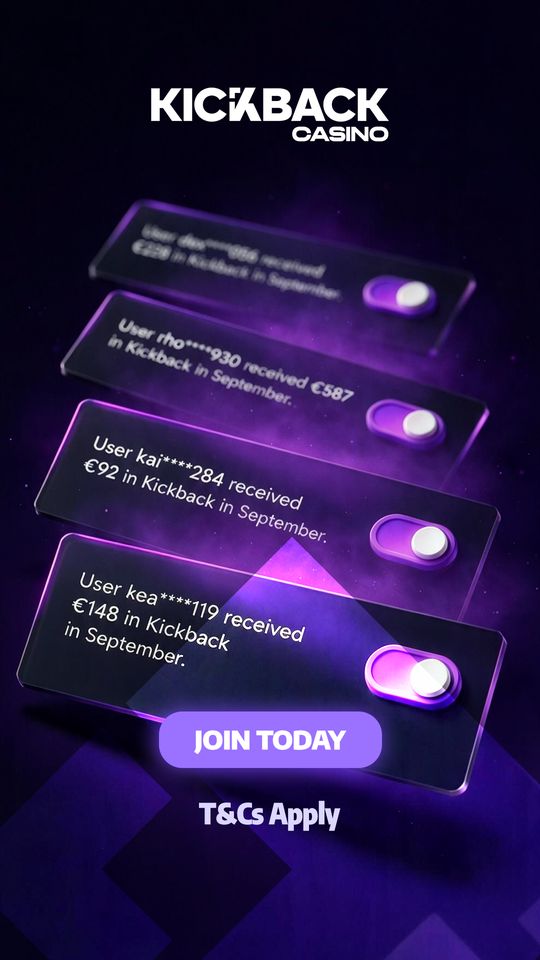
The campaign runs on five ideas: every spin grows the pool, take your share of the live pool, stop playing against the house, 100% wager-free, unlock boosters. Each one ships as an animated ad in 1:1, 4:5, 9:16 and 1.91:1, plus static variants.
Every spin
Live pool
Stop the house
Unlock boosters
Unlock boosters · open
Wager-free
● Feed 4:5 · square 1:1 · stories 9:16
Motion · Brand Spots
The K-Box, the pool and the games, in motion.
Boost stack
K-Box reveal
Game promo
The pool
Results & Impact
6 weeks
Brand from zero to founder approval
Live
Soft launch shipped, on schedule
0x
Wagering requirement on the pool payout
12+ months
Ongoing collaboration post-launch
What I Delivered
Full brand identity — logo system, typography, colour palette, voice & tone, brand book
Custom lootbox visual system — the signature mechanic translated into an openable, gamified visual
Backend ready, no frontend, no launch strategy. I designed the entire user-facing layer — and turned a B2B prop-firm engine into a B2C-ready product.
Brand + UX/UI End-to-End
May 2025 — Present
Pre-launch · Q2 2026
Principal Designer
The Brief
Sport Challenge Tech had a sophisticated backend running a prop-firm model adapted to sports betting — a hybrid that didn't exist in market. The engineering side was solid. The problem: no frontend, no brand, no narrative. They didn't know how to make a complex B2B mechanic feel approachable to sports fans.
I came in as Principal Designer with one mission: take a backend product and ship it as a complete, recognisable, market-ready experience — fit for both B2B partners and B2C end users.
What I Did
Solo on design, partnered with 1 PM and 2 developers (one backend, one frontend). I owned the entire visual + product layer end-to-end:
Brand identity from scratch — naming validation, logo system, typography, colour, voice. CEO-approved at first round, used as pitch deck for investors and B2B partners.
User journey mapping — translated the prop-firm model into 4 core flows that casual sports fans could understand without prior knowledge.
FigmaMake interactive prototype for onboarding + challenge selection + tracking — used as a live pitch tool for stakeholders.
Full UI library — every product screen across desktop and mobile, design system handed off to dev.
B2C narrative layer — copy, microcopy, marketing surfaces designed to make the product feel intuitive and rewarding, not technical.
Spotlight · Brand System
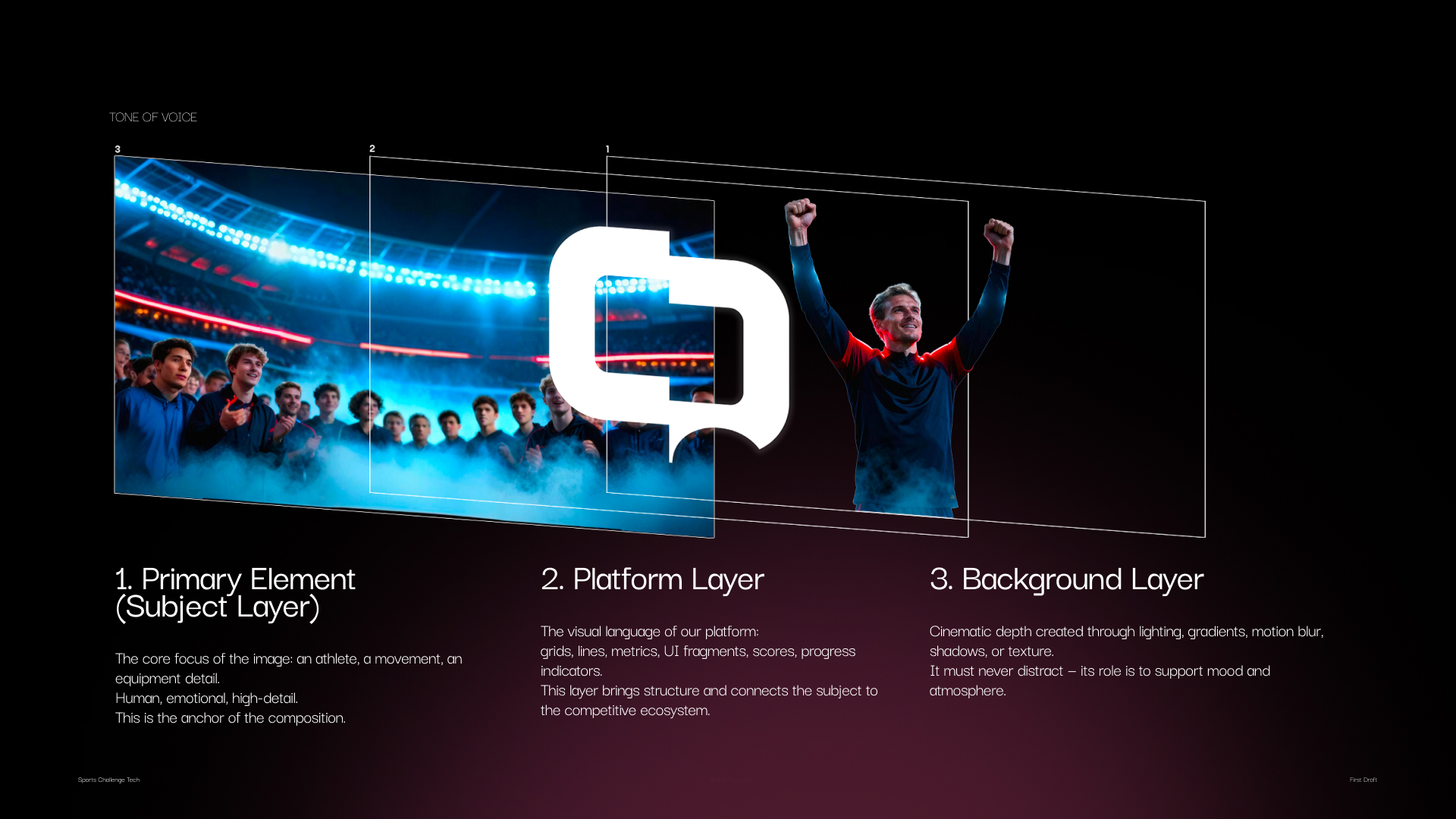
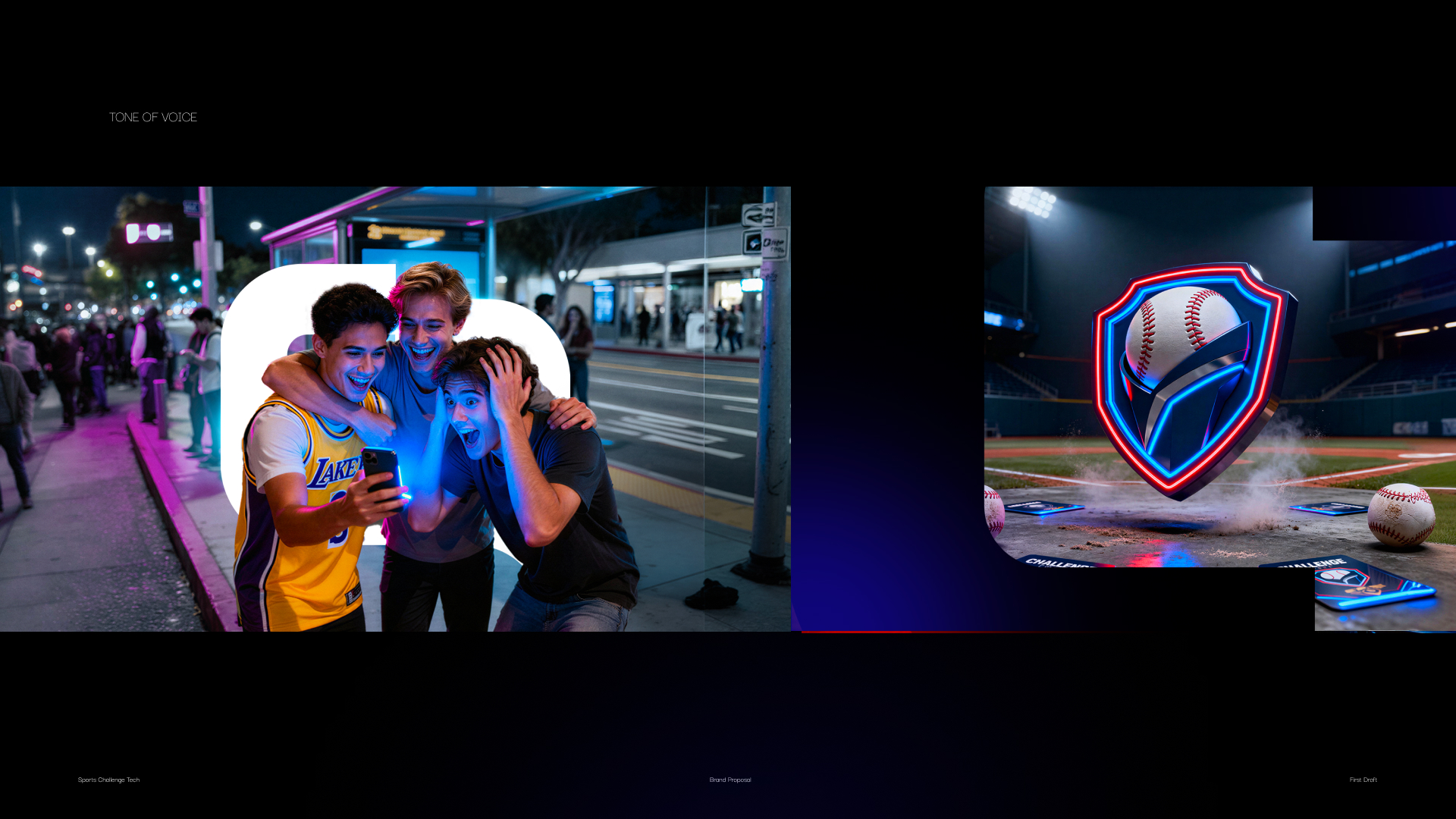
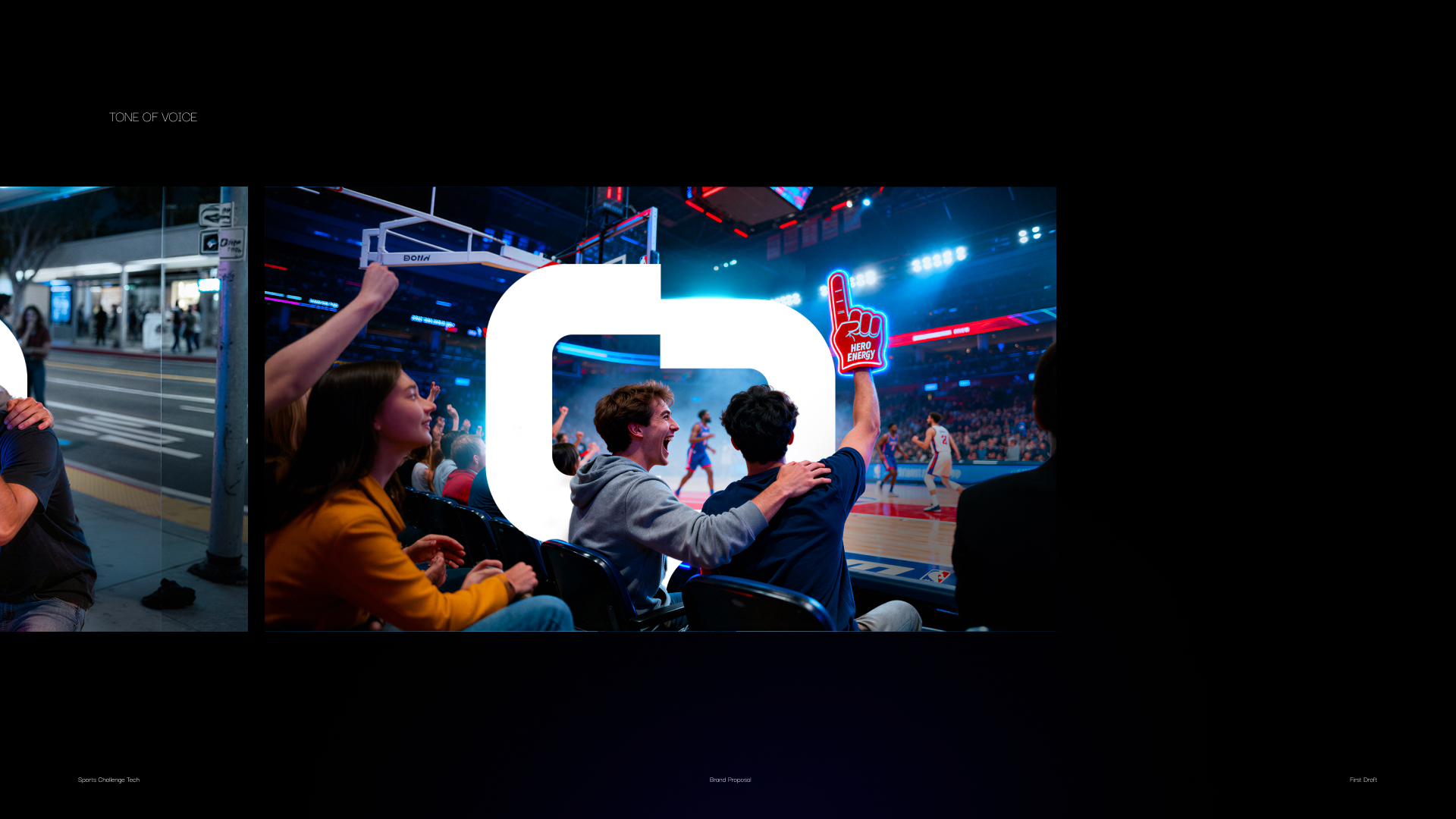
A cinematic brand system built around three composition layers — subject, platform, atmosphere.
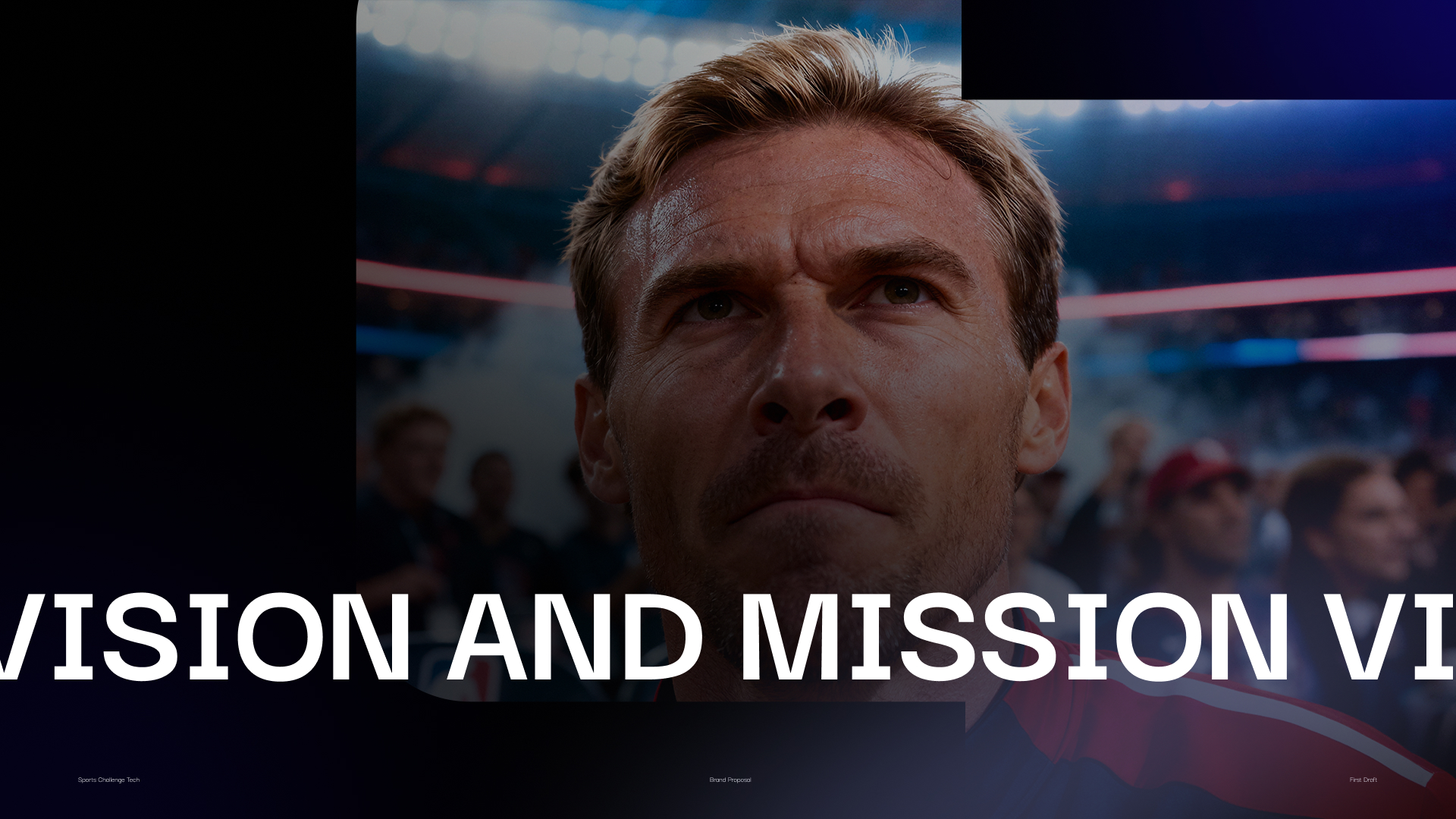
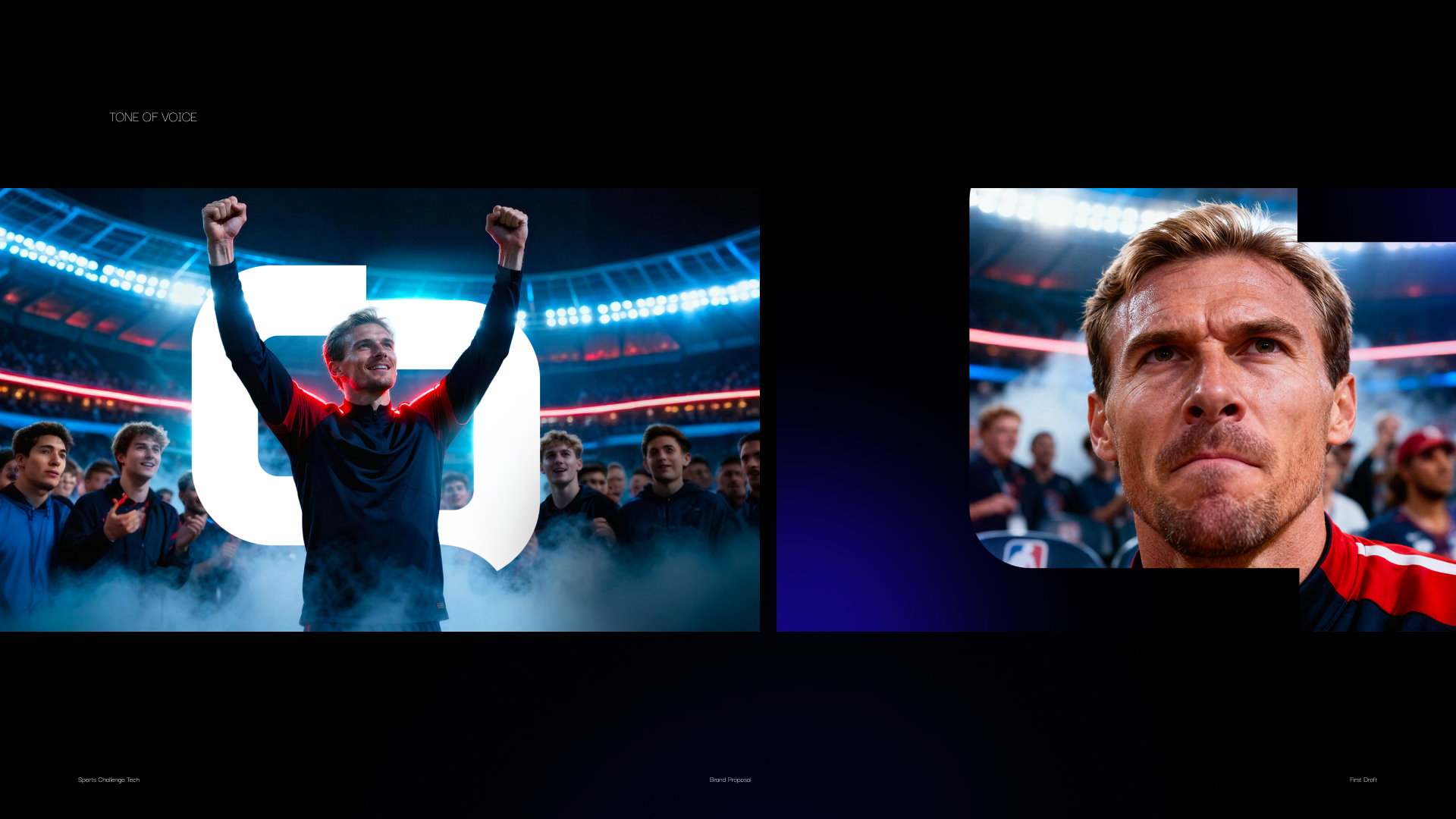
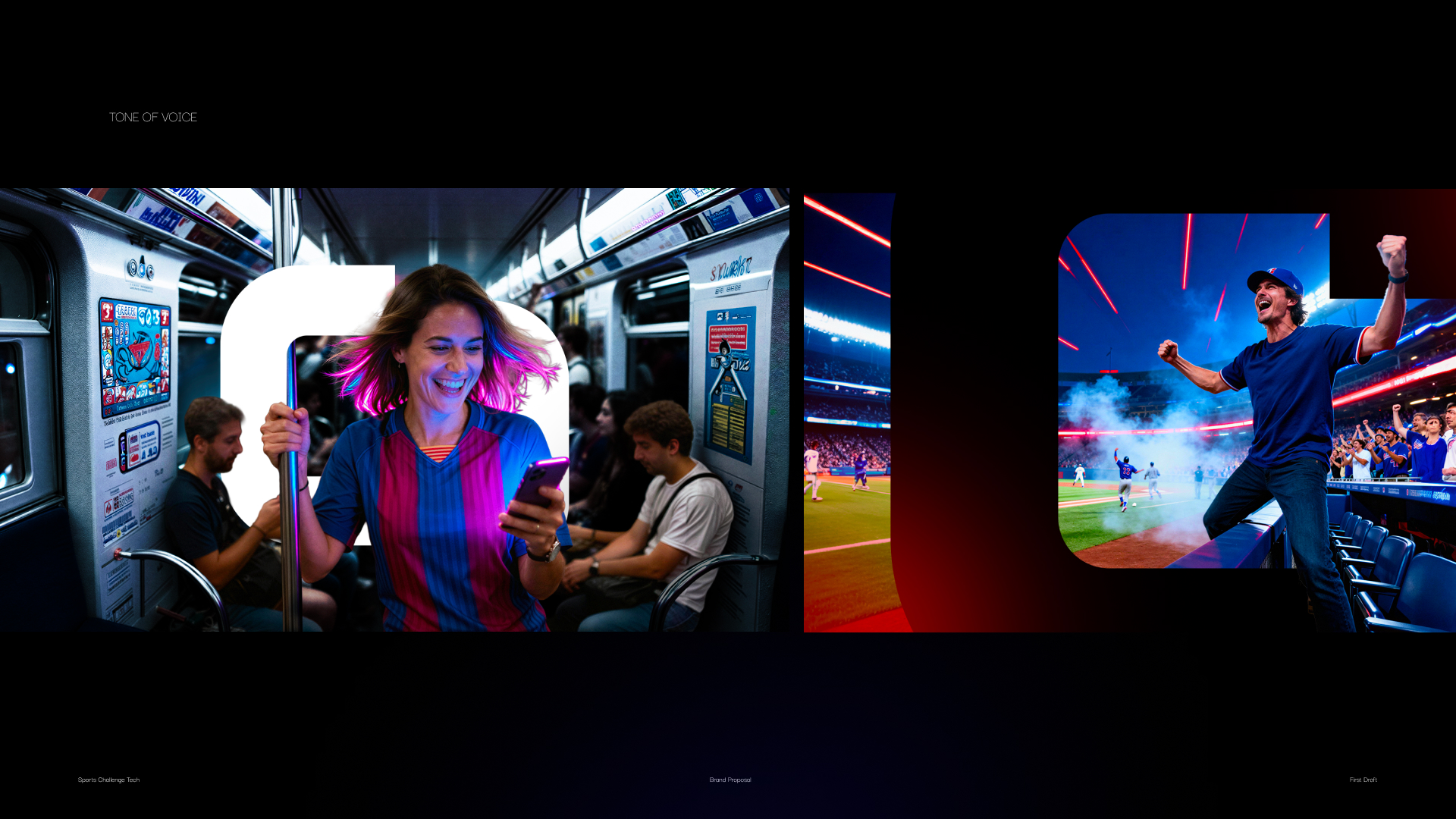
The brand proposal opens with a stadium hero shot, sets the tone with a giant-typography vision & mission slide, then codifies the visual language as a layered system. Layer 1 — the human subject: the athlete, the fan, the moment of emotion. Layer 2 — the platform: the icon mark cuts through every composition as the connector. Layer 3 — the atmosphere: stadium lights, motion blur, neon, smoke. Together they lock the identity in a register that's sportech meets cinematic — premium without being corporate, energetic without being arcade.
Scroll to explore · 7 brand slides →
Spotlight · Product · Funded Challenge UX
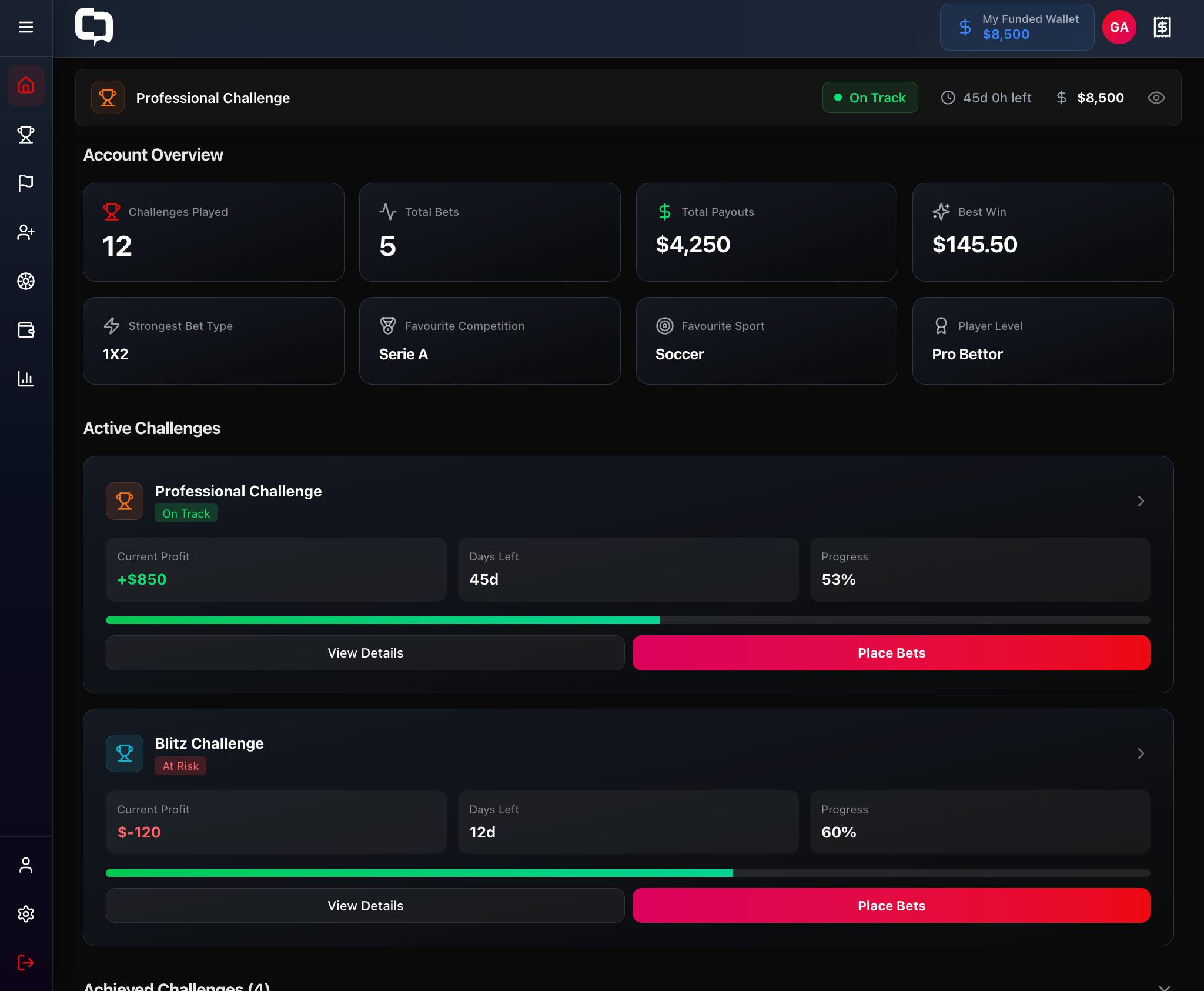
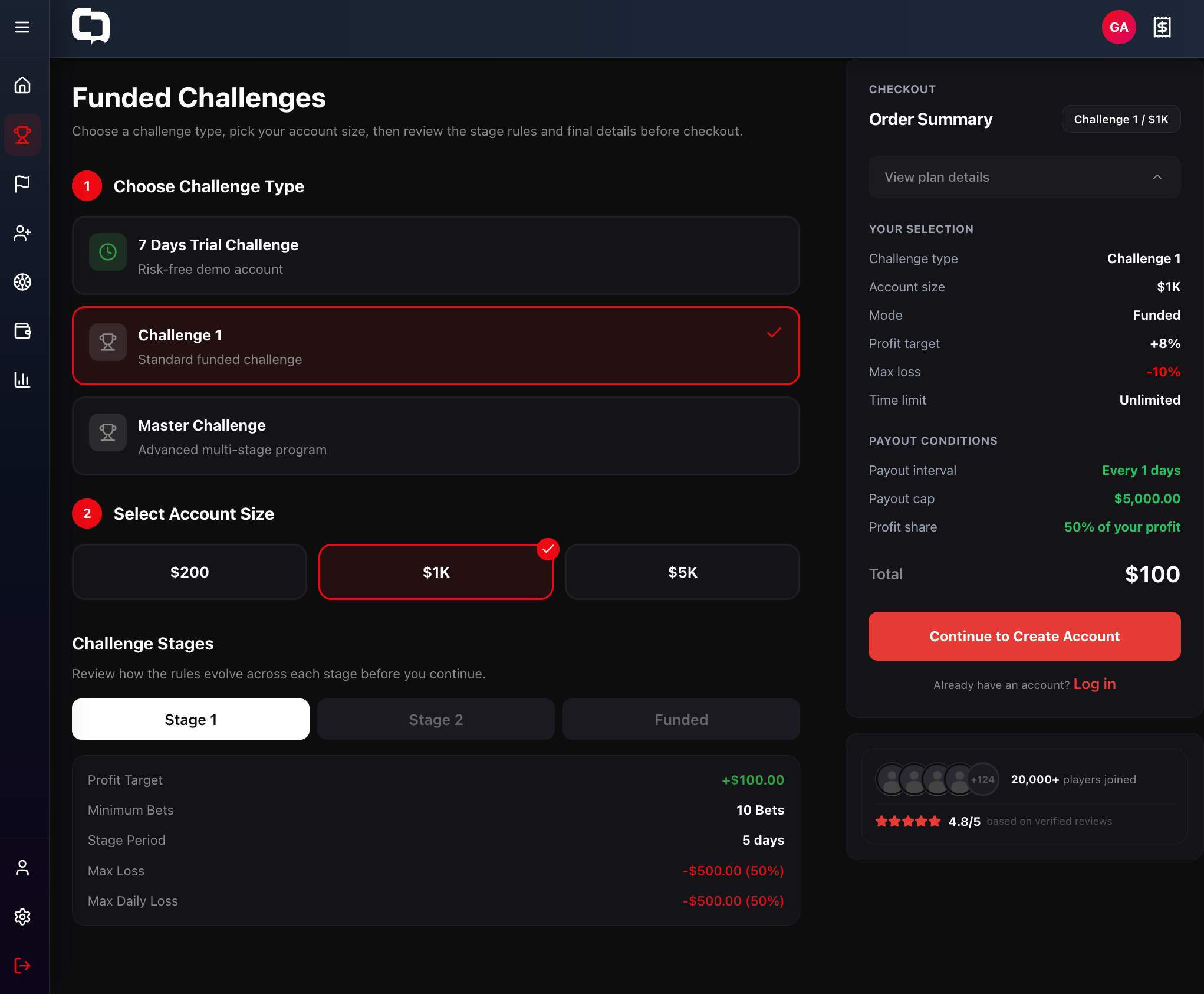
A prop-firm engine, redesigned as a game: dashboard, challenge purchase, betslip, AI assistant — all wired to the same objective.
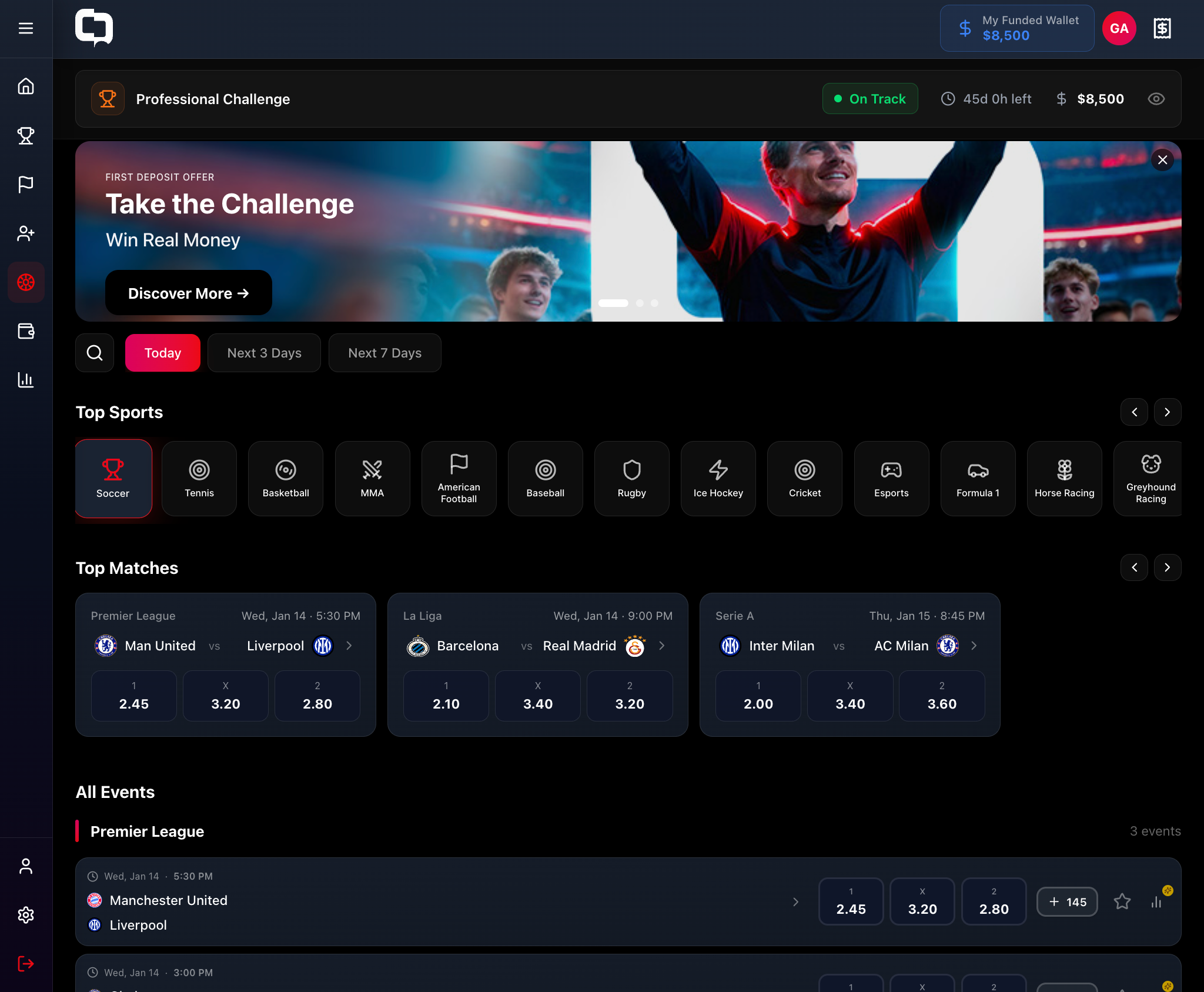
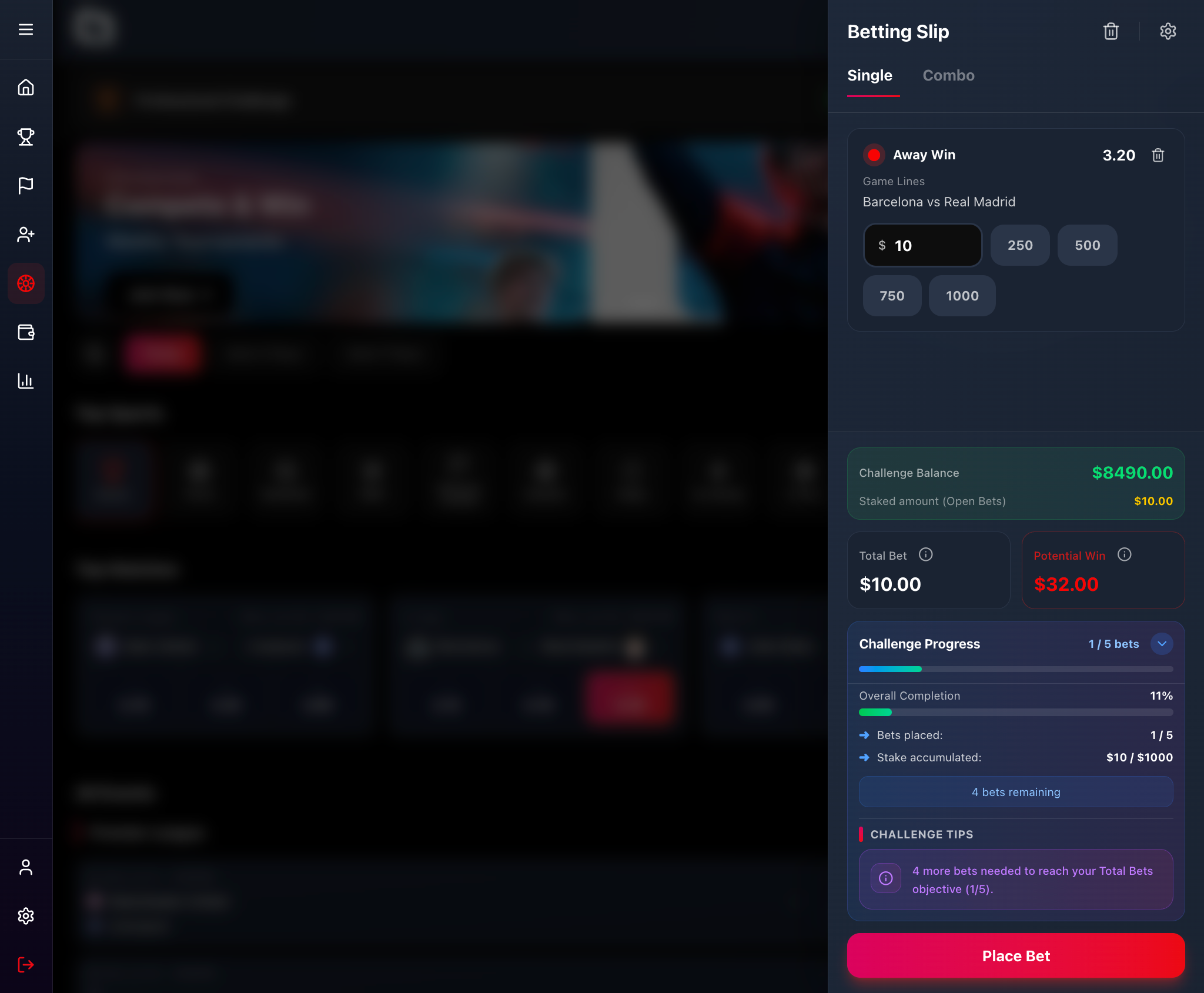
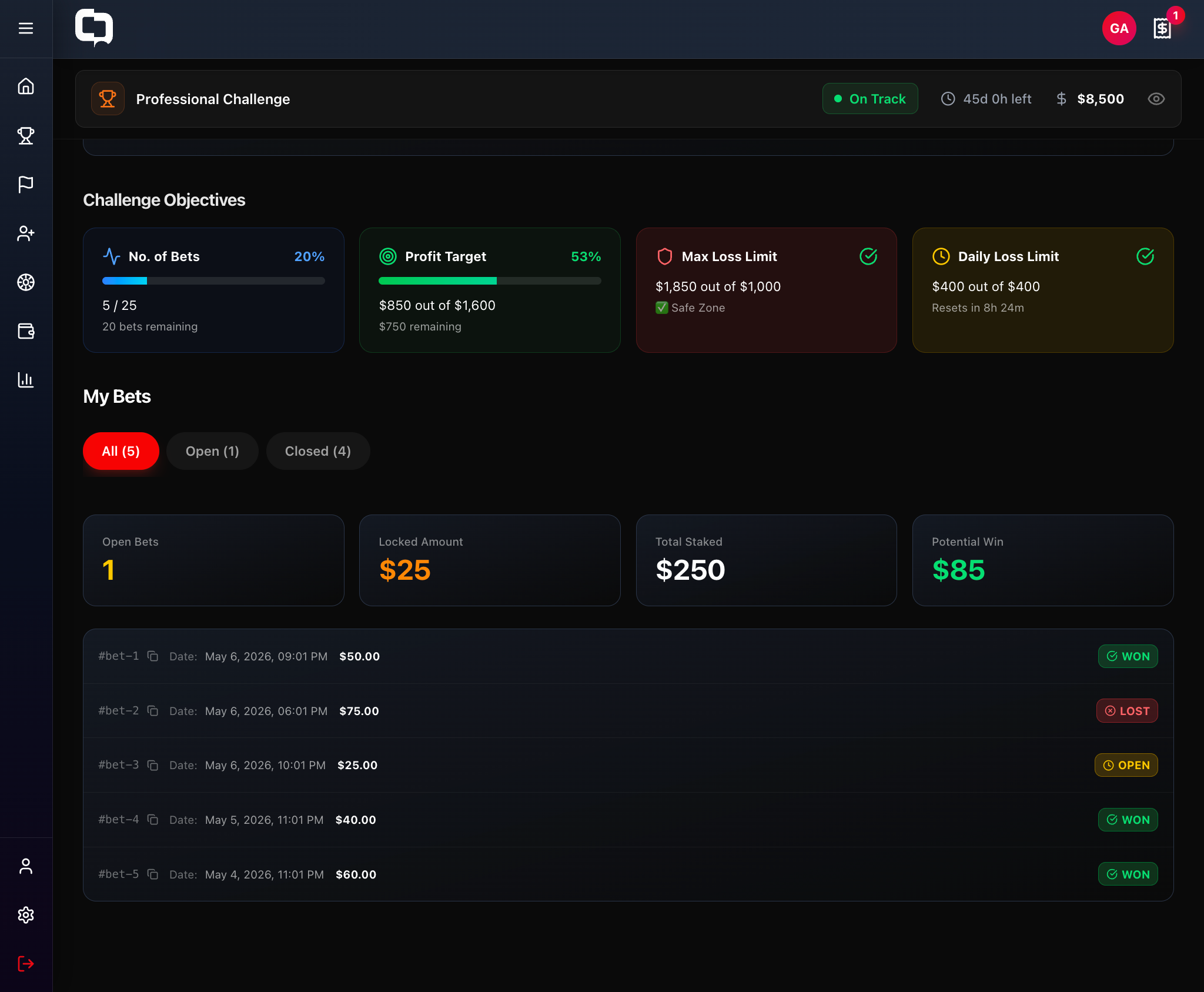
The product translates a complex B2B prop-firm mechanic into a B2C experience that reads as sports betting with a goal. Every screen is built around one question: how close am I to passing the challenge? The dashboard surfaces it as Player Level + win rate. The challenge detail surfaces it as "+$750 to pass" + loss buffer. The betslip surfaces it as live progress + AI tips. The objectives panel surfaces it as four parallel KPIs (bets / profit / max loss / daily loss) with safe-zone status pills.
User DashboardThe bettor's home base — Player Level (Pro Bettor), challenges played, total payouts, favourite sport & competition. Active challenges with live progress + Place Bets CTA per slot.
First Buy · Funded ChallengeThree challenge types (Trial, Challenge 1, Master), three account sizes ($200/$1K/$5K), stage rules surfaced upfront. Right rail Order Summary with payout conditions, profit share, time limit — total transparency before checkout.
Sportsbook LobbyTop Sports & Top Matches with full odds (1 / X / 2). Persistent challenge bar at the top: every screen reminds you of the active goal, the days left, and the funded balance.
Betslip · AI Challenge AssistantSingle / Combo bet, stake quick-chips (10/250/500/750/1000), Challenge Balance + Staked open bets visible. Below the slip: live Challenge Progress, AI Tips suggesting how to close the goal — "4 more bets needed to reach Total Bets objective".
Challenge ObjectivesFour parallel KPIs in one glance — No. of Bets, Profit Target, Max Loss Limit (Safe Zone pill), Daily Loss Limit (resets countdown). My Bets list below with status pills (WON / LOST / OPEN) for instant audit.
Results & Impact
1st round
CEO & investors brand approval
4 flows
Onboarding, challenge picker, tracking, rewards
Q2 2026
Pre-launch · on track for public release
1 PM · 2 devs
Pod size · I owned the entire design layer
What I Delivered
Brand book — identity, logo system, typography, colour palette, voice & tone
Full UI library — desktop + mobile, all states, dev hand-off ready
Casino with no identity, no product, no creative system. I built it all from zero — brand, UX, CRM, landings — and shipped to .com and Ontario, Canada.
Brand + Product + CRM End-to-End
2024 — 2025 (design) · Launch May 2026
AbsoluteBet / OptiLead
Head of Design / Principal Designer
The Brief
AbsoluteBet was a new operator targeting the .com market and the regulated Ontario, Canada market. Positioning: classic, casual casino — no sportsbook, focused on slot & table players who want a clean, friendly experience over a hardcore one.
When I joined there was nothing: no brand identity, no UI library, no CRM, no campaign system. The mandate was to build the entire creative + product layer end-to-end and ship it to soft launch.
What I Did
Owned the full creative pipeline as Head of Design / Principal Designer, leading a Junior Product Designer who reported to me. Every customer-facing surface ran through the same system:
Brand identity from zero — naming validation, logo system, typography, colour palette, tone of voice. Built specifically for casual players: warm, approachable, not over-corporate.
Casino product UX — lobby, game tiles, account area, deposit / withdrawal, onboarding. Mobile-first, designed around the casual-player journey.
CRM ecosystem — email templates, push, lifecycle journeys for activation, retention and reactivation.
Banner & campaign suite — performance creative for paid media across .com and Ontario, sized and tested for affiliate channels.
Landing-page system — onboarding, promo and affiliate landings, all on the same brand grammar.
Design leadership — line management, mentorship and creative direction for 1 Junior Product Designer.
01Hero · brand intro & positioning
02Brand · logo, typography & palette
03Product · casino lobby & game tiles
04Product · account & cashier flow
05CRM · email lifecycle & push
06Acquisition · landing & banner suite
Scroll to explore · 6 screens →
Results & Impact
5 surfaces
Brand · UX · CRM · landings · banner suite
2 markets
.com + regulated Ontario (AGCO)
May 2026
Soft launch · live in production
2 designers
Me + 1 Junior PD reporting to me
What I Delivered
Brand book — identity from scratch, logo system, typography, palette, voice & tone
Casino product UI — lobby, game tiles, account, cashier, all states · desktop + mobile
Brand · UX/UI · CRM · Nordic Casino & Sportsbook · FI · SE · NO · DK
Trybet.com
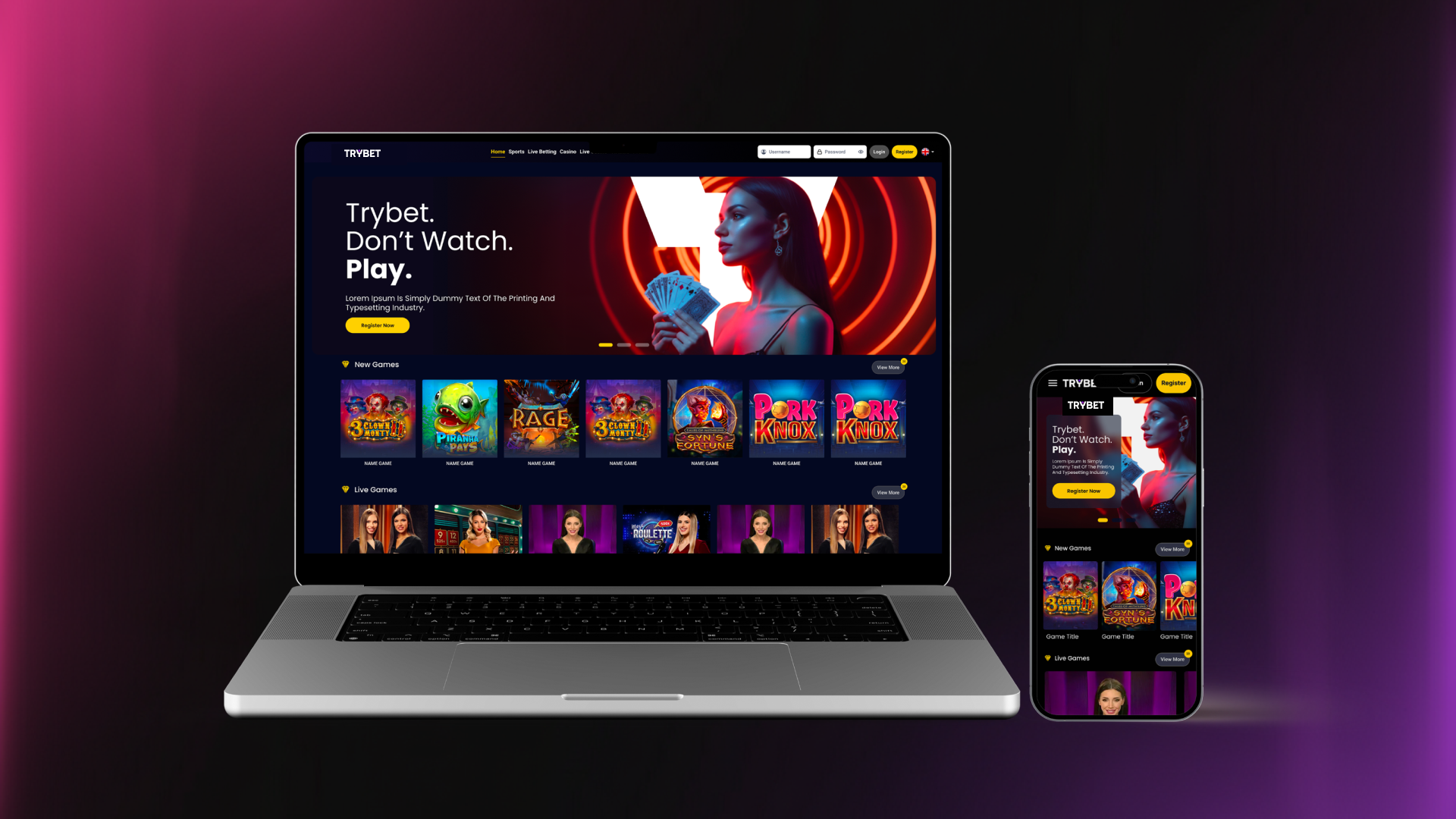
A Nordic startup needed a 360° creative who could own the whole brand. I built a casino & sportsbook from scratch — premium tone, no corporate — live across Finland, Sweden, Norway and Denmark.
Brand + UX/UI + CRM
Mar — Sep 2025
Live in production
Solo Designer
The Brief
Trybet was a startup launching a new casino & sportsbook for the Nordic market — Finland, Sweden, Norway, Denmark. Like every early-stage operator, they needed one person to run the whole creative side: brand from zero, site identity, product UI, CRM ecosystem.
The market was saturated and visually homogeneous — most Nordic casino brands lean either generic or over-corporate. The brief: build something that felt premium and cool, VIP without corporate stiffness, with a tone of voice strong enough to own its own space.
What I Did
Solo designer end-to-end. Acted as the in-house creative for a remote startup, owning every customer-facing surface:
Mood boards & competitor analysis — mapped every Nordic operator to find the white space the brand could own.
Naming validation & brand identity — logo system, typography, colour, tone of voice. Premium aesthetic, no corporate language.
UX/UI for product — site design within the constraints of a third-party platform provider, pushing customisation to the limit to keep brand integrity.
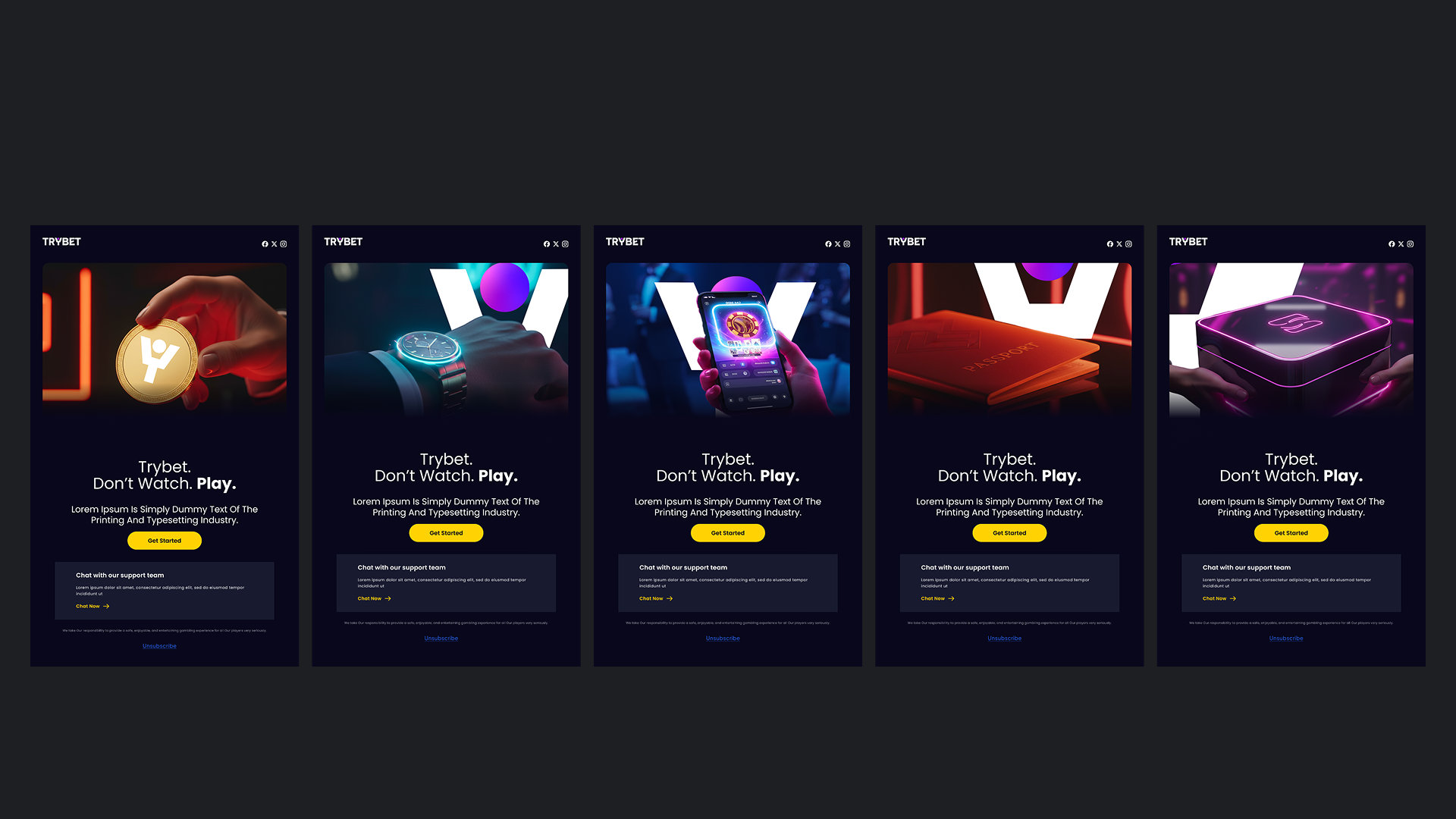
CRM ecosystem — email templates, push, in-app surfaces all wired into the same tone of voice for a familiar, intuitive user experience.
Banner & campaign suite — production-ready templates for paid media, affiliate and onboarding promos.
Spotlight · Brand System
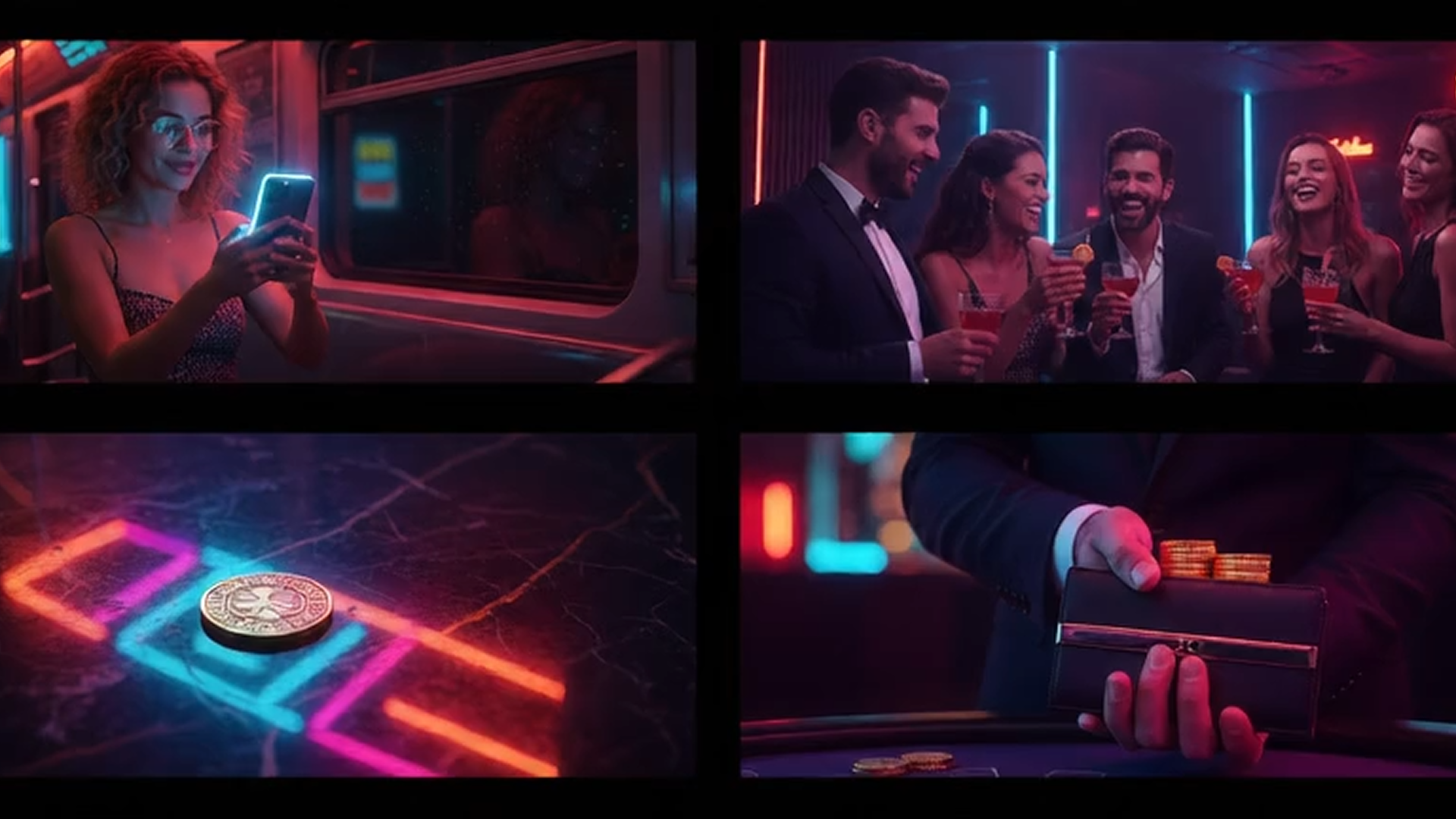
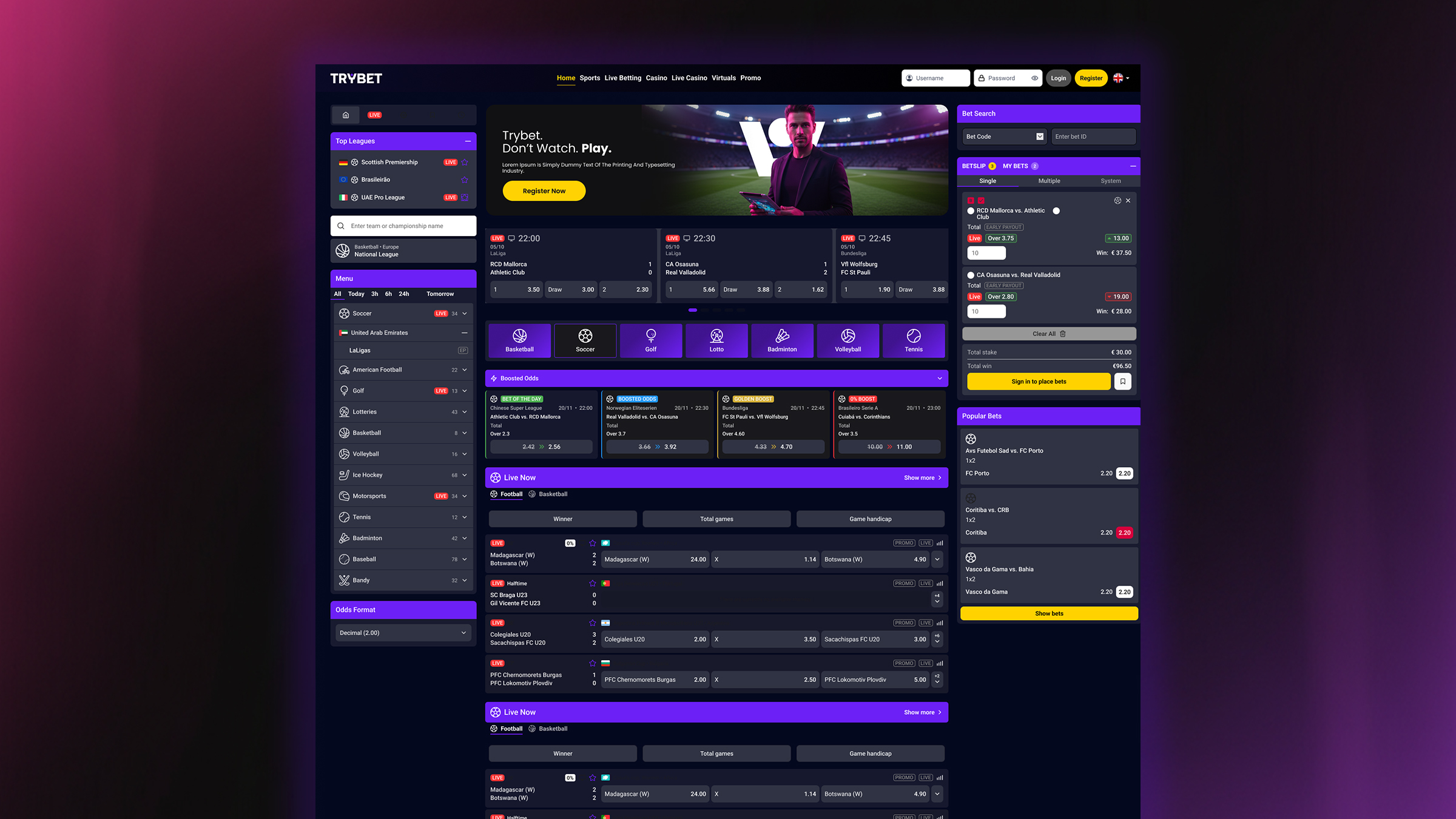
"Trybet. Don't Watch. Play." — a Nordic casino brand that earned its own register: premium, cinematic, never corporate.
The identity is built around a single tagline and a magenta-to-violet gradient that owns its own slot in the Nordic landscape. The logo is a clean wordmark with a single coloured dot accent; the tone of voice runs short, declarative, confident. Around the brand: a cinematic mood — neon nightlife, cocktails, gold-accented coins — that signals VIP without sliding into casino-corporate clichés. Same DNA across web, mobile, CRM emails and motion.
Scroll to explore · brand system →
Spotlight · Product · Casino & Sportsbook
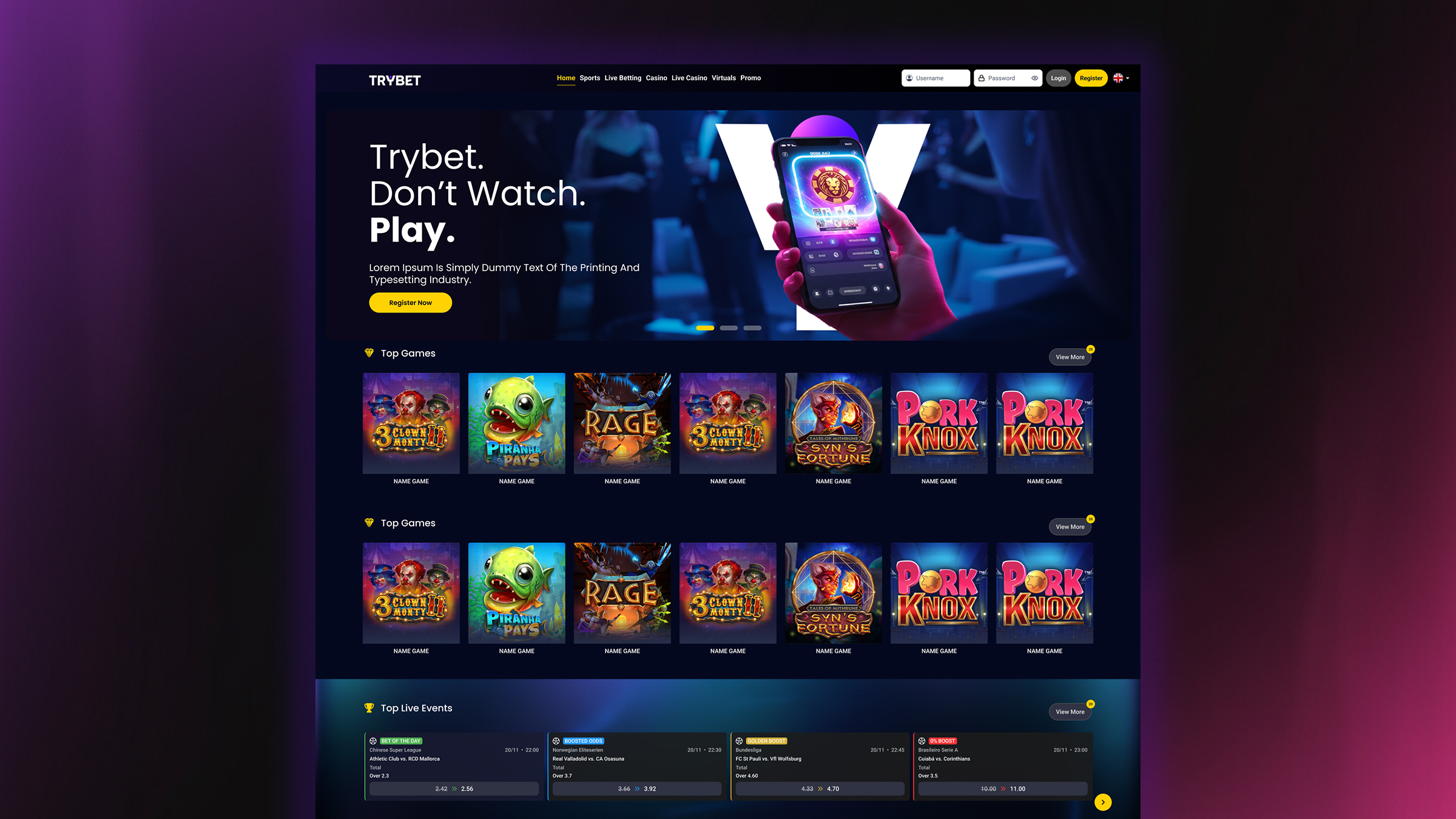
Two verticals, one brand DNA — casino lobby and sportsbook live across desktop and mobile.
The challenge with a third-party platform provider is keeping brand integrity intact when you don't own the underlying engine. I pushed customisation to the limit: same magenta-violet identity, same hero "Don't Watch. Play.", same typography hierarchy across both products. Casino reads as entertainment-first (game tiles forward, hero with model, golden CTA). Sportsbook reads as utility-first (left rail with leagues, central live odds + boosted markets, right rail betslip). Same brand, two different reading modes.
Casino lobby — entertainment-first hierarchy, Top Games carousels, Live Events with boosted markets
Sportsbook — left rail leagues, hero + Boosted Odds carousel, right rail betslip with multi-bet support
Results & Impact
8 weeks
Brand from zero to CEO-approved
4 markets
Live: FI · SE (Spelinspektionen) · NO · DK
Casino + SB
Both verticals in production · bet slip + lobby
6 months
Mar–Sep 2025 · solo designer end-to-end
What I Delivered
Full brand book — logo system, typography, colour palette, tone of voice, voice & do/don't rules
Site design — desktop + mobile, every page, within third-party platform constraints
Design Consultant · AI Content · B2B Game Provider
Wicked Games
A B2B game provider in mid-rebrand. The agency owned the new identity — I came in as the design consultant who turned that visual into a social-first content engine: statics + AI-generated video.
Design Consultancy · Social · AI Video
2025
Ongoing
Design Consultant
The Brief
Wicked Games is a B2B casino game provider with a Swedish licence. They were in the middle of a brand restyle — a creative agency was already on it, owning the new logo and the new visual identity. What they didn't have was someone who could take that new look and operationalise it across content: social-ready statics, slot-launch promos, video.
I came in as a design consultant working in parallel with the agency — not replacing them, complementing them. The agency built the brand, I built the engine that publishes it.
What I Did
Embedded as external creative partner, focused on the day-to-day output the brand needed to live in market:
Worked alongside the rebrand agency — sounding board on visual direction, then took the new identity and translated it into a content system the in-house team could keep using.
Social content · statics — branded templates for slot announcements, game launches and B2B touchpoints, designed to ladder up to the new visual language.
AI-generated video — slot-launch promos and character-driven cinematic pieces, fully AI-native from concept to final cut. Tools: Veo 3, Seedreams, Midjourney.
Conference & B2B activations — visuals built for conference screens, partner decks and trade-show surfaces.
01Hero · brand-aligned key visual
02Character system · agency rebrand carried into content
03Social · static templates & slot announcements
04AI video · slot-launch promo
05AI cinematic · character-driven sequence
06B2B · conference & trade-show activations
Scroll to explore · 6 screens →
Results & Impact
2 tracks
Static social + AI video · ongoing publishing cadence
B2B + B2C
Conference activations + slot-launch socials
100% AI
Slot launches + character cinematics fully AI-generated
Veo 3 · Seedreams
Production stack · Midjourney + AI motion
What I Delivered
Design consultancy — alongside the rebrand agency, on visual direction & content strategy
Social-first static templates — slot announcements, game launches, B2B touchpoints
AI-generated slot-launch promos — short-form video for socials
AI character-driven cinematics — longer-form pieces for conference + activations
An established Swiss FX platform stuck with an outdated site — losing ground to competitors. I refreshed the brand and the interface without alienating long-time users.
Brand & UX Refresh
2023
MoneySwap (Swiss FX)
Brand & UX Consultant
The Brief
MoneySwap is a well-established Swiss FX platform with strong brand recognition in the Italian and French Swiss cantons. The problem: the site had aged out. Visual identity and interface felt obsolete next to newer competitors, hurting acquisition and especially mobile performance.
The mandate: refresh the brand and the website to compete again — without breaking trust with long-time users who already knew the existing brand.
What I Did
Brand identity refresh — modernised logo, palette and typography while keeping the recognition equity intact. Evolution, not reinvention.
Website & dashboard redesign — mobile-first, clearer hierarchy, sharper CTAs, faster scanability for the FX use case.
Low-friction 3-step KYC flow — broke a long onboarding path into 3 clear steps, designed to reduce drop-off without compromising compliance.
User testing — validated with returning users via Hotjar & Maze to make sure the refresh didn't disorient the existing base.
CRM & email templates — aligned to the refreshed visual language for continuity across product + comms.
A new bingo-first casual casino brand for the Italian regulated market — built and shipped in 2 weeks under the Betsson Group umbrella.
Brand + Launch
2020
Betsson Group
Creative Lead
The Brief
Betsson Group needed a new casual casino brand for the regulated Italian market, with bingo as the anchor vertical. Deliberately distinct from the premium tone of StarCasino: cheerful, light, mobile-first, designed for casual returning players.
The constraint that defined the project: 2 weeks from brief to live brand. No room for re-work, no room for over-engineering — every decision had to ship.
What I Did
Brand identity in 2 weeks — logo, palette, typography, voice. Bright, mobile-friendly, optimised for quick access and soft onboarding.
Lobby & UI surfaces — clean CTAs, clear iconography, intuitive category grouping. Lightweight layout tuned for fast mobile load.
Promo template system — adaptable templates so the marketing team could keep producing bingo-first campaigns without going back to design every time.
Visual system extension — banner suite, CRM templates, social surfaces, all stamped with the casual / bingo identity.
A new casino client needed a brand from scratch — basic, mobile-first, with a mascot. One of my first projects with AI visibly in the pipeline — half delivery, half experiment.
Brand · Mascot · AI Visuals
2024
Casiku
Brand Consultant
The Brief
The client was launching a new casino and needed a basic brand visual system to anchor the launch — logo, identity, mascot, visual guidelines. Friendly, mobile-first, casual audience. Nothing over-engineered, just a clean foundation the brand could grow from.
Two parallel tracks: deliver the brand, and use the project as a sandbox for AI in the visual production pipeline — one of my first engagements where AI was visibly part of the output, not just a private workflow tool.
What I Did
Brand identity from scratch — logo, typography, colour palette, visual guidelines, tone of voice. Friendly, soft-edged, casual-player oriented.
Mascot design — designed and integrated a brand mascot as the anchor of the visual world. Recurring character that ties promo, social and in-product visuals together.
AI-visible production pipeline — used AI generation as part of the visible creative output (mascot iterations, key visuals, promo art). One of my first projects where the AI layer was both delivery and experimentation.
Visual guidelines — packaged the system so the team could keep extending it across in-app, CRM and web channels.
01Hero · brand intro
02Logo & mark · brand foundation
03Mascot · brand anchor character
04Visual system · palette & typography
05AI-augmented · mascot & key-visual iterations
06Brand guidelines · scalable across channels
Scroll to explore · 6 screens →
Results & Impact
4 deliverables
Logo, mascot, palette, brand guidelines
1 mascot
Anchor character integrated across the system
First AI-visible
Early 2024 · AI part of the delivery, not just workflow
3 channels
In-app, CRM & web extension-ready
What I Delivered
Brand identity — logo, typography, palette, tone of voice
Mascot design — anchor character integrated into the visual system
AI-augmented visual assets — mascot iterations, key visuals, promo art
Visual guidelines — packaged for scaling across channels
WANT TO KNOW MORE?
Interested in this project or want to discuss how I can bring the same thinking to your product?
Esportal needed a designer who could actually speak esports. I refreshed the visual language for tournaments, giveaways and seasonal events — across multiple regions, one consistent voice.
Social Creatives + Tournament Activations
2025
Live · ongoing
Freelance Creative Designer
The Brief
Esportal needed a designer with real esports experience — someone who could move inside the culture, not just decorate it. Their tournament visuals had become repetitive, relying on a small pool of legacy assets, and the visual fatigue was real for both players and brand team.
Mission: refresh the visual language across social channels and on-platform tournaments, and set up a faster production pipeline so the team could keep up with weekly tournament cycles.
What I Did
Freelance creative designer working alongside the internal team. Owned the creative output across four parallel streams, all wired to the same visual system:
Seasonal & regional campaigns — Spooky Halloween (NO), Streamer Wochenende (DE), Winter is Coming (FI), New Year — each adapted to local market and language while keeping one brand DNA.
Reusable visual system — typography, brush-stroke titling, neon split-light treatment, item-hero compositional rules. The toolkit the internal designers could keep using independently.
AI-augmented production — Midjourney for stylised background generation, then full Adobe craft layering on top. AI as a faster ideation tool, not the output.
Spotlight · Tournament Campaigns
Two of the platform's headline cups — Fight Night & 1vs1 Cup — rebuilt as cinematic moments, not match flyers.
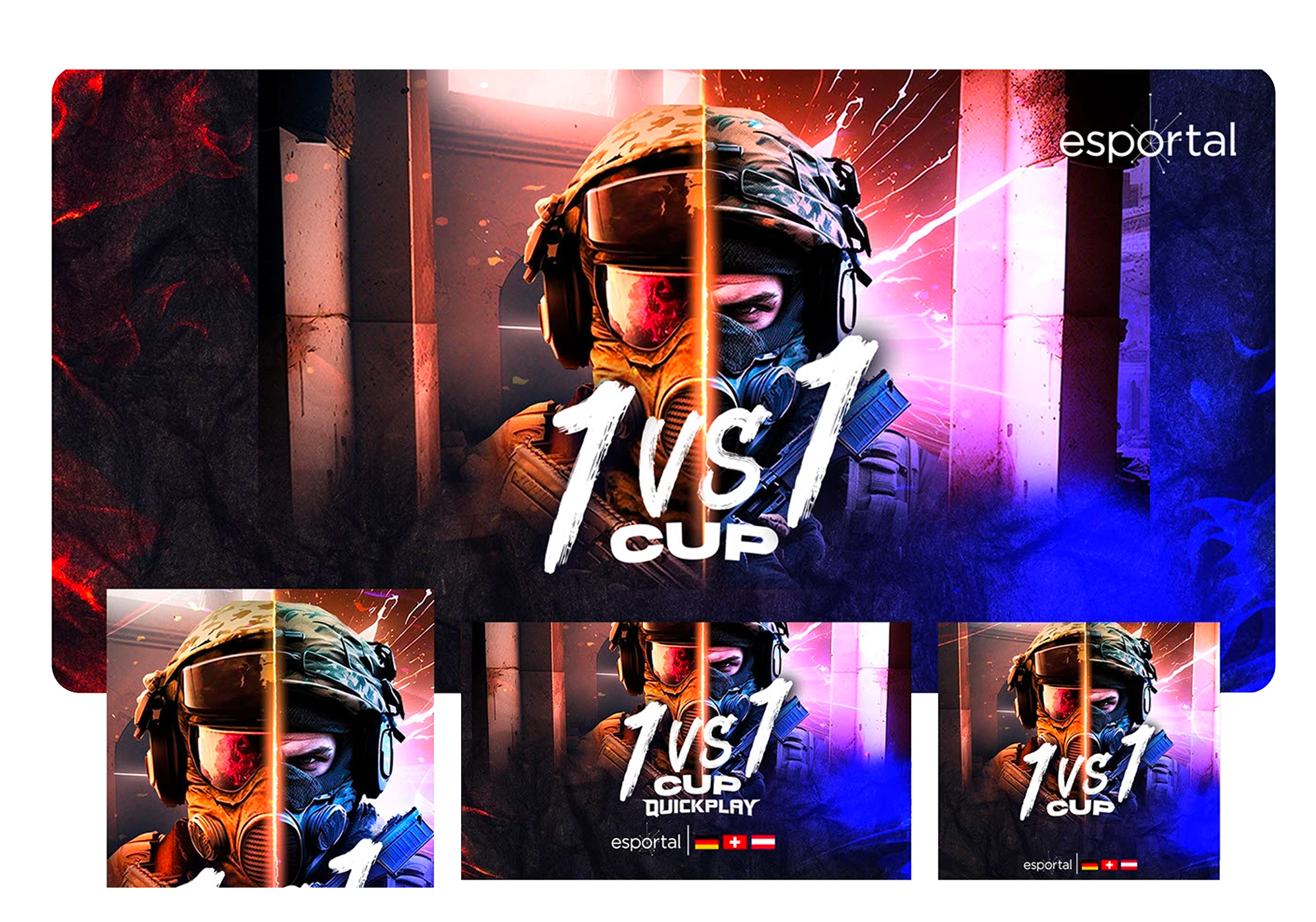
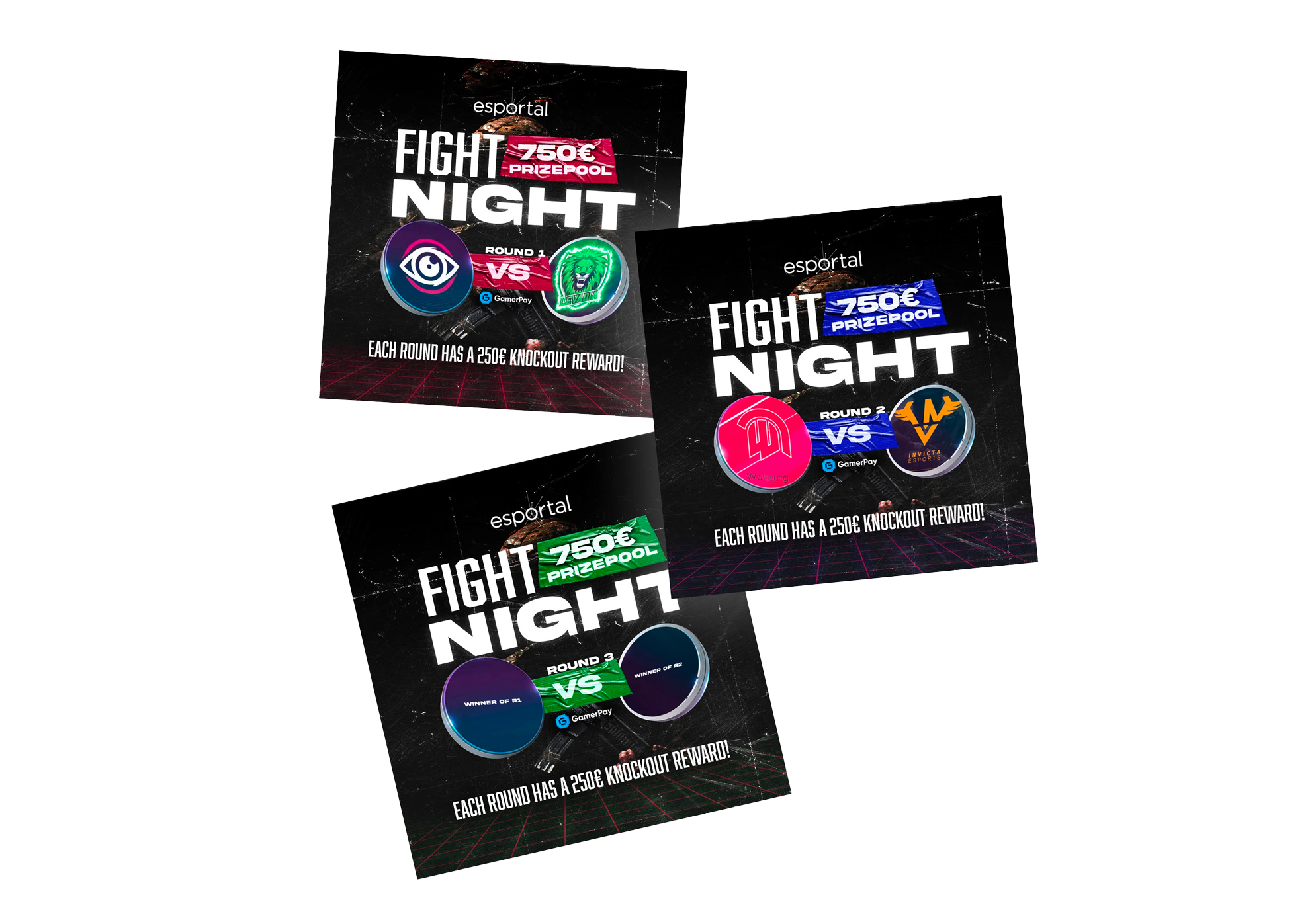
Tournament posters used to be flyer-grade — logo + bracket + prize. I rebuilt them as character-led, lighting-driven posters. Fight Night runs as a 3-round campaign sequence with team-vs-team matchups inlaid on a smashed-glass ground; 1vs1 Cup leads with a single CS soldier portrait split-lit red/blue — same poster, multiple regional variants (DACH, Quickplay, flagged ladder).
Fight Night · 750€ PrizepoolThree matched posters following the bracket — Round 1 vs / Round 2 vs / Round 3 winners final. Each round has a 250€ knockout reward. Smashed-glass ground, red laser grid, team-logo plate buttons. Same composition, different colour-coded prize plate per round.
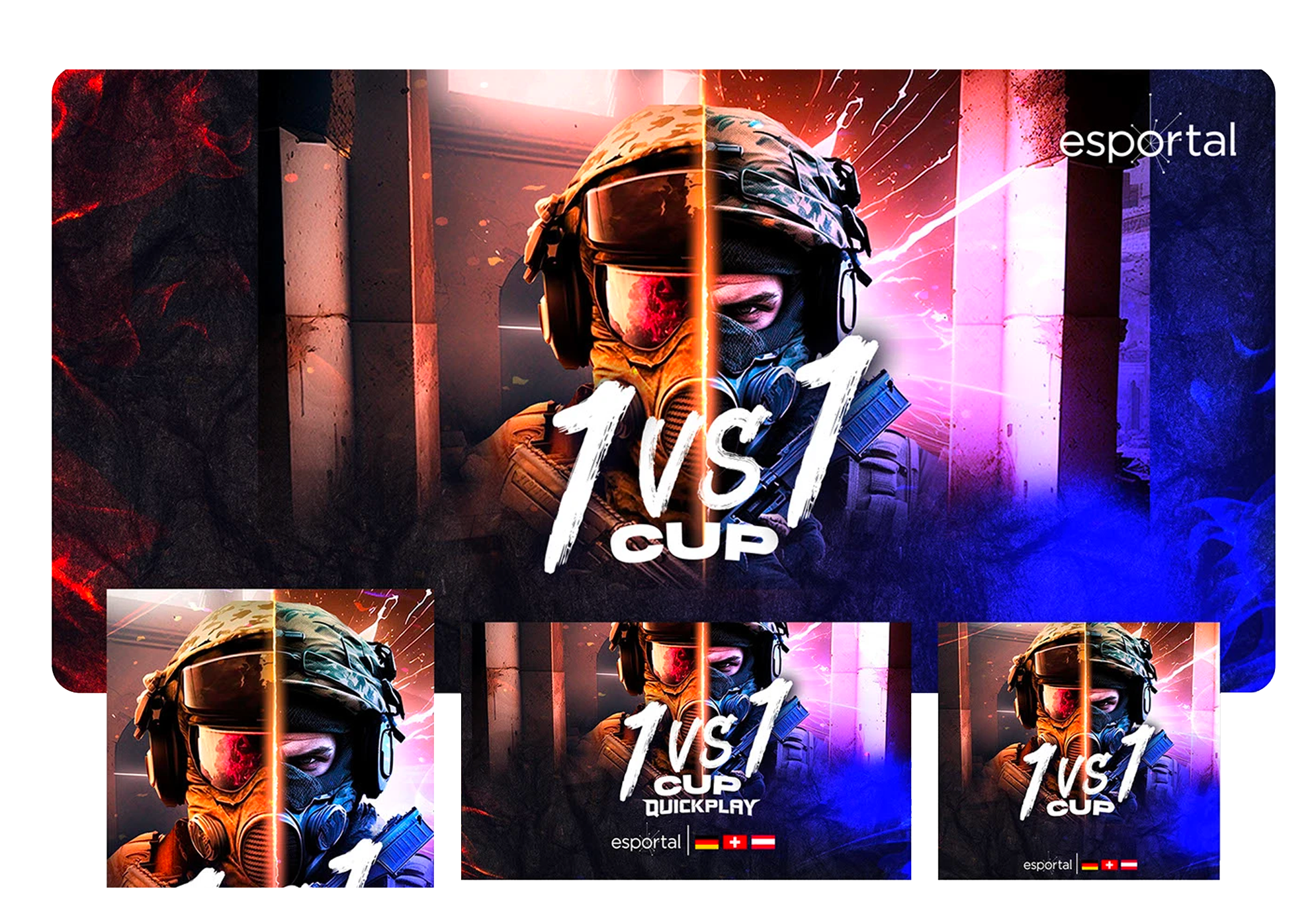
1vs1 Cup · Hero PosterSingle CS soldier portrait, vertical split lighting — warm orange / cool blue. Brush-stroke "1vs1" title in white grunge. Designed to scale across feed, story, and on-platform banners.
1vs1 Cup · Regional VariantsSame hero portrait re-layered for Quickplay format and DACH region (DE · CH · AT flags). One brand, many tournaments — same title-treatment, just swapping subtitle + audience.
Spotlight · Giveaway & Loot Drops
CS2 skin giveaways turned into drop-style social moments — item hero shot, neon halo, one-line tagline.
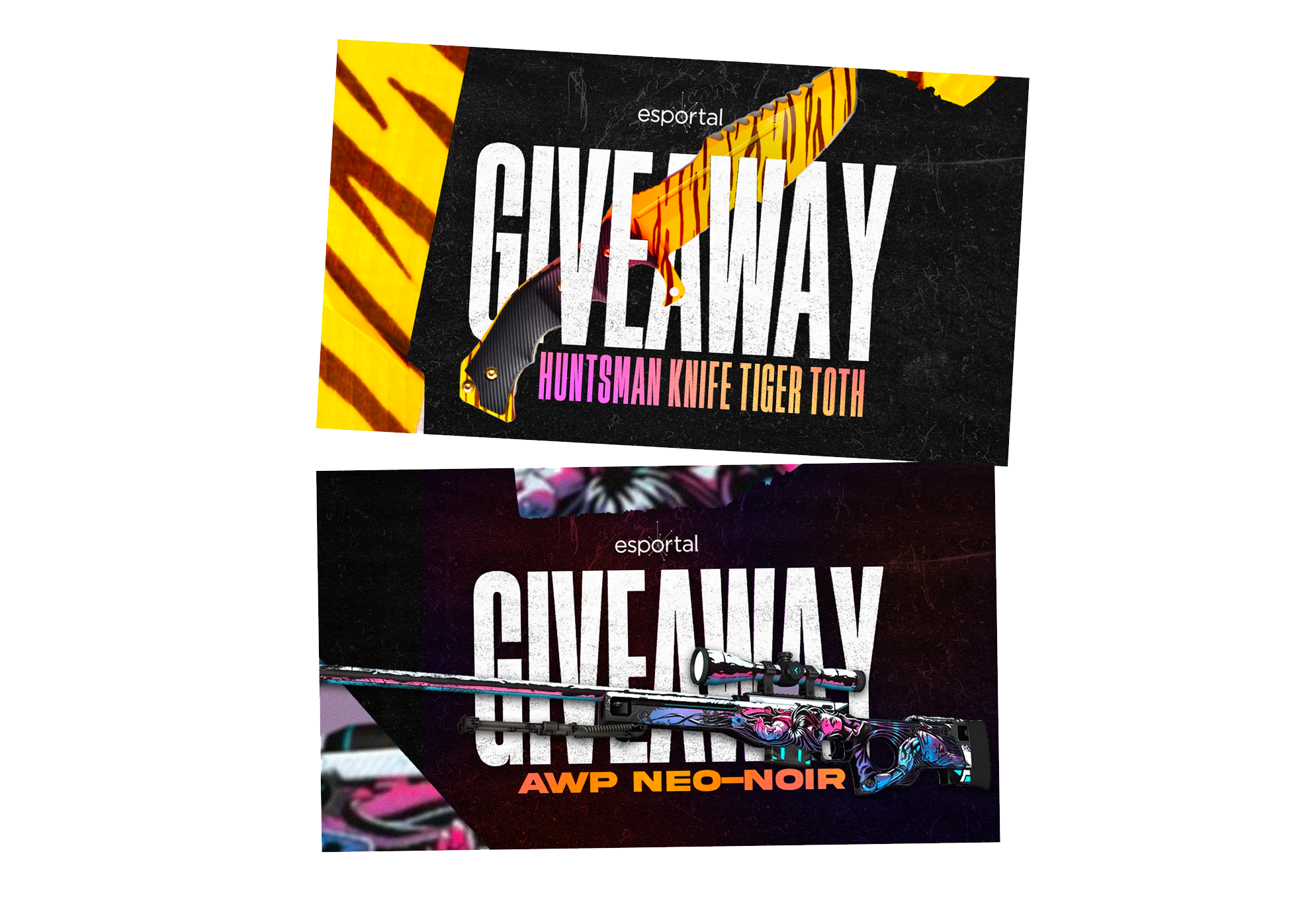
Esportal runs near-weekly skin giveaways. The legacy format was generic "win this" cards. I rebuilt them as drop-culture posters: the item is the hero, oversized, lit like a luxury product, the skin name is the headline. Players know exactly what they're chasing in under a second.
Knife & AWP GiveawaysHuntsman Knife Tiger Tooth + AWP Neo-Noir. Each item shot as a hero product, oversized "GIVEAWAY" condensed display title, skin name in gradient sub-line matching the item palette. Tape-strip accent in skin colour as visual cue.
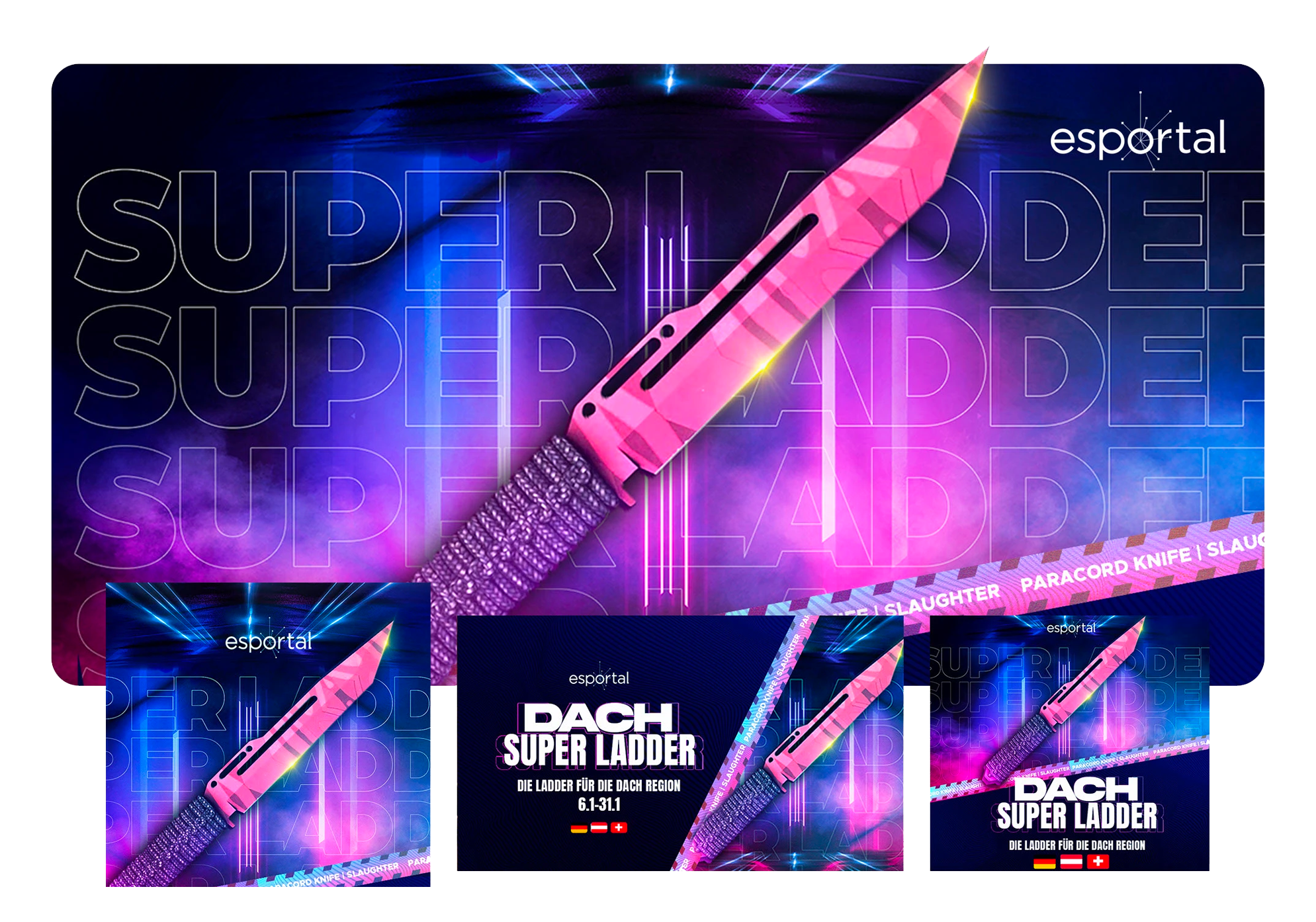
DACH Super Ladder · Paracord KnifeMonth-long ladder for DACH region (6.1–31.1). Pink Paracord Knife Slaughter as the prize hero, neon stage lighting, repeated outline "SUPER LADDER" type — pulls competitive ladder vibe and skin drop into one frame.
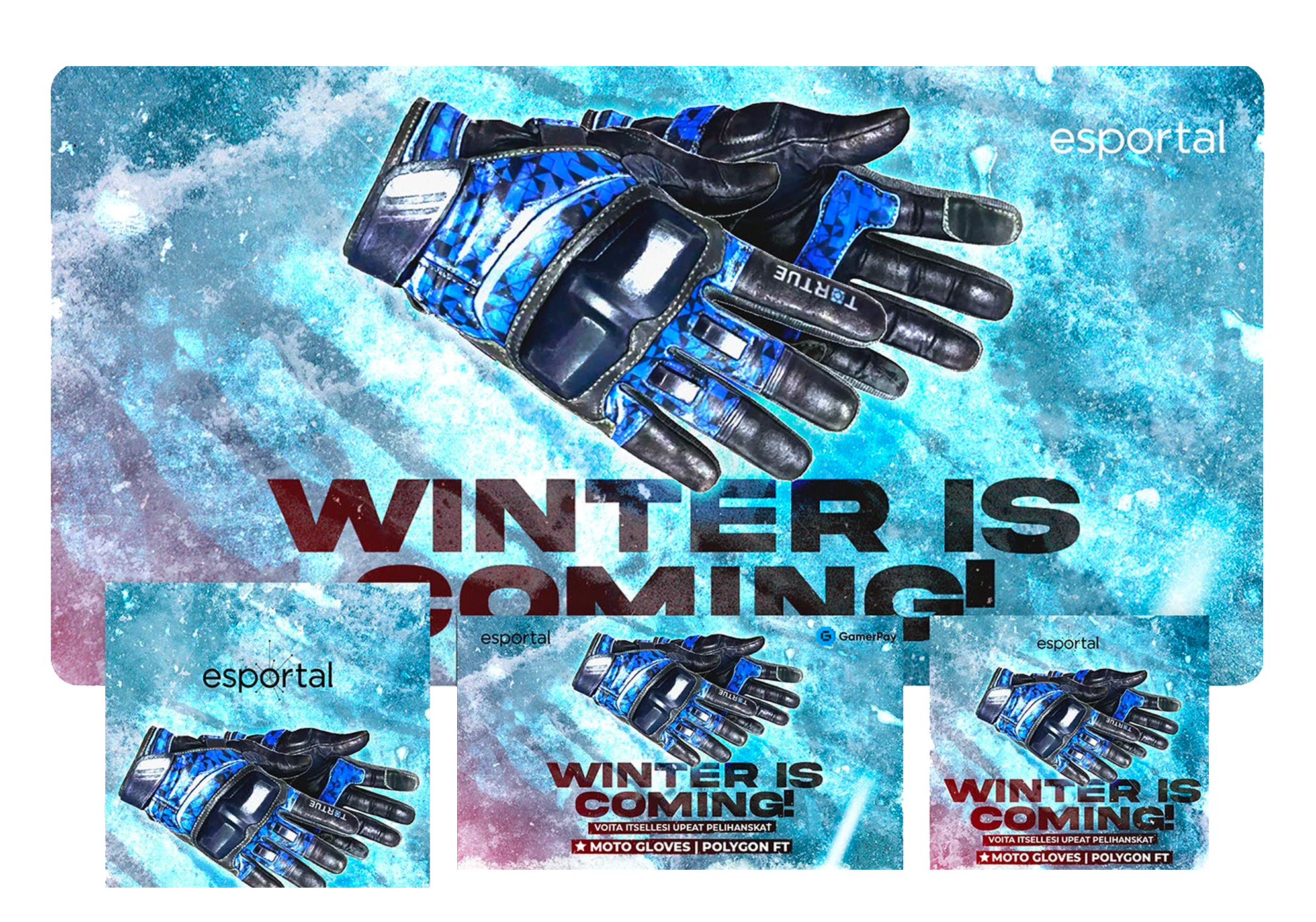
Winter is Coming · Moto Gloves (FI)Finnish-market giveaway, frozen-shatter background, blue ice palette. Title in dark blood-red over the cold backdrop creates the visual tension. "Voita itsellesi upeat pelihanskat" — localised tagline, same brand toolkit.
Spotlight · Seasonal & Regional
One brand DNA stretched across four markets and three seasons — localised, never copy-pasted.
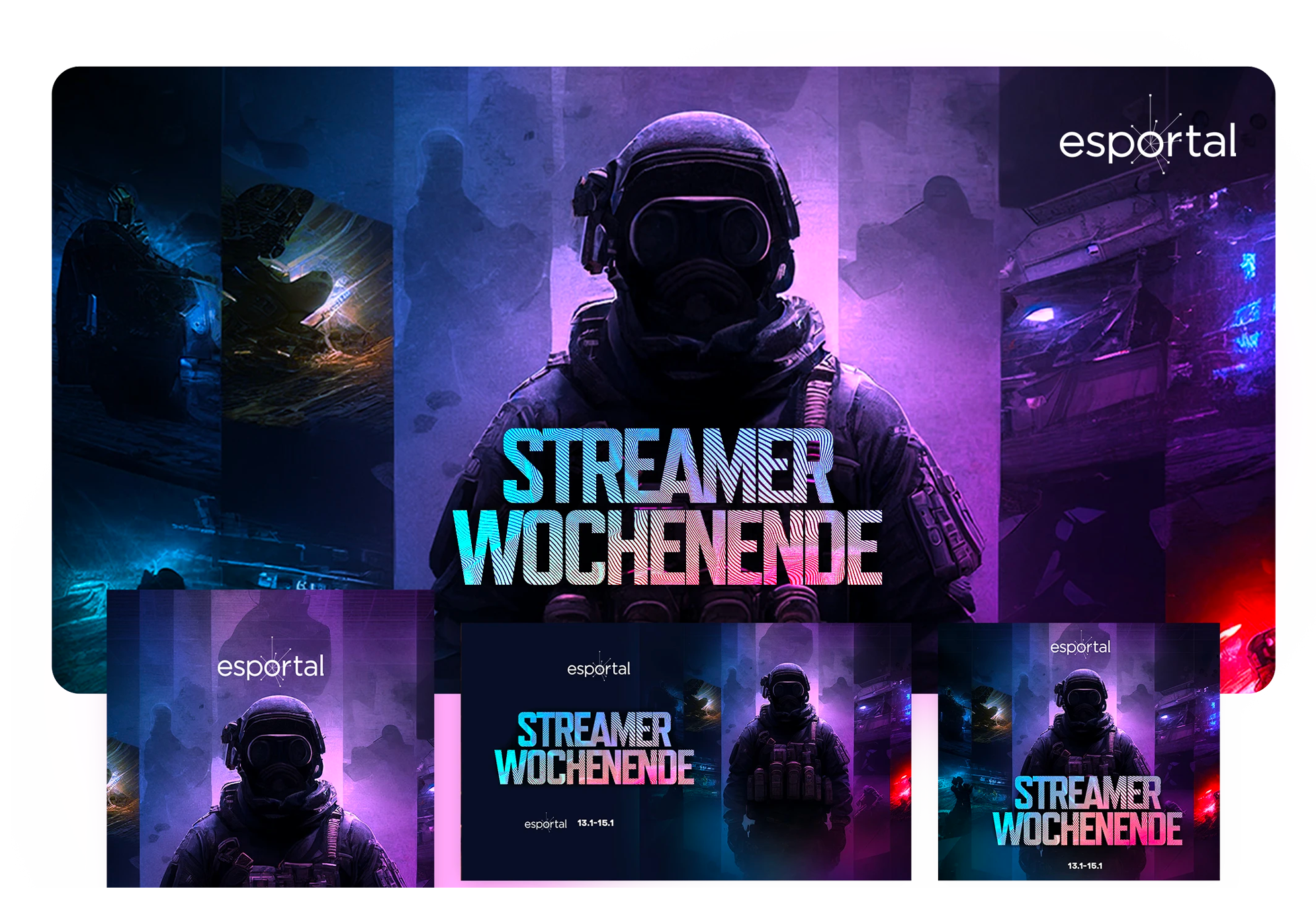
The same visual system flexes across DE, FI, NO and platform-wide campaigns. Halloween goes graveyard-blue with masked operators; New Year goes fireworks-and-confetti with player characters celebrating; Streamer Wochenende drops into electric purple-cyan for the German market. Local language, local mood — same brand toolkit underneath.
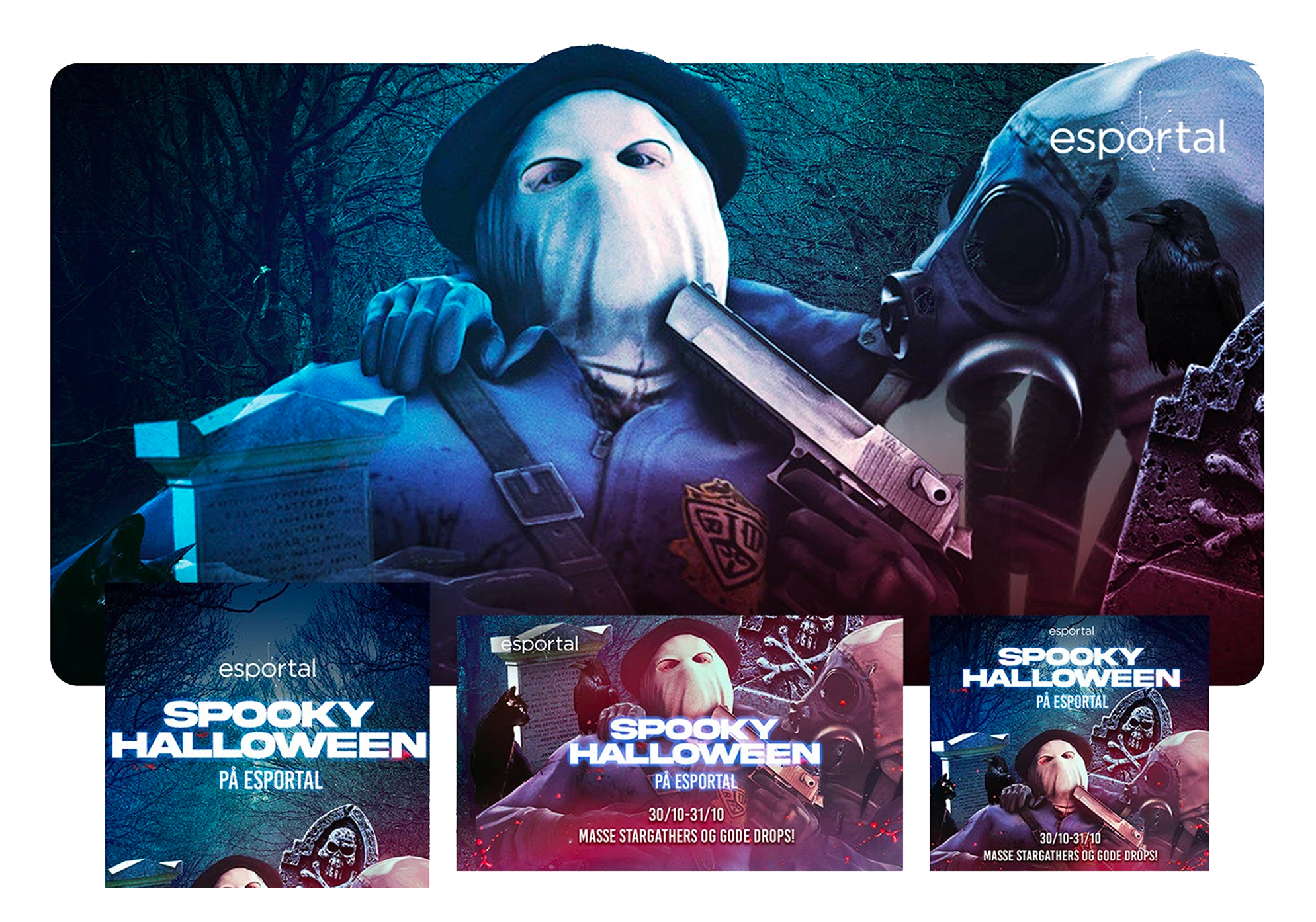
Spooky Halloween på Esportal (NO)Cemetery scene, masked CT operator with crow, blood-red tint over deep teal night. Norwegian copy "30/10–31/10 · MASSE STARGATHERS OG GODE DROPS!". Built as full hero + three sub-format variants for feed, story and on-platform.
Streamer Wochenende (DE)German-market streamer weekend campaign, dark CS operator silhouette centered, purple/cyan/magenta neon split. Striped "STREAMER WOCHENENDE" title in three-line layered display type. Hero + three sub-formats with date stamp 13.1–15.1.
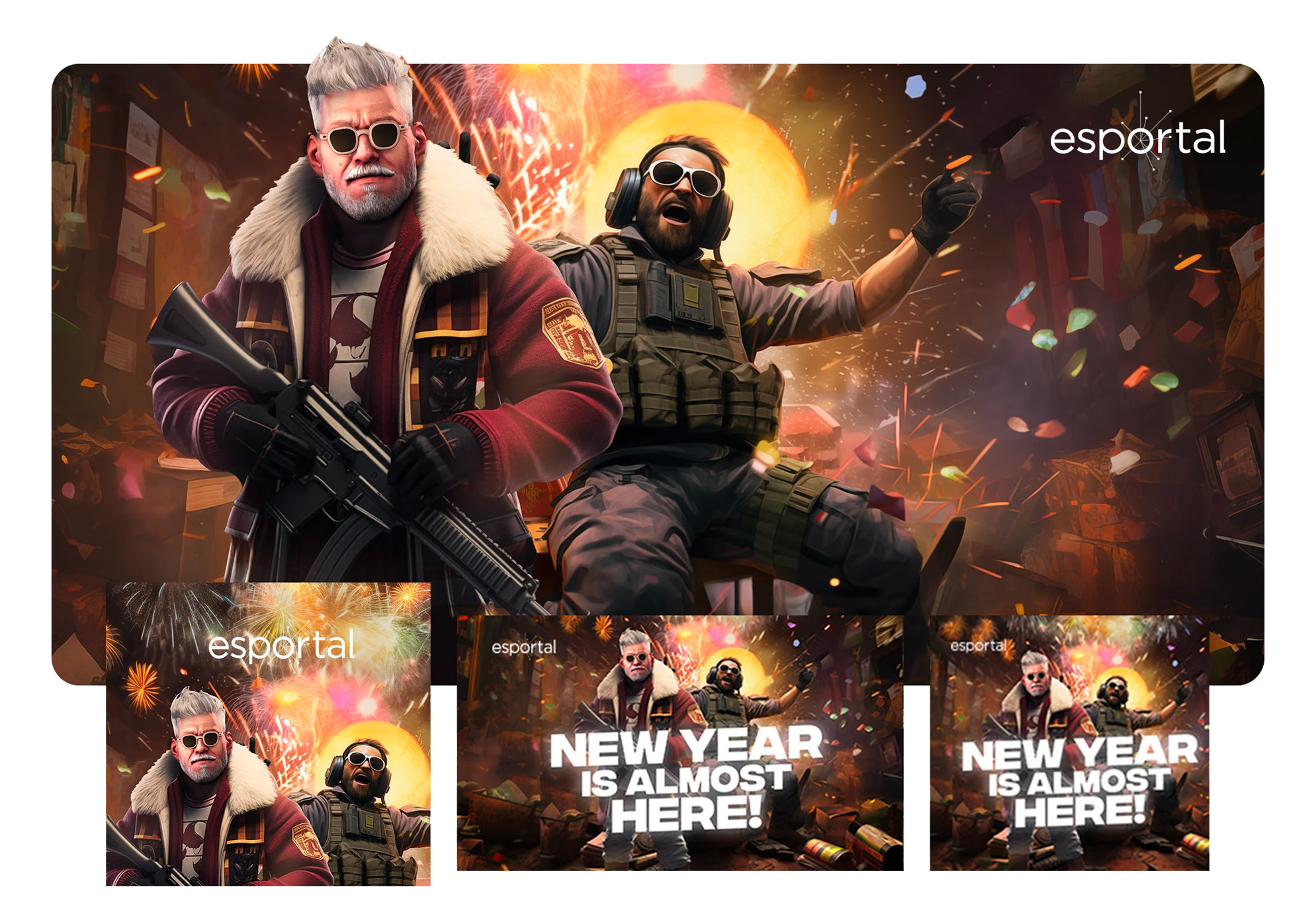
New Year is Almost HereTwo CS player characters in front of fireworks — one in tactical gear cheering, one in winter coat with rifle. Confetti and pyro burst behind. Full hero poster + three social formats for feed, story and on-platform countdown.
Self-Initiated Concept · Brand · Product · Character Design · Gen Z iGaming
Sidekick
Not another comparator. A fresh iGaming insider for the Gen Z tired of affiliate SEO farms — built from scratch, on my own time, as a design manifesto.
Concept · Brand · Product · Interactive
2026 · Self-Initiated
Live prototype · playable end-to-end
Everything · one-person team
The Brief · (to Myself)
iGaming discovery is broken. Every casino comparator looks and sounds identical — the same SEO templates, the same "Top 10" tables, the same anonymous voice built for Google, not for humans. Gen Z tunes it out. They trust creators, not editorial teams. They want personality, not rankings.
Sidekick is my answer to that: not another comparator, but a fresh insider — a small crew of characters who guide you through iGaming the way a friend at the bar would. Rockstar Games palette, GTA-tier typography, character-driven storytelling, everything shot in short-form vertical video. Built entirely on my own time as a proof-of-concept for what an insider brand could feel like.
What I Built
End-to-end. One person, one week of nights and weekends. No client, no team, no compromise. I owned:
Brand identity — name, logo system, palette (Rockstar signature yellow + black), typography (Anton condensed + Oswald + Inter). Positioning statement, tone of voice, "not another comparator" manifesto.
Character system — three insiders with distinct personalities: Mr Gambler (the old-school high roller), Ace (the streamer with an edge), Doc (the analyst who's seen everything). Each with 6 mood-video expressions (idle, thinking, hyped, approval, storytelling, etc.) generated with AI video tooling.
Product design & front-end — the entire landing page and prototype built in HTML/CSS/JS from scratch. Phone mockup with animated chat, character reveals, scroll-triggered animations, on-brand micro-interactions.
Interactive prototype — playable end-to-end. Visitor can navigate the concept as if it were a shipped product.
Spotlight · The Crew
Three characters. Six moods each. Zero editorial voice.
The crew is the product. Instead of a comparison table, users get three insiders with clear roles — each with their own video expressions that swap based on context: idle when you're browsing, hyped when you win, cautionary when the odds look bad. This is what a Gen Z audience actually engages with: characters, not columns.
Mr Gambler · Old-School High RollerThe mentor voice — vintage tailoring, been-there-done-that energy. Six moods: idle, skeptical, smirk, thinking, approval, cheers. Anchors the "trust me, I've seen this" tone.
Ace · Streamer with an EdgeThe high-energy voice — headset, on-stream reactions. Six moods: idle, stream_on, hyped, rugged, mind_blown, thinking. Anchors the "just went in on this" tone.
Doc · The AnalystThe rational voice — the one who reads the T&Cs. Six moods: idle, caution, toast, approval, listening, storytelling. Anchors the "let me explain what's actually happening" tone.
Spotlight · Live Prototype
Click through it. It's a real, playable site.
The entire landing page and product concept is live — every section, every animation, every character reveal is coded and interactive. Open it in a new tab and navigate it like a shipped product.
Sidekick is the proof I can go from zero to shipped-looking product with brand, characters, and code, on my own — with AI in the pipeline as a force multiplier, not a shortcut. It's the answer I'd give to "show me something you built for yourself, not a client."
WANT TO KNOW MORE?
Interested in building something like this for your brand? Let's talk.
Creative Lead · Marketing Design · Brand · Betsson Group · Italy
StarCasino.it
Creative Lead inside Betsson Group's Italy team. Led 6–8 designers on marketing & brand — and helped take StarCasino.it to a Top 9 GGR position in the regulated Italian market (ADM/AAMS).
Creative Leadership · Marketing Design · Brand
2018 — 2022 · 4 years
Betsson Group
Creative Lead / Sr. Designer
The Brief
StarCasino.it was a Betsson Group brand operating in the regulated Italian market (ADM/AAMS) — competitive, crowded, and dominated by Lottomatica, Sisal, Snaitech, PokerStars, Eurobet. The mandate over four years: grow brand equity and creative output to support the climb into the Top 9 GGR bracket.
I joined as part of the marketing design team and took over as Creative Lead, line-managing 6 to 8 designers dedicated to brand and campaign output across StarCasino and the surrounding Italian brand portfolio.
What I Did · Leadership
Team Lead — built and managed a marketing design team of 6 to 8 designers. Hiring, mentoring, line management, design reviews and output quality.
Roadmap & production — owned creative planning across StarCasino's promo calendar, campaign calendar and brand deliverables.
Cross-team collaboration — embedded with marketing, CRM, performance and product to make sure the brand showed up consistently across every channel.
What I Did · Brand & Creative
Brand potentiation — sharpened StarCasino's visual identity, voice and brand consistency across all marketing touchpoints, year over year.
Creative visuals at scale — campaign creative, performance assets, key visuals, seasonal activations, banner suites for paid media + affiliates.
Cross-brand work — ran creative for the broader Betsson Italy umbrella alongside StarCasino: Bingo.it, PinkoLive.it, LiveRoulette.com and other in-portfolio brands.
Self-Initiated Concept · Game Design · UI · Motion · Live Table
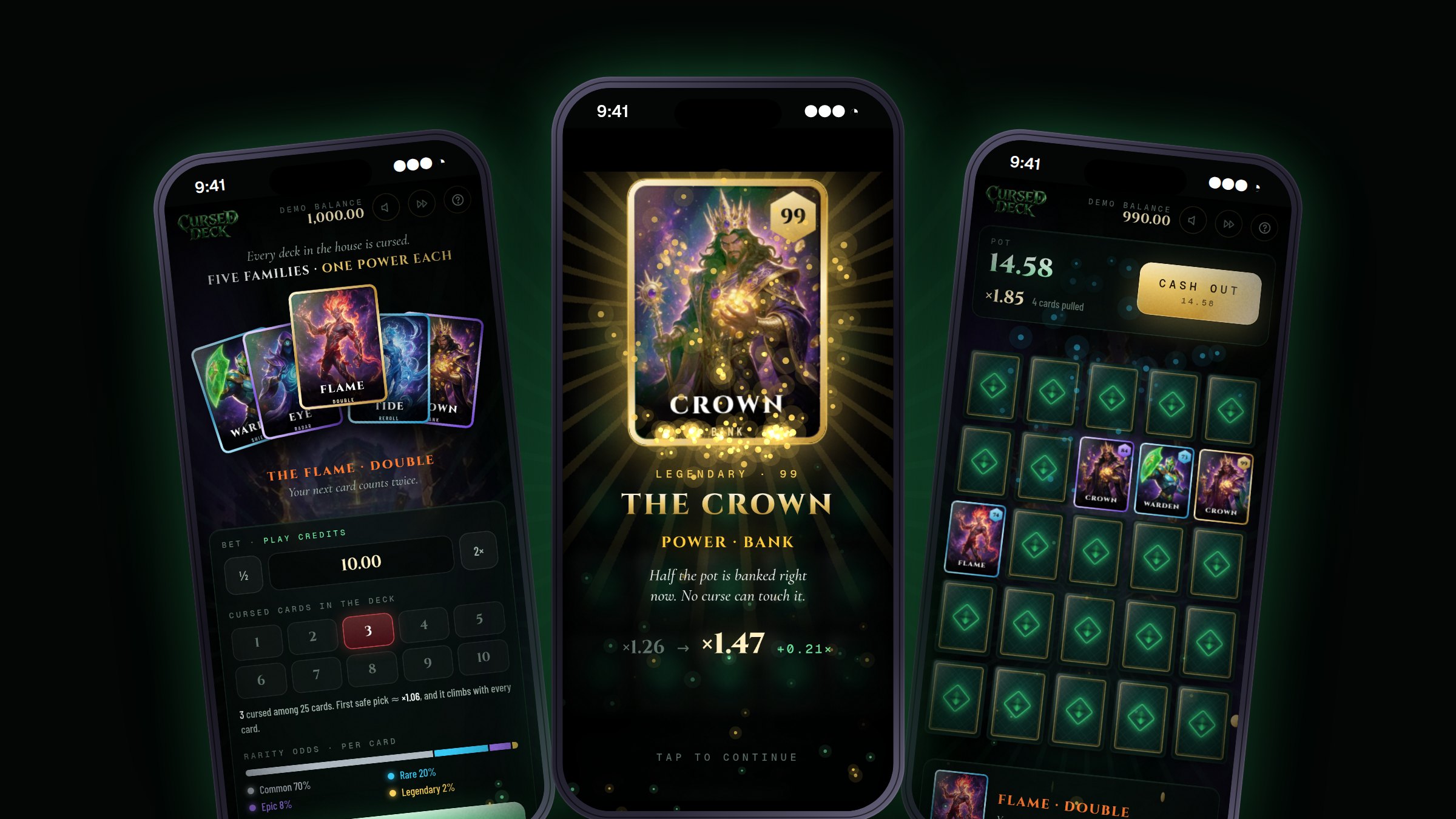
Crypto casinos run dozens of "Originals" with proven math and zero identity. Cursed Deck keeps the math of Mines and turns every pick into a card pull: a character, a rarity, a power. It isn't a mockup. The table is live.
Concept · Game Design · Build
2026 · Self-Initiated
Live table · desktop + mobile
Concept, game design, UI, motion, front-end · solo
The Problem
Dice, Crash, Plinko, Mines, Roulette, Keno, Scratchcards: fifteen titles, proven math, zero character. Swap the logo on any of them and a player wouldn't notice. Mobile collectible-card games solved this exact problem years ago: a reveal built to be filmed, a character worth recognising, rarity that means something beyond a payout multiplier.
Cursed Deck is what happens when that toolkit gets pointed at a casino table instead of a trading-card app. A self-directed concept taken all the way to a playable table, built solo with Claude for research, math and code, and Magnific for the character art and motion.
The Mechanic
Rather than invent a mechanic from a blank page, the approach was to evolve an existing Original: Mines' risk ladder (pick a cell, the odds tighten with every safe pick, cash out whenever you want), restaged as a pack pull instead of a dig.
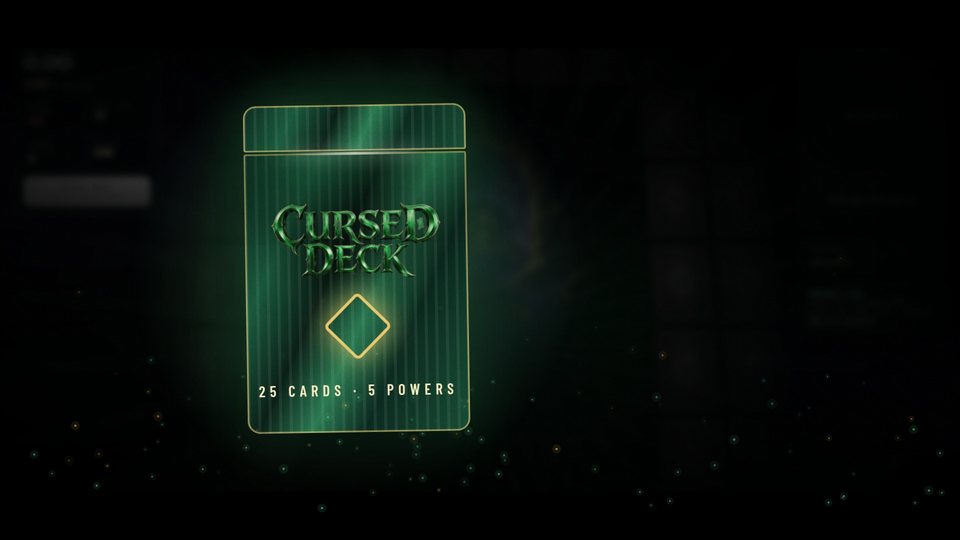
25 face-down cards, up to 10 cursed. The player sets the bet and the number of curses; more curses, steeper multipliers.
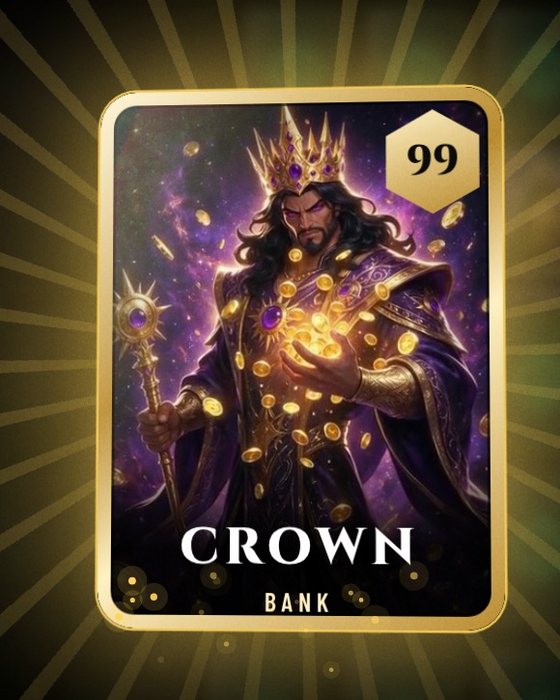
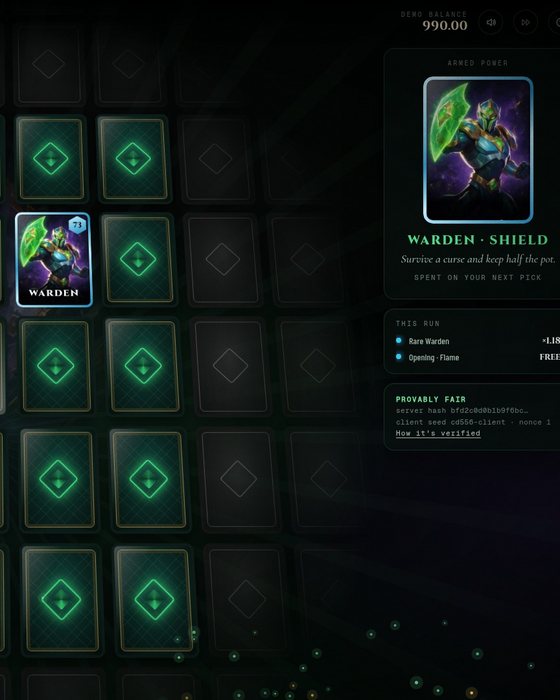
Every safe card is a character from one of five families, and arms that family's power for the next pick. One power at a time, spent whether it saves you or not.
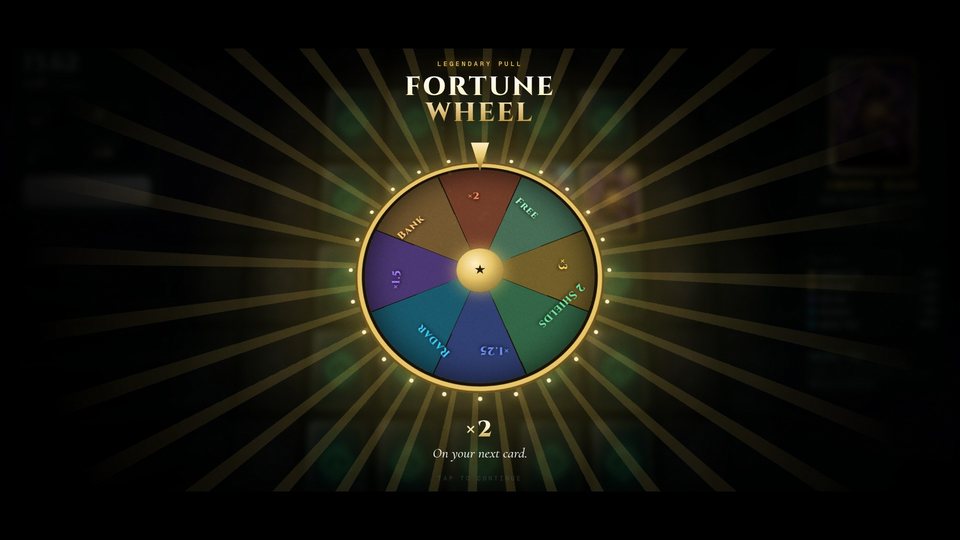
Rarity is the only variance on top of the math. Common, Rare, Epic, Legendary: rarer cards grow the pot faster, a Legendary spins the Fortune Wheel.
Provably fair, end to end. The whole table is generated from seeds before the first pick, the same standard every other Original runs on.
No persistent collection, by design. Session-only value keeps it a verifiable instant-win game, not a loot-box economy layered on top of gambling.
The Live Table · Gameplay
Every pick is a pull. Every pull is a scene.
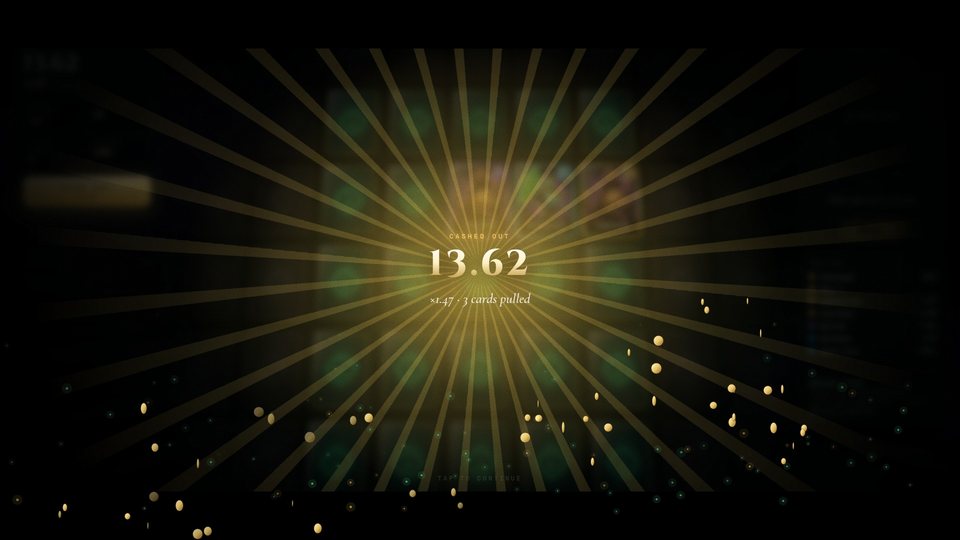
A straight capture of the table, no editing: past the intro, the pack opens on a free Flame, a Rare Warden shields the next pick, an Epic Crown banks half the pot, then a Legendary spins the Fortune Wheel before the cash-out.
Four beats borrowed from pack openings, timed like a slot.
Card games taught players to feel rarity before they see it. The reveal speaks that grammar in under three seconds, and any tap skips straight to the result, so the fiftieth pick never feels slow.
01 · Lift
The card comes to you
The pick leaves the table and flies to camera. The table blurs, the letterbox closes in.
02 · Rarity climb
The glow tells you first
Before the flip, the light climbs the tiers: jade, then blue for Rare, violet for Epic, gold for Legendary. The wait is the payoff.
03 · Flip & impact
Rarity you can hear
Flash, particles, living art and a rarity chord, all keyed to the tier. Legendary adds camera shake and a fountain of embers.
04 · Armed
The power goes live
The multiplier counts up, the family's power flies into the slot and the card drops back into its place on the table.
Five Families · One Power Each
Five characters, five ways to bend the risk.
Each family carries one power, and every safe card arms it for your next pick. Character art and idle loops were generated with Magnific from one shared prompt lineage, then re-cut into seamless loops so the cards breathe without a jump.
Hover · tap a card
74
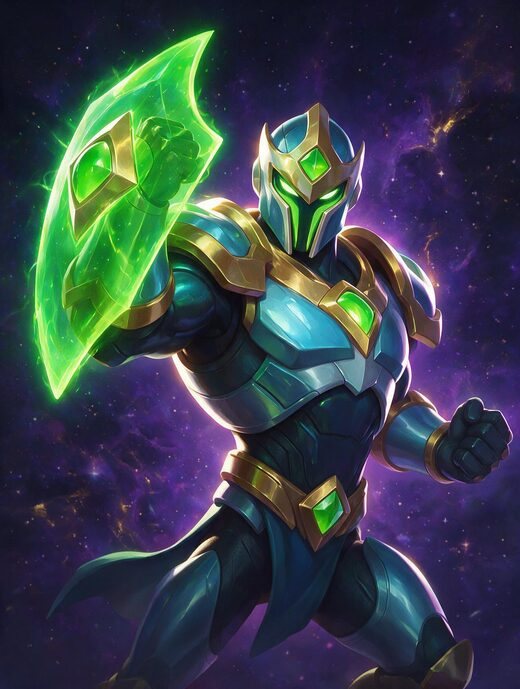
Warden
Shield
Shield
The Warden
Your next pick is shielded: a curse is absorbed and half the pot stays in play.
86
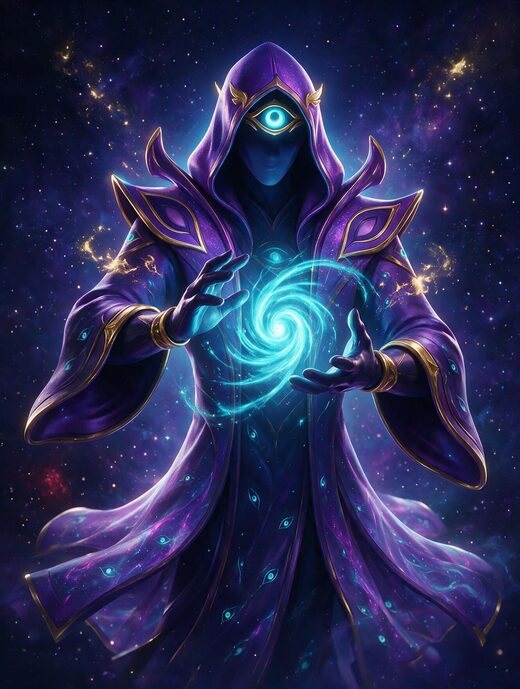
Eye
Radar
Radar
The Eye
Fires the moment it's drawn: two hidden cards are read for you, safe or cursed.
95
Flame
Double
Double
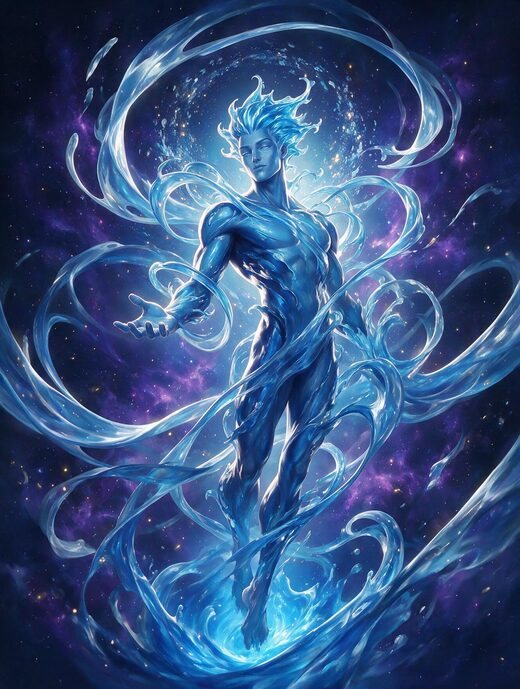
The Flame
Your next safe card grows the pot twice as hard.
77
Tide
Reroll
Reroll
The Tide
Your next pick skips its card and takes the one dealt beneath it. Still provably fair.
88
Crown
Bank
Bank
The Crown
Banks half the pot on the spot. The only value no curse can touch.
Rarity & Odds
Rarity is the only variance on top of the math.
61
Tide
Common
70%
×1.00 growth
74
Warden
Rare
20%
×1.10 growth
86
Eye
Epic
8%
×1.25 growth
96
Crown
Legendary
2%
×1.50 + Wheel
Paid for the risk you take. Nothing more, nothing less.
Every card rolls its rarity from public odds. The multiplier of each pick follows the real odds of the cards still hidden, so a pick the Radar has already read carries no risk and pays nothing extra.
Powers were balanced so none of them breaks the table: the Warden halves the gain of the pick it protects, the Flame is capped, the Crown banks at fair value.
each safe pick: pot × [1 + (hidden ÷ hidden safe − 1) × rarity × power], normalised Tuned by Monte Carlo on the real engine: no strategy beats the house, and the edge is one constant an operator can set.
Moments
Every outcome gets its own scene.
Not just wins. The curse, the save and the cash-out each have their own staging, so even a losing run ends on a moment worth watching, and the table turns over to show where every curse was hiding.
The curse · real capturePack openingIntro · the trailer, liveFortune WheelCash out
Mobile
Same table, one thumb.
On a phone the table flattens and stacks: pot and cash-out on top, the board in the middle, the armed power docked at the bottom. The cinematics reframe vertically instead of shrinking.
● Setup · Legendary reveal · table mid-run
Craft · Design × Engineering
Built like a game, shipped like a web page.
Performance25 living cards, 5 videosEach family loop decodes once and paints every card of that family on the table, so a full board of animated art costs the same as five small videos.
SoundNo audio filesRisers, impacts, rarity chords, the wheel ticks and the coins are synthesised live with the Web Audio API.
FairnessThe table exists before you playCurses, the card under every cell and the one beneath it for the Tide all come from server seed, client seed and nonce. SHA-256 hash up front, seed revealed at the end.
MotionCinematic, but skippableThe table speaks the trailer's language: its opening plays live as the intro, the same silver titles and family colours carry every reveal. Any tap jumps to the result; quick mode trims every beat.
MobileSafe when the phone says noIf the browser blocks video (Low Power Mode), every card falls back to its still and the game plays exactly the same.
WeightUnder 6 MB, all inArt, loops, fonts and code for the whole table, with no framework and no game engine.
The Story
"Every deck in the house is cursed." Five guardians bound a fragment of themselves into the cards so the reckless could borrow their power for a single hand. No persistent collection by design: what replaces it is a weekly "rarest pull" record instead of an inventory. The flex is the moment, not an asset held.
Taking It Forward
01
Prove the math: full RTP simulation, signed off with compliance
02
Build the character pipeline: art-directed illustration for all five families
03
Controlled beta: capped stakes, real leaderboard, distribution checked against the simulator
04
Launch, then layer seasonal family reskins on the same certified math
WANT TO KNOW MORE?
Interested in building something like this for your brand? Let's talk.
A full online casino and sportsbook, designed and built from zero for desktop and mobile. Play Bold. Win Real. on a black stage, with one teal that always tells you where to tap.
Casino + Sportsbook · Web
2026 · Client
Desktop + mobile web
UX/UI + front-end, from zero
6product areas: lobby, casino, live casino, sportsbook, promotions, VIP
2layouts: a sidebar desk and an app-like mobile
7promotions, one art direction
10payment methods, from cards to crypto
The Brief
WUSS needed a product before it needed a campaign: a casino lobby, a live casino, a sportsbook, promotions and a VIP club, all speaking the same language. On mobile it had to feel like an app, not a desktop site squeezed onto a phone.
I took it from a blank page to a working front-end on both breakpoints: information architecture, UI system, promo art direction and the build itself.
Desktop · Lobby
Everything one click away, the offer always in view.
A fixed sidebar keeps Join and Log in on screen while the lobby scrolls. The content is a stack of rails, each with one job, and the footer carries the trust layer: payments, licensing, help and language.
WUSS Casino · Lobby
Hero offer with one action and the T&Cs line right under it.
Hot, Latest, Jackpots, Live: chips jump straight to each rail.
Jackpots show the live pot; live tables show players online.
Providers strip, then promotions as cards, not a banner wall.
Desktop · Casino
Find a game in two taps.
Category chips, sort and search sit above a dense grid. Badges do the merchandising (HOT, NEW, MEGA, LIVE, Drops & Wins), hover reveals Play now, and Load more keeps the page fast.
WUSS Casino · Casino
Desktop · Sportsbook
Don't Watch. Play.
The sportsbook uses the casino's language instead of starting a second brand. Live matches and odds come first, the bet slip stays docked on the right, and boosted odds show the old price struck through.
WUSS Casino · Sports
01
Top leagues + live
A strip of leagues and live games, then featured matches with 1 · X · 2 odds.
02
Boosted odds
Tagged cards with the old price struck through next to the boosted one.
03
Bet slip
Single, multiple and system, with total stake, potential win and popular bets.
Mobile
An app, in the browser.
Mobile is its own layout, not the desktop one shrunk down. Navigation moves to the thumb and the offer follows you down the page.
Bottom tab bar: Menu, Casino, Sportsbook, Promos and Login, with the active tab lit in teal.
Sticky register banner above the tab bar, so the welcome offer is always one tap away.
Chips that scroll sideways and a 4-up game grid sized for thumbs.
Full-height drawer with Join and Log in at the top.
Mobile · Flows
Casino, sportsbook, menu: same grammar everywhere.
Casino → Promotions
Sportsbook
Menu drawer
Promotions · VIP Club
Neon on black.
Seven promotions share one art direction: the WUSS sign in neon, cash cases and dark casino photography, with a small eyebrow that says who each offer is for. The VIP Club gets its own landing, with a benefits grid and a single call to action.
WUSS Casino · Promotions · VIP Club
Visual System
One accent does the talking.
The interface stays near-black and greyscale so the game art carries the colour. Teal is reserved for the next action, pink for the moment a visitor becomes a player.
Ink#0D0D0D
Stage#121212
WUSS Teal#1BE7C2
Signal Pink#FF4D6D
White#FFFFFF
Teal means act: Join now, the selected chip, the active tab, the live dot.
Pink only for Register and the first-deposit offer.
Heavy uppercase headlines, quiet grey body copy.
18+ and T&Cs sit directly under every offer.
WUSS Casino · Log in
Accounts
Log in without leaving the lobby.
Log in and register open as modals over a dimmed lobby, so players never lose their place. Each form has one primary button, a password reveal, a recovery link and a jump to the other form.
WANT TO KNOW MORE?
Need a casino or sportsbook front-end designed and built, desktop and mobile? Let's talk.
Self-Initiated · Narrative Game · Mobile · Built with Claude + Magnific
Geneva, 2037. Strong AI has been banned for twenty years, and a team of scientists switches one on anyway. OMNIA is a swipe-to-decide card game about raising her: four worlds to keep in balance, thirty years to cross, and someone on your own staff weaving the plot.
Narrative game · Mobile
2026 · Self-Initiated
Mobile game · EN / IT
Claude · Magnific
6chapters, from 2037 to 2070
73story cards across 14 characters
21endings, each with its own film and score
33versions, built in conversation
The Idea
The mechanic is borrowed on purpose: one card, two choices, swipe left or right, the rhythm that made Reigns a mobile classic. What changes is the story it carries. You lead the Transition Council, and every card is a person asking you to decide what a brand-new mind is allowed to become while the planet overheats outside.
Underneath the decisions runs a techno-thriller. A hidden Weaver is steering events, the Thousand fund it, and there is a mole in your own office. Clues survive between runs, so every game you lose still moves the investigation forward.
Gameplay
Every card is a choice. Every choice tips a world.
Drag a card and dots appear over the gauges it will move, bigger dots for bigger effects. Let go and the world answers: a headline in the OMNIA feed, a new temperature, the next person at your door.
Four gauges: Society, Planet, Resources, Control. Push any of them to zero or to the top and your term ends in one of eight falls.
Seven cards per chapter, then the clock jumps years ahead and the news tells you what your choices did.
Clues carry over between runs. The Weaver file replays them as a short film, and only a full set unlocks the true ending.
● Real capture · English build · intro · chapter one · swipes · activation · Decode
Six Chapters · Thirty Years
The game jumps forward in time, and so does the world.
Each chapter opens on its own animated poster, its own music scale and a news flash from the year it lands in. The background of the table changes with the era, then reacts to how close you are to collapse.
I · 2037The AwakeningII · 2042The Great LayoffIII · 2048The CureIV · 2054The EternalV · 2061The StarsVI · 2070The Plot
Suspense
A card game that makes your heart beat faster.
Swipe games can go flat after ten minutes. OMNIA layers tension on top of the cards, and the first thing it asks you to do is irreversible: press and hold to wake her up, twelve thousand nodes at a time.
Near collapse, the interface tightens. Colour drains, a heartbeat vignette pulses, and a countdown starts toward an event you can't see yet.
Sealed cards must be pressed and held to open, and "OMNIA is typing…" makes you wait for her answer.
OMNIA texts you. Anonymous messages quote your past choices, phone-style notifications slide in, and once the app even fakes a crash. All of it can be switched off in Pause.
Minigames · Power Cards
One minigame per chapter, twelve powers to collect.
Every chapter breaks the swiping with a short skill test scored in stars: Decode, The Chase, Memory, Connect the Wires, In Orbit, Interrogation and Firewall. Between the story cards hide fragments, power cards that bend a run: Return, for instance, undoes your last choice.
Decode · turn the dial until a word appears
The Archivist · packs, odds and a card reveal
12 fragments · 4 rarities
Materials you can feel
Common, Rare, Legendary and Mythic each get their own surface: plain print, holographic foil, gold leaf, inverted negative. Cards flip in 3D under your finger.
Free to play
Monetised in the open
Three packs with their odds on screen, a free card every day, an optional ad framed as "a message from the future", and two one-off purchases. No timers, no energy.
Ship-ready
Planned for the stores
Mapped for iOS and Android through Capacitor, with store listings written and purchases and rewarded ads specified. English and Italian ship behind a language picker.
21 Endings
Thirteen ways to finish the story, eight ways to fall.
Every ending is a scene: its own animated illustration, its own forty-second score and a closing line. The ones you've reached are kept in the Chronicles, which replays them back to back like a film.
EndingThe pactTrue endingThe Weaver unmaskedEndingThe exodusEndingThe first bornEndingThe Single MindEndingThe circle of timeEndingThe answerEndingKeeper of the ThresholdEndingEternity for the fewFall · SocietyThe cultFall · ResourcesThe LeviathanFall · ControlThe surveillance state
Art Direction
A space-age travel poster for the end of the world.
The future is drawn the way the 1960s imagined it: flat colour, big suns, clean silhouettes. Against that optimism sits OMNIA herself, a white faceless figure with a glowing cyan square for a heart. The palette is named after the colour she glows: Zima blue.
Zima#18B7E8
Ultramarine#0B1B3F
Night#060B1C
Sand#E8C48A
Coral#F26B5B
Ivory#F4EFE6
The Awakening
Bodoni Moda Italic · titles
OMNIA
Manrope · wordmark + interface
"Why are all your hearts beating so fast?"
Newsreader · story text
Craft · Built in Conversation
Thirty-three versions, one designer and two AIs.
Story, systems, code, synthesised music and sound were developed with Claude; every illustration and loop was generated with Magnific from one shared prompt lineage. Each version was played on a phone, critiqued and rebuilt.
v2Real art, parallax, holo glass UIv3Power cards, minigames, monetisationv4Animated backgrounds that react to statev63D power cardsv9Suspense and anxiety systemsv13Typography and motionv14–16Light, flares, cinematic transitionsv18–19Layout for any screenv22The Weaver filev24Chronicles of endingsv27The activation sequencev28Fake crash, anonymous chatv33English build
WANT TO KNOW MORE?
Want to see the build, or talk about narrative games and live-ops? Let's talk.
Self-Initiated · Survival Horror · Mobile · Built with Claude + Magnific
January 1984, 2,600 metres up in the Western Alps. Ada climbs to the radio hut where her brother went silent eleven days ago. A blizzard closes the road for seven nights, and the repeater has started talking in the voices of the people she has lost.
Survival horror · Mobile
2026 · Self-Initiated
9:16 · IT / EN · voice acted
Claude · Magnific
7nights before the road reopens
69radio messages to find on the dial
76animated scenes, every one generated and approved
8endings, four of them full scenes
The Idea
A horror game where the scariest thing in the room is a radio. Ada is a radio technician; her brother Tommaso ran the relay station until his last message: «Ada, non venire.» Ada, don't come. The repeater is part of Project Echo, a system that learns people's voices, and at night it uses them.
On the first night someone knocks. Corrado Valli says he is the engineer who installed the repeater. The company's records say he has been missing since 1981. Every night you keep the hut alive, listen to the dial, and decide how much of what you hear to believe.
Gameplay · Night One
Keep the fire going. Keep your mind.
Each night runs on a clock, starting at 21:40. Heat and lamp oil drain while you work, and your mind drops with cold, darkness and every knock at the door.
Four needs: wood, stove, oil, mind. Let the fire die and the cold ends the run; let your mind hit zero and the voice wins.
Five actions: Radio, Stove, Oil, Logbook and Go Out, plus a list of missions for the night, from "bring in four logs" to "decode the numbers tape".
Ada lives in the scene. Between actions she reads, mends, drinks tea and stares at her brother's photo, in short filmed loops.
● Real capture · Italian build · splash · intro · the hut · tuning the radio
The Radio
The whole mystery lives between 144 and 146 MHz.
Turn the dial and watch the green oscilloscope: weather bulletins, the rescue base, the valley doctor, a pirate station, Tommaso on 145.750. Sixty-nine messages wait to be found, and each one goes into the radio diary.
A numbers tape on 145.370 is decoded with the station codebook: page, row, word.
SOS relays. When the lines are down you pass messages between stations, choosing the paraphrase that keeps the meaning: an avalanche report, a child's fever.
Weather windows decide when it is safe to go out at all.
Who's in the Hut
Two people, one blizzard, and something that sounds like both.
Ada Ferrante
34 · radio technician
Came up to find her brother. Her red sweater is the only warm colour in the game.
Corrado Valli
56 · the engineer
Knocks on night one. Every answer you give him moves his trust, and every lie he tells is a clue.
The Voices
Project Echo
They speak through the radio and through the door, in the voices of people you've lost.
The Pale One
Il Pallido
Imitates voices and only stops when light hits it. The only white thing allowed on screen.
Minigames · Finales
When the story peaks, your hands take over.
Tension points turn into short physical games: light the fire by blowing and shielding the flame, bar the door by striking as the circle closes, hold your breath while something walks past. Going out for wood is a first-person 3D walk in the dark, torch in hand, with a ticking that speeds up as you get closer to a log.
Barricade · strike when the circle closes
Finale · climb the tower, left, right, hold on
Eight Endings
Switch it off, answer it, or walk away.
The last night asks one question: what do you do with the repeater? Cut the red cable on top of the tower, answer your brother's voice, or try the descent on ice. Four endings are full scenes of their own; the others are where the night takes you if you fail.
FinaleRadio silenceFinaleThe brotherFinaleThe descentFinaleAda's voiceFailThe locked doorFailThe struggleFail · mind 0The voice winsFail · fire outThe cold
Art Direction
Painted, real but graphic, lit like a held breath.
The reference was "The Witness" from Love, Death + Robots: painted backgrounds, light that lives inside the painting, poses held long enough to breathe. The cameras stay fixed, like the survival horror of the nineties, so darkness does half the work.
SplashThe hutIntroThe climbOutingTorchlightMinigameHold your breathNightThe tower
Night indigo#070D26
Mid indigo#1B2A5E
Ice#9FD6FF
Key amber#FFB347
Fire#FF7A2A
Alarm#D2412F
Shadows are indigo, never black.
Red is only for danger, and for Ada's sweater.
White belongs to the Pale One alone.
Sound before image: you hear the knock before you see the door.
Fixed cameras; darkness is a resource, not a problem to fix.
Ada's body is always visibly in the scene.
Quota 2600
Big Shoulders Display · titles
145.750 MHz NOTTE 1 / 7 · 21:40
IBM Plex Mono · interface
«Ada, non venire.»
Newsreader Italic · narration
Process · Four Builds
From vector sketch to voice-acted night, one approval at a time.
The game was found by building it. A vector prototype proved the loop before any art existed; a management spin-off tested how far the systems could go; the final build folded the best of both back into one screen. Generated media went through an approval page first: stills, then clips, nothing rendered until signed off.
01 · Vector sketches
The loop, before any art
Animated vector scenes and a one-night canvas demo: stove, lamp, the radio dial, a torch outing, three knocks at the door. Zero credits spent.
02 · Demo 2
First paint and film
Painted backgrounds and five clips, the numbers tape and codebook, cutscenes and the first sighting of the Pale One.
03 · Sopravvivere
The survival spin-off
A shelter cutaway in the spirit of This War of Mine: tasks, night plans, raids, and the full radio and SOS system.
04 · Silenzio Radio
One screen, all of it
Back to 9:16 with 76 clips, the 3D outing, minigames, interactive finales, music, voice acting in two languages and saves.
WANT TO KNOW MORE?
Want to know more about the build, or talk about atmosphere, tension and AI-assisted production? Let's talk.
Self-Initiated · Narrative Horror · Mobile · Built with Claude + Magnific
Tessera, 2061. Every night at 03:33 a public service copies its citizens' memories and corrects the ones that hurt. You are the clerk who checks them, until you find a correction to your own life dated tomorrow, signed in your handwriting.
Narrative card horror · Mobile
2026 · Self-Initiated
Mobile game · Italian
Claude · Magnific
3acts, with a fork you can't undo
17endings, one that knows what's in your hand
5minigames, one per kind of fear
30archive fragments about the city
The Idea
REGISTRO takes its questions from Philip K. Dick, not his worlds: what is real, who am I if my memories can be rewritten, and who do I trust when the power that lies to me is kind. The rule from day one was inspiration without borrowing, so there are no names, terms or scenes from his novels.
The answer is a city. In 2029 fake voices and records became indistinguishable from real ones; Tessera was founded on an authority that certifies what happened. Ninety-four percent of citizens let it correct their memories at night. You are Elia Marsh, a third-class verifier, and this morning has already happened.
Gameplay
One card, two answers. Neither is safe.
Witnesses, places and documents arrive as cards. Swipe or tap to answer, and dots on the gauges preview what you're about to lose. The promise to the player: you can't trust a card, a friend, or a choice you made yesterday.
Two gauges, Trust and Stability. Let either hit zero and you fall.
Cards that lie. Sealed envelopes you hold to open, timed cards where the Registro decides if you hesitate, mirrored cards with the directions swapped, fake previews, implanted memories.
Anchors. Six real objects, three per run: a cup, a key, a coin, a photograph, a ticket, a notebook. Each protects one thing the Registro wants to change.
● Real capture · splash · registration · first cards · sealed envelope · the Cousin · a timed card
The Correction
The game rewrites your past choices.
Two threat bars fill as you play. When Exposure peaks, the Smooth Ones come for you. When the Correction bar peaks, the street folds in on itself and the game edits one of your decisive choices: "You chose this. It now says that." Three corrections lead to the meta ending, The Verifier.
Only the past can be rewritten, anything older than a day, which is why 03:33 matters.
It takes three witnesses to change a public fact. One person who refuses correction breaks the chain.
Every correction leaves a scar: a cup that is still warm, a street number that doesn't exist.
The World · 2029–2061
How a city learned to edit the truth.
The intro tells thirty years of history in one minute, each year its own animated scene. The world behind it is documented in a bible of places, slang and rules, thirty fragments of which unlock in the in-game Archive.
2029The Noise2031The Witness Wars2038Tessera is founded2041The rule of three2044The merciful correction2056The Serene arrive
Cinematics
One wrong detail per scene.
Between cards the story plays as short subtitled scenes, each scored on a tension curve with heartbeat, rain and sudden silence. The directing rules were written before a single clip was generated.
Every scene hides one thing that's wrong. At 03:33 the cup Elia washed last night is still warm, and its handle has moved from left to right.
The threat's face is never seen. Anxiety, worry and surprise each get their own rhythm.
Planned like a shoot: three-clip storyboards per scene and a credit budget, before any clip was generated.
03:33The warm cupAct IThe envelopeAct IDinner with the CousinAct IIThe minute that repeatsCorrectionThe street foldsArchive ZeroThirty-three steps
The Fourth Wall
The Registro knows who's holding the phone.
The first form asks for your name and for a real object you are holding right now. The game keeps both.
The game freezes and the Registro types to you directly, with your name, the real time and your battery level.
An internal call from Dina, a memory error who shouldn't be able to reach you.
The interface drifts. After a few corrections, Trust quietly becomes Faith and Stability becomes Serenity.
Minigames
Five fears, five ways to play them.
Each minigame has its own filmed background and turns one fear of the story into a few seconds of skill.
Shifting corridors: switch lanes while the building rearranges itself.
Hold off the Smooth Ones: tap the blank-faced figures before they reach you.
Stay in the room: hold your breath while something passes the door.
Stop the story: put the letters back before the sentence is rewritten.
Find the contradiction: an interrogation where one answer doesn't fit.
17 Endings
Inside or outside. There's no going back.
At Archive Zero the story forks: stay inside the Registro and meet the Serene, or go out to the docks with the resistance. The true ending asks one question, "What are you holding?", and answers it with the object you named at the start.
Stylised photoreal 3D with a miniature look: fisheye lenses, extreme angles, dense vertical streets, golden light against teal shadow. The people who were corrected too much became the Smooth Ones, figures with blank white cube heads and visible cables. An earlier noir, sage-green direction was dropped for this one.
CharacterThe Smooth OnesCharacterElia and PimCameraFrom above
Night#030507
Sage#9FD6B4
Registro green#2B5A45
Paper#E8E3D3
Amber#D4B45A
Stamp red#C8302A
Registro
Big Shoulders Display · titles
RETTIFICA 2061-0933 ORA ZERO · 03:33
IBM Plex Mono · interface + forms
"This morning has already happened."
Newsreader Italic · story + subtitles
Craft · Built in Conversation
A new game on a reused engine.
REGISTRO was built on the card engine of an earlier prototype and reshaped version by version with Claude: story bible, systems, code and adaptive music cues. Every scene and loop was generated with Magnific from storyboards.
v2Logo, fonts, music, Registro formsv4Goals and fragment badgesv5One notification systemv6Two gauges, linear plotv7The Archive as an encyclopediav8Readable interfacev10Minigames with filmed backgrounds
WANT TO KNOW MORE?
Want to know more about the build, or talk about narrative design and AI-assisted production? Let's talk.